CEREMONY
15 Wedding Ceremony Mistakes I See Most (and How to Avoid Them)
An NYC officiant's honest list of the wedding ceremony mistakes that actually go wrong, from hundreds of ceremonies, plus the exact fix for each.
A few summers ago I stood at the front of a Brooklyn rooftop ceremony, mic in hand, facing about ninety guests who were all squinting and sweating. The couple had picked 4 p.m. in late June, and the sun sat directly behind them, blasting into the front three rows. Nobody could see the bride’s face. Nobody had thought to ask which way the chairs should point.
It was a gorgeous ceremony, and it was also fixable in the five minutes it would have taken someone to walk the space the day before. I’ve worked the front of hundreds of these by now, and I’ll tell you the truth: the worst ceremony mistakes are almost never the emotional or poetic kind. They’re logistics nobody owned.
I face the guests while you face each other, so I catch what you can’t. The phone lifting into the aisle right as you turn. The guest in row five who missed the whole thing because there’s no mic. The groomsman who has no idea who he’s supposed to walk. Here’s my honest list of what actually goes wrong, with the exact fix for each.
The short version: the ceremony mistakes that wreck the moment are running long, skipping the rehearsal, ignoring sun and wind and sound outdoors, an unprepped officiant, phones in the aisle, guests left standing, no backup for the ring or license, and mispronounced names. Every single one is preventable before the wedding day.
If you only read one companion piece, make it the full wedding ceremony order, the running order every fix below slots into.
Why do so many ceremonies run too long?
Because nobody timed it. People write a script that reads beautifully on paper, then deliver it at half speed because their nerves are up, add a reading they forgot to count, and suddenly twelve minutes on the page becomes twenty-eight in the chairs.
In my own work I aim for 15 to 20 minutes of spoken portion, and 20 to 30 minutes overall. Long enough that it feels like something happened. Short enough that the front row isn’t wilting and the back row isn’t peeking at the bar.
The fix costs nothing. Read the whole script out loud, on your feet, with a timer running, at least once before the wedding. Reading it silently doesn’t count, because you read three times faster in your head than you speak it in front of people. If you want help getting the bones right before you trim, I walk through it in how to write a wedding ceremony.
Is skipping the rehearsal really a big deal?
If anyone other than the two of you is walking down that aisle, yes. Skip the rehearsal and you get the processional that looks like a slow-motion traffic jam: bridesmaids unsure of the order, groomsmen unsure who they’re escorting, the music cue sailing past while everyone freezes at the top of the aisle.
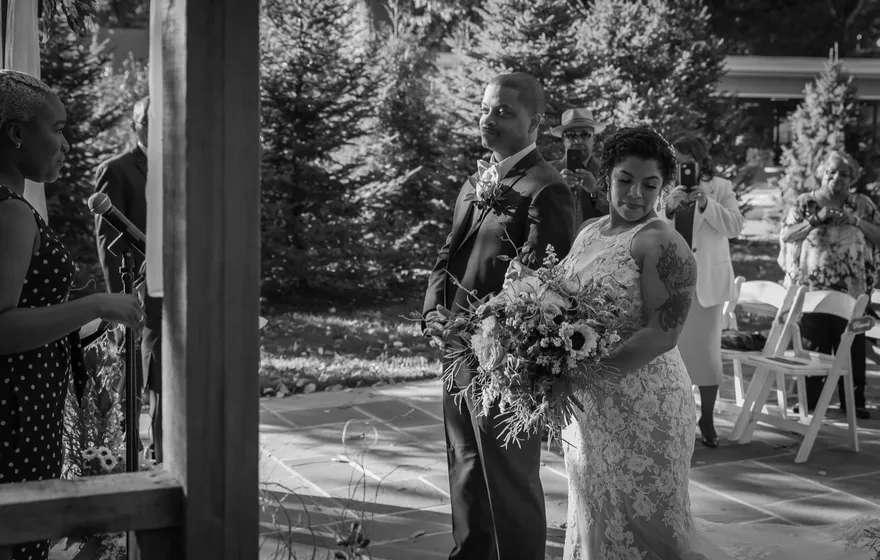
A real rehearsal isn’t about perfection. It settles three things: who walks when, where they enter, and where they stop and stand. That’s it. It takes 20 to 30 minutes and it removes nearly all of the day-of confusion (The Event Bay).
I’ve watched couples skip it to save time, then spend triple that time on the wedding day re-explaining the lineup while guests wait. Run the order once, out loud, in the actual space if you can. The full sequence is laid out in the wedding processional order, and I get into how to run the whole thing in how to officiate a wedding.
What goes wrong at outdoor ceremonies that nobody plans for?
Three things, and they’re all decided at chair-placement time, not on the wedding day: the sun, the wind, and the sound.
| Problem | The fix |
|---|---|
| Sun | Face north or south |
| Wind | Foam mic windscreen |
| Sound | Real mic and speaker |
The sun. The classic failure is late-afternoon light sitting directly behind the couple while a west-facing front row squints through the vows. Orient the couple so they face north or south, which puts the sun on the side instead of in everyone’s eyes, or push the start to 5:30 or 6 p.m. when the light drops lower and softens. Walk the space at the same time of day as your ceremony, even a week out, and you’ll see exactly where the sun will be.
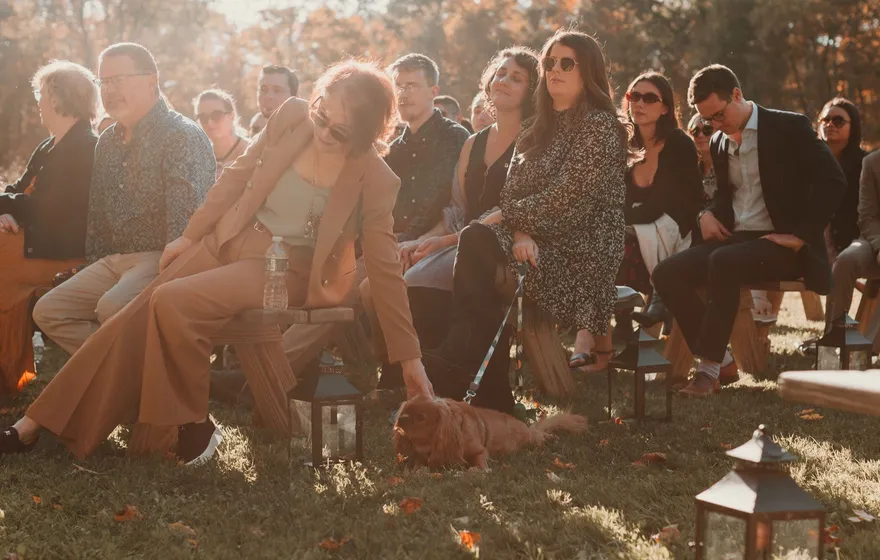
The wind. A light breeze turns vows into a roar on both the live audio and the videographer’s recording. The fix is almost insultingly cheap. A foam windscreen for the mic costs a few dollars, yet almost nobody brings one unless you specifically ask (ShunBridal). So ask. While you’re at it, ask whether the music and any unity ritual involve open flame, because outdoors a candle is a lost cause.
The sound. This is the one that quietly ruins outdoor ceremonies. Indoors, walls bounce your voice back. Outdoors there are no walls, and I’ve watched it happen from the front again and again: past about row three with no real mic and speaker, most guests miss most of what’s said. The vows are happening and half the people you love are watching a silent movie. Outside or in a big room, you need real amplification, not hope.
What does an unprepared officiant actually look like?
It looks like a lovely person reading a script for the first time at full volume, in front of everyone the couple loves. Long pauses while they find their place. Names said with a question mark. A reading that goes on for four minutes because nobody told them it was long.
I coach first-time, friend-and-family officiants through exactly this, and the gap between a smooth ceremony and a clunky one is almost entirely preparation, not talent. The officiant should have read the final script out loud at least twice, marked where to slow down, and know who hands them the rings.
The single most common officiant slip is the names. You’d be amazed how often a nervous officiant mispronounces a name, or swaps the two of them, right at the altar. The fix is the oldest trick we have: bold or highlight both names every single place they appear in the script, and write tricky ones out phonetically in the margin. Repetition under nerves is how you dodge the quietly mortifying name slip. There’s more on delivery in the wedding officiant’s speech.
Why are my guests standing for the whole ceremony?
Because someone forgot to tell them to sit. This one breaks my heart a little, because it’s so easy to prevent.
Guests stand for the entrance of whoever’s walking down the aisle. Then they wait for permission to sit back down. If the officiant forgets the “please be seated” line, guests will very often stay on their feet for the entire 15-to-30-minute ceremony, out of pure peer pressure and a fear of seeming disrespectful, rather than sit on their own (Inspired Help). I’ve watched a hundred people stand through a whole ceremony over one missing sentence.
The fix is a single scripted line, delivered right after the couple reaches the front. Put it in bold so the officiant can’t miss it. Here’s the exact wording I use, dropped into the opening so you can see where it lives.
Cue: (Couple has reached the front and is facing the officiant. Music has faded out. Officiant looks up at the guests and smiles before speaking.)
Officiant:
“Good afternoon, everyone, and welcome.
Please, take your seats.
(wait for everyone to sit, do not rush this)
We are gathered here in this beautiful place to celebrate one of life’s greatest moments, and to witness the marriage of [First Name] and [First Name].
Before we begin, a small request. Be here, fully, with us. Let yourselves feel this. There is nowhere you need to be for the next twenty minutes except right here, watching two people you love promise themselves to each other.”
Note: (That last paragraph does double duty. It settles the room, and it sets up the unplugged ask if you’re making one.)
If you’d rather start from a complete, ready-to-edit ceremony than write every line cold, I keep a free sample ceremony script you can grab and shape to your couple.
How do phones in the aisle actually ruin things?
A guest leans into the aisle to film the walk, and now their arm is in the professional photographer’s frame of the processional. Or a phone flashes during the first kiss and blows out the lighting on a shot you cannot re-take. I see it from the front constantly. Those moments happen once, and there’s no second take.
The fix is an unplugged ceremony, and it works best when the officiant makes the ask out loud, warmly, before things begin, rather than relying on a sign nobody reads. People put the phones away when a human asks them kindly. I lay out the whole approach, including the exact wording, in the unplugged ceremony.
Phrase the unplugged ask as a gift to the couple, not a rule for the guests:
“[Name] and [Name] would love to see your faces, not your phones, so they’ve asked that we keep devices tucked away until after the first kiss.”
In my experience guests put the phones away when you frame it that way, and the photographer you paid for can finally do their job.
What’s the backup plan for the rings and the license?
There usually isn’t one, and that is where it goes wrong. The ring gets left in a hotel safe, or a best man drops it into the grass at a garden ceremony, and the whole thing stalls while everyone hunts on their knees.
Experienced officiants quietly keep a couple of inexpensive silicone rings in a few sizes in an emergency kit, precisely so a forgotten or lost ring never stops the ceremony. Silicone also sidesteps any metal-allergy worry (The AMM). Almost no couple thinks to ask whether anyone has a backup, so be the one who does.
Then there’s the license, which is the most serious mistake on this whole list, because it’s the one that can leave your marriage off the record. A signed marriage license that never gets returned to the issuing office means no record and no marriage certificate, even though the ceremony happened and everyone celebrated. In New York the marriage itself still stands (N.Y. Domestic Relations Law 25), but proving it means weeks of calls to the clerk who issued the license, and other states have their own rules. There are documented cases of a family-member officiant simply never mailing it, the couple only finding the unfiled license in their paperwork much later (FindLaw).
A few license details trip people up, and they vary by where you marry. In New York City, the couple has to wait a full 24 hours after the license is issued before the ceremony can happen, absent a judicial waiver, and the license is only valid for 60 days starting the day after issuance (NYC Office of the City Clerk). Miss that window and there’s no ceremony to file. New York also doesn’t explicitly recognize online ordinations, and there have been cases of town clerks refusing to file certificates from online-ordained officiants, which can leave a marriage legally invalid (NY.gov). If a friend is officiating, confirm their credentials and local registration well before the day, not the week of.
The five-minute version: a pre-ceremony walkthrough
Here’s the thread that ties every mistake on this list together. None of them is a talent problem. They’re all things nobody was assigned to own. So assign them. The morning of, or at the rehearsal, walk this list:
- Who says “please be seated,” and is it bolded in the script?
- Has the officiant read the full script out loud, with names highlighted and timed?
- Which way does the couple face, and where will the sun be at start time?
- Is there a real mic and speaker, and a foam windscreen if you’re outside?
- Who carries the spare ring, and is there a backup at all?
- Who is physically responsible for returning the license, and by when?
- Has someone asked guests to go unplugged?
Seven questions, five minutes. They head off nearly every ceremony disaster I’ve ever watched unfold from the front.
The worst ceremony mistakes are almost never the emotional or poetic kind. They’re logistics nobody owned.
Want the script handled for you?
If reading all this made your stomach drop a little, that’s normal, and it’s exactly why I built the Couple’s Ceremony Kit. It’s the structure I use, turned into something you can fill in: a ceremony framework that won’t run long, vow prompts that get you to the real words, the spoken lines most people forget (including that seating line), and the logistics checklist so nobody has to remember the ring or the license on the day.
It’s $79, and it’s the difference between hoping your ceremony goes well and knowing the bones are right before you walk in. You bring the love and the names. The kit handles the part where things quietly go wrong.
Frequently asked questions
How long should a wedding ceremony be?
Most non-religious and personalized ceremonies run about 20 to 30 minutes overall, and I aim for a 15-to-20-minute spoken portion. That’s long enough to feel meaningful and short enough that the front row isn’t melting in the sun or the back row isn’t checking the time. Full religious services run longer by design, and the fix for running over is simple: read the script out loud with a timer before the day.
What is the most common mistake friend or family officiants make?
Treating the ceremony as a speech to write instead of an event to run. The script matters, but the failures that actually derail a ceremony are logistical: forgetting to tell guests to sit, no backup plan for sun or wind or sound, no spare ring, mispronounced names, and no clarity on who mails the license. A first-timer who walks the rehearsal and carries a small kit avoids almost all of it.
Do wedding guests have to stand for the whole ceremony?
No, and they shouldn’t. Guests usually stand for the entrance of whoever walks down the aisle, then the officiant invites everyone to be seated. The mistake is when the officiant forgets that line, because guests will often stay standing for the entire ceremony out of politeness rather than sit on their own. One scripted sentence right after the couple reaches the front prevents it.
What happens if the officiant doesn’t file the marriage license?
If the signed license is never returned to the issuing office, there is no record of the marriage, so you can’t get a marriage certificate for name changes, insurance, or anything else that asks for proof. In New York the marriage itself still stands, and fixing the record means working with the clerk who issued the license; other states have their own rules. There are real cases of a family-member officiant simply never mailing it. Filing windows vary by location, so confirm before the day who is responsible for returning the license and by when, then follow up afterward to make sure it was recorded.
Why do couples have an unplugged ceremony?
Because guest phones and cameras routinely block the professional photographer’s shot of the walk down the aisle and the first kiss, and a guest flash can ruin the lighting on a moment that can’t be redone. An unplugged ceremony asks guests to put devices away so the people you hired can do their job and your guests actually watch the wedding instead of a screen. The officiant delivers the request in one warm line before things begin.
The Couple’s Ceremony Kit
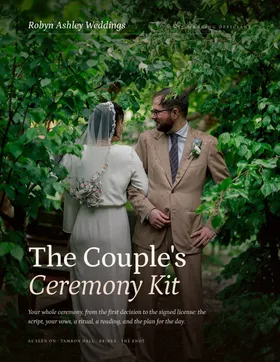
Walk in with a ceremony that sounds like the two of you
This post covers one part of the ceremony, and the Couple’s Ceremony Kit covers the rest, with five full scripts to start from and the prompts I use to help couples write their vows.
- Five full ceremony scripts in five different styles
- The Story Mine, thirty prompts for writing your vows
- Sixteen unity rituals, with the words and what to gather
- Thirty readings, each with my notes on when it fits
CEREMONY
Caribbean Wedding Traditions Worth Keeping
A couple sat in my office in Crown Heights, both second-generation, one side Guyanese and one side Trinidadian, and the bride said, "We want it to feel Caribbean, but we don't.
READ →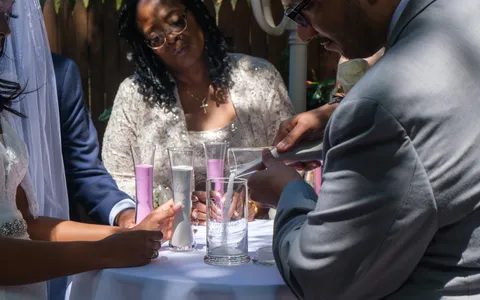
CEREMONY
What Is a Unity Ceremony? The Complete Guide
What a unity ceremony is, where it fits in your wedding, and how to choose the right ritual, from an officiant who's performed them at 300+ weddings.
READ →
CEREMONY
African Wedding Traditions, Explained With Respect
African wedding traditions by people and region: the Akan knocking, the Yoruba engagement, the Igbo kola and wine-carrying, libation, aso ebi and the broom, with how to include one or two without flattening them.
READ →