CEREMONY SCRIPTS
How to Write a Wedding Ceremony (With the Structure Pros Use)
A blank page is the scariest part of officiating. Here's the proven ceremony structure that takes you from dread to a finished draft in one sitting.
The fear is always the same: “I have to write a whole wedding ceremony, and I have no idea what to even say.” It feels like staring at a blank page until words appear by magic.
They won’t, and they don’t have to. A ceremony isn’t a blank page. It’s a structure you fill in. Once you see the skeleton, the writing turns from invention into arrangement, and that’s a job anyone can do well. I’ve watched people who’d never written a thing produce a ceremony that sounded like the couple by following the bones.
Here are the bones.
The structure that works every time
Write your ceremony in this order and it will flow:
The order of a ceremony
-
Welcome and opening
Bring everyone into the moment, set the tone.
-
The couple's story
The personal heart of the whole thing.
-
A reading
Optional
A poem, passage, or lyric that fits them.
-
The declaration of intent
The “Do you take…” and the “I do.”
-
The vows
Traditional, personal, or both.
-
The ring exchange
With the wording written out.
-
The pronouncement
The customary “I now pronounce you…”
-
The kiss
And the recessional.
Two of those are non-negotiable: the declaration of intent, which is the part the law requires in most states, and the pronouncement that closes it. Write them word for word and never improvise them. Everything else is yours to shape.
The one section that makes it personal
Number two, the couple’s story, is where a friend or family member beats any hired professional. You don’t have to research what a stranger would dig for. You already lived it.
This is the part to spend your real effort on. How they met. The moment it got serious. The small, specific, true detail that makes people smile because it’s so them. Specifics are everything here. “They love each other very much” says nothing. Compare it with a line like this one:
“He learned to make her grandmother’s curry so she’d have a taste of home on hard days”
That one says everything, and it’s a single true detail.
How long the whole thing should be
Aim for fifteen to twenty minutes. That’s the consensus among working officiants, and it tracks with how guests actually behave: attention drops off noticeably after about twenty minutes (American Marriage Ministries). Written vows work best at around 200 to 300 words each.
| Part | Target |
|---|---|
| Whole ceremony | Fifteen to twenty minutes |
| The couple’s story | Three or four minutes |
| Written vows | 200 to 300 words each |
If your draft runs long, cut the sentences that don’t add to the tone or the feeling. A tight ceremony respects everyone in the room, including the couple.
The rookie mistakes to skip
Three traps catch almost every first-timer:
- Opening with a definition. “Marriage is the union of two people who…” is how a thousand forgettable ceremonies begin. Open with the couple instead.
- Writing for the internet, not the couple. You’re talking to the people in those chairs, about the two people in front of you. Keep it that intimate.
- Over-sharing for a laugh. A joke that reveals too much, or that the couple hasn’t approved, can sour a moment fast. Get any humor cleared beforehand.
You catch all three the same way, by reading the draft out loud before the day.
If the blank page still scares you
Plenty of people would rather start from something than from nothing, and there’s no shame in that. The Officiant Kit includes eight full ceremony scripts across different styles (secular, religious, bilingual, blended-family) plus the vow prompts and customization cues. You swap in the couple’s details and the structure is already handled.
For more on the building blocks, see wedding ceremony readings, ring exchange wording, and a full wedding ceremony script you can adapt.
The bottom line
Writing a ceremony isn’t about being a writer. It’s about arranging a structure and telling one true story well. Follow the order, make the couple’s story specific, keep it tight, and read it out loud. Do that and you’ll write something only you could have written.
The Officiant Kit
What to say when the ring goes missing, the mic dies or you blank on a name
This post gets you through one part of the ceremony, and the Officiant Kit covers what surrounds it, from the weeks before and the rehearsal to what you do when something goes wrong in front of everyone.
- Eight full ceremony scripts, with names you type once
- The Story Builder, seven steps to the couple’s story
- The Rehearsal Run Sheet, a cue sheet and four pocket cards
- A marriage license reference for all fifty states
CEREMONY SCRIPTS
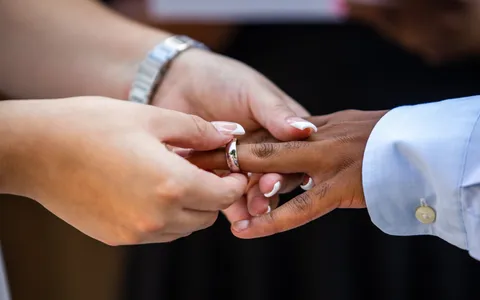
Ring Exchange Wording
A groom once handed me both rings before the ceremony with the kind of relief you give someone holding your wallet at the beach. Twenty minutes later, mid-vow, his hands were.
READ →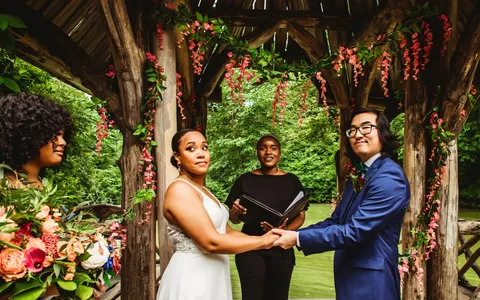
CEREMONY SCRIPTS
DIY Wedding Ceremony: A Full Template You Can Actually Use
Two summers ago I sat in the third row at a friend-officiated wedding. The couple wanted me there as a guest, not a vendor, so I left the clipboard at home. The best man stood up,.
READ →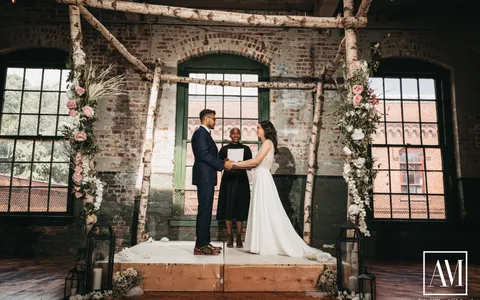
CEREMONY SCRIPTS
A Complete Wedding Ceremony Script You Can Actually Use (2026)
A full wedding ceremony script you can read or adapt, with the legal wording included and an officiant's notes on where to slow down and look up.
READ →