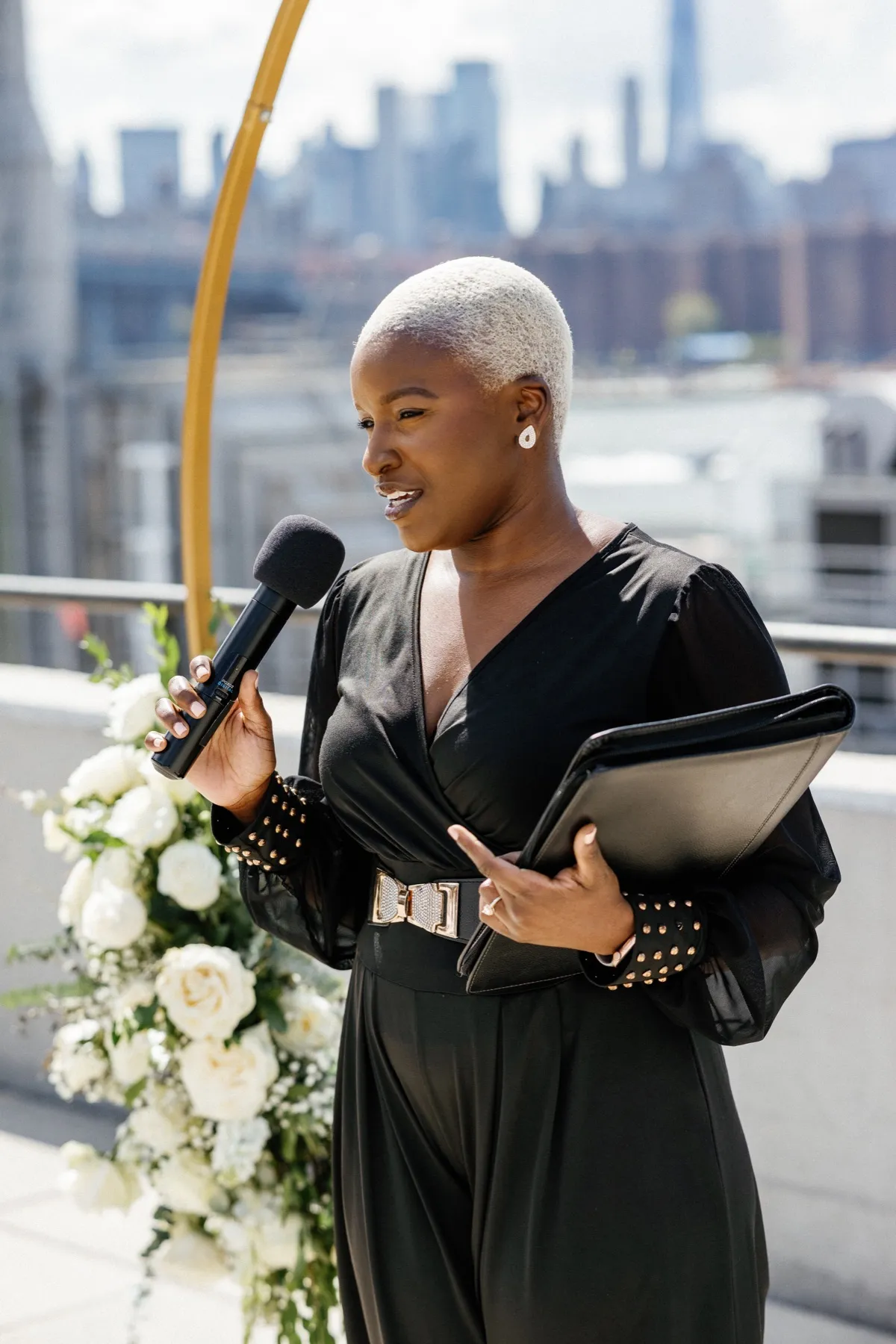
OFFICIANT
How to Officiate a Wedding: A First-Timer's Step-by-Step Guide (2026)
How to officiate a wedding when you've never done it before, from someone who's coached a lot of nervous first-timers through their first ceremony.
Someone you love asked you to marry them. Their actual wedding, in front of everyone, with you at the front of the room. After the rush of being honored wears off, the panic sets in: you’ve never done this, and you have no idea where to start.
Here’s the thing I tell every first-timer I coach: officiating is not a talent you’re born with. It’s a skill with a fixed playbook, and a calm, prepared beginner beats a winging-it natural every single time. The people who stumble aren’t the shy ones. They’re the ones who didn’t prepare.
This is that playbook, in order.
Six steps get you from “I said yes” to a signed license, and I’ll take them in the order you’ll actually do them.
Step 1: Get legally ordained
In most U.S. states, you need some form of legal authority to perform a marriage, and for a friend that usually means online ordination, which is free and takes a few minutes.
Two organizations handle almost all of it:
- American Marriage Ministries (AMM): free, fast, with genuinely useful state-by-state legal guides
- Universal Life Church (ULC): the original online ministry, also free
Sign up with one, save the certificate the same day, and you’re ordained. The part everyone fears is the part that takes five minutes.
New York is the exception I plan around, because it’s where I work. New York courts have voided marriages performed by online-ordained ministers, so for a one-time favor the safer route is a one-day marriage officiant license. Any adult 18 or older can get one, you don’t have to live in New York, and you apply to the same clerk’s office that issued the couple’s license, after they have it and before the ceremony (N.Y. Domestic Relations Law 11-d).
| Route | Cost | Good for |
|---|---|---|
| Ordination | Free | Most states |
| NY one-day | $25 | One NY couple |
| NYC registration | $15 | Ordained, in NYC |
That last row matters if you’re ordained and the wedding is in the five boroughs: New York City asks officiants to register with the City Clerk before they perform a ceremony there, and one-day officiants are exempt (NYC Office of the City Clerk).
Step 2: Confirm the local rules (don’t skip this)
This is where first-timers actually get burned, not at the microphone. Marriage law is local, so the rule that’s fine in one county can be a problem in the next.
Have the couple, or you, call the county clerk where the wedding is happening and ask plainly:
“I’m an online-ordained officiant. What do you need from me?”
Some places want nothing but the signed license back. Others ask you to register or show your ordination first. In New York City specifically, the rules are their own animal, which I cover in the one-day officiant license guide.
One call settles it, and it prevents the only mistake on this whole list that can’t be fixed after the fact.
Step 3: Write the ceremony
Now the part that feels impossible and isn’t. A wedding ceremony has a natural skeleton. Follow it and you genuinely cannot go far wrong:
The ceremony, in order
-
Welcome and opening
Greet everyone and set the tone in the first thirty seconds.
-
The couple's story
3 to 4 minutes
How they met, why they work, the detail only someone who knows them would have.
-
Readings
A poem, a passage, a few lines from a song that matters.
-
The vows
The heart of it.
-
Ring exchange
With the wording written out, word for word.
-
The declaration and pronouncement
The legal declaration and its customary close, said clearly.
-
The kiss
And breathe, you did it.
The part you can do better than any hired professional is number two. You already have the stories. Lean into those and let a script carry the legal bits. If you want the full how-to, I broke it down in how to write a ceremony and laid out the timing in wedding ceremony order.
Step 4: Format your script so you can’t lose your place
This sounds small. It’s the difference between smooth and a story people tell for years.
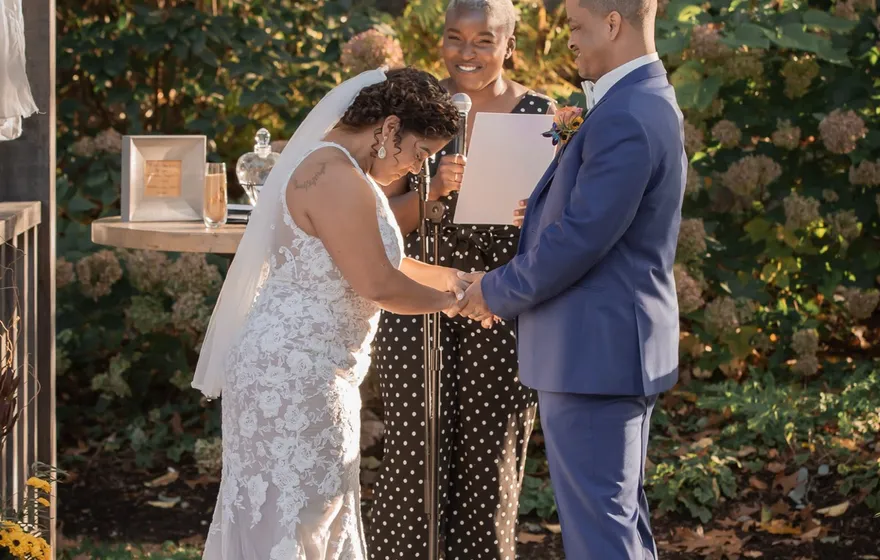
A real one made the rounds recently: an officiant skipped the ring exchange entirely because it was sitting alone on its own page of his notes, and he flipped right past it. Nobody noticed until the couple was already walking back up the aisle (People / AOL). It worked out, they danced their way back and did the rings, but you don’t want your ceremony going viral for that reason.
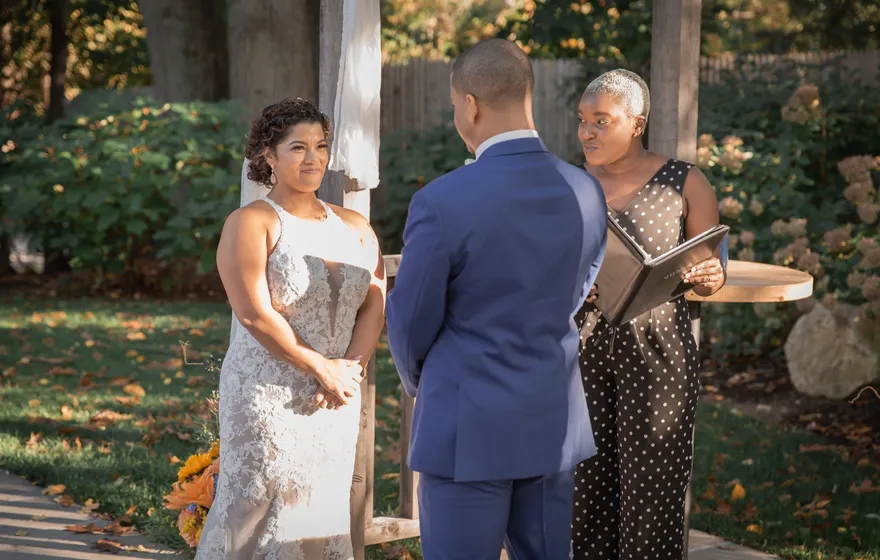
So format defensively:
- Print in large type (most pros use 16-point) with short lines and bolded names
- Never let a key moment, especially the ring exchange, fall alone at a page break. Keep it mid-page.
- Use a binder or folder, not your phone. If rain is possible, slide each page into a sleeve.
One more habit costs nothing and pays off the moment your nerves kick in.
Step 5: Rehearse out loud, with a timer
Reading silently doesn’t count. Say it out loud, standing up, at least a few times, and time it. You’ll catch the tongue-twisters, the spots where you rush, and the true length (always longer than you think).
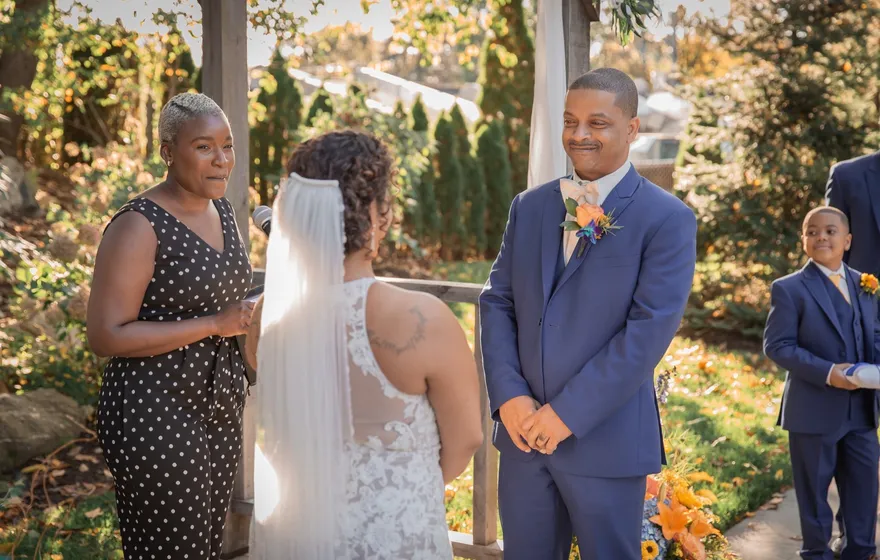
A few things nobody warns you about:
- The microphone look-down problem. When you read down at the page, your mouth is close to the mic; when you look up at the couple, it’s far away, so your volume swings. Do your sound check while looking down at your script, not just saying “testing” into the air.
- Aim to look up most of the time. Eye contact with the couple, not your binder, is what guests remember.
- Slow down past the point that feels natural. Nerves speed everyone up.
If the venue has a microphone, ask to try it at the rehearsal so the sound check isn’t happening in front of the guests.
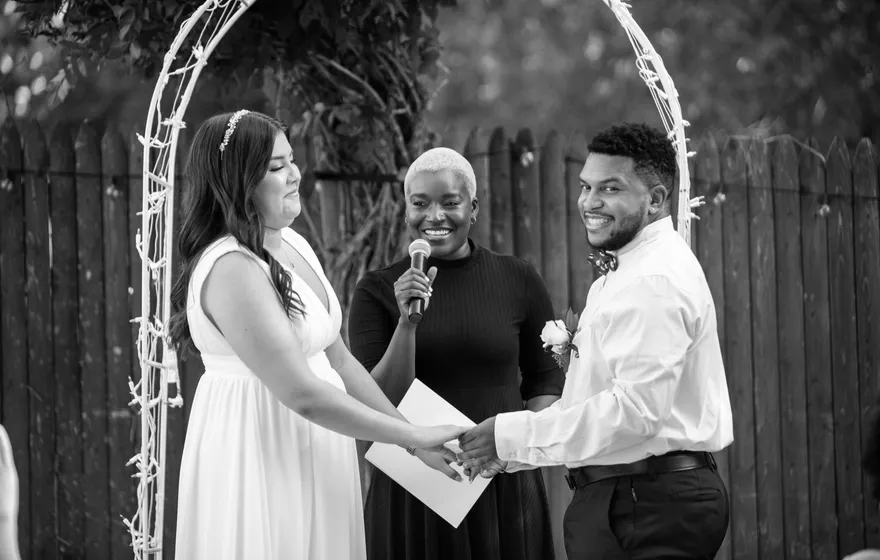
Step 6: Handle the license like it’s the only thing that matters
Because legally, it kind of is. After the ceremony:
- Sign it right then. Not at the reception, not tomorrow.
- Check every field before it goes anywhere: names spelled right, date correct, every signature in the right box.
- File it with the county clerk inside the deadline, often just a few days (in New York, five). A missed deadline or a misspelling can mean the marriage isn’t legally recorded, and those stories are real.
Get this right and the legal side disappears, exactly as it should.
Your day-of safety net
Here’s what I hand every first-timer so they’re not holding their phone at the altar: my free guide, Ready to Officiate, with the ceremony in order, your cue lines, the license steps, and what to say when something goes sideways. It ends with a pocket card you cut out and keep on you on the day. Two companion reads when you get there: the full wedding officiant checklist for everything before the day, and the officiant speech for the words between the legal lines.
If you want the whole system, the Officiant Kit has eight full ceremony scripts, a legal guide so the paperwork part is handled, and the day-of tools. It’s built for exactly this: a person who loves their friends and has never done this before. Give it to yourself the day you say yes.
Still at the very first step? I go deeper on how to get ordained online and whether you even need an officiant at all.
The bottom line
Officiating a wedding is a privilege and a job, and the job is learnable. Get ordained, confirm the local rules, write something true, format it so you can’t lose your place, rehearse out loud, and guard the license. Do that, and you’ll walk up there prepared, on time, and sounding like yourself.
You’ve got this.
The Officiant Kit
What to say when the ring goes missing, the mic dies or you blank on a name
This post gets you through one part of the ceremony, and the Officiant Kit covers what surrounds it, from the weeks before and the rehearsal to what you do when something goes wrong in front of everyone.
- Eight full ceremony scripts, with names you type once
- The Story Builder, seven steps to the couple’s story
- The Rehearsal Run Sheet, a cue sheet and four pocket cards
- A marriage license reference for all fifty states
OFFICIANT
The One-Day Officiant License in NYC: How It Actually Works (2026)
NYC has two ways to legally officiate a wedding, and most articles confuse them. Here's the one-day license, the full registration, and which is yours.
READ →
OFFICIANT
Can a Friend Officiate Your Wedding? The Honest Guide (2026)
How to have a friend legally officiate your wedding, write the ceremony, and avoid the one mistake that actually matters, from an NYC officiant who's seen it go both ways.
READ →
OFFICIANT
How to Get Ordained Online to Officiate a Wedding (2026)
How to get ordained online for free with AMM or the ULC, why the county clerk decides whether it counts, which states require registration, and how to sign and return the license correctly.
READ →