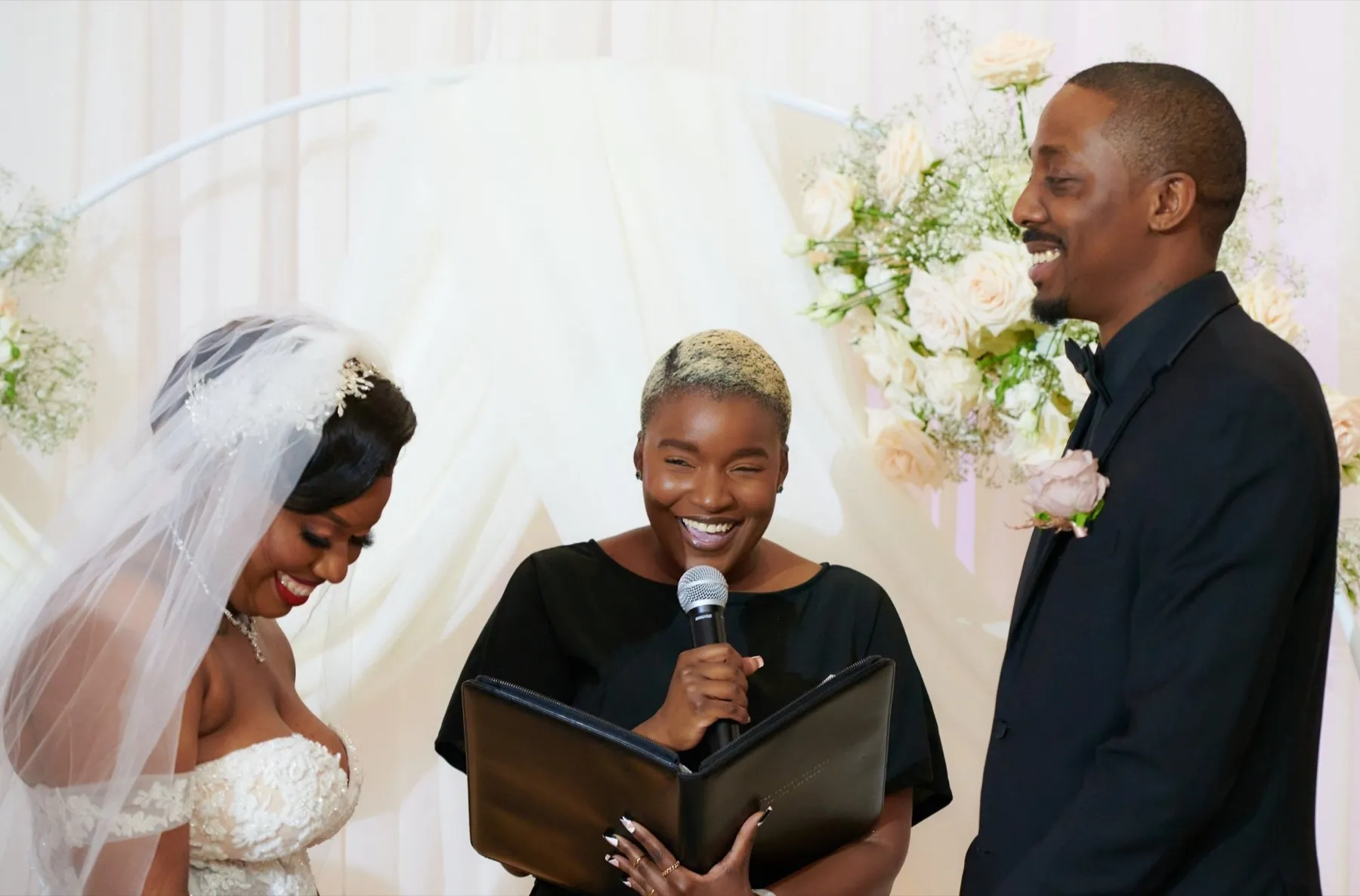
OFFICIANT
Wedding Officiant Speech
How to write a wedding officiant speech that wins the room: opening lines, the couple's story, what to cut, timing, and a full free sample address.
The groom’s college roommate stood at the front of a Brooklyn rooftop with eight pages of single-sided printer paper in his hands, and the wind took page three right off the edge of the building. He froze. The room laughed, which saved him, but I was two rows back coaching him with my eyes, and what I wanted to tell him was a lot simpler than anything on those eight pages.
You don’t need eight pages. You need to know how the thing actually works.
I officiate weddings in New York, and a good chunk of my week goes to talking nervous best friends and big sisters off the ledge after they got handed this job. Nobody warns you about the trap when you say yes to officiating. The speech isn’t really a speech. It’s the structure holding the whole ceremony up, and it lives or dies in about three moments.
CHAPTER 01
What is a wedding officiant speech, actually?
The officiant’s address is three different jobs wearing one hat. First, crowd-wrangling: the opening that pulls a distracted, phone-checking room into the moment. Second, storytelling: the couple’s-story section that has to stay tight or it sags. Third, traffic-directing: cueing the vows, the rings, the kiss, and the pronouncement so the whole thing moves instead of stalling.
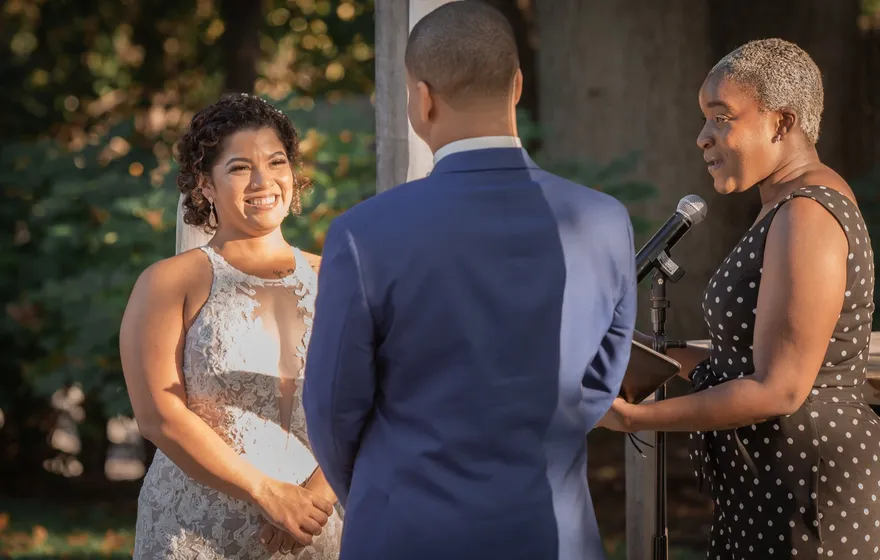
First-timers fail the same way every time. They pour everything into the story and forget the cues. They write three pages about how the couple met and zero words about telling the guests to sit down. Then they’re up there improvising the parts that should have been on autopilot.
So I coach it backwards from how everyone wants to do it. Write the mechanical cues first. Write the story last. The story is the fun part, which means it’s the part you’ll over-build, and it’s the easiest thing to trim on the day. The cues are the part where, if you blow them, the marriage doesn’t legally happen.
If this is your first time and you want the full picture of the role beyond the speech, start with how to officiate a wedding, which walks the whole arc from getting ordained to the pronouncement. This post zooms in on the part you actually say out loud.
CHAPTER 02
How long should the officiant speech be?
Here’s the math I give every first-timer, because “however long feels right” is how you end up with a forty-minute ceremony on a hot rooftop.
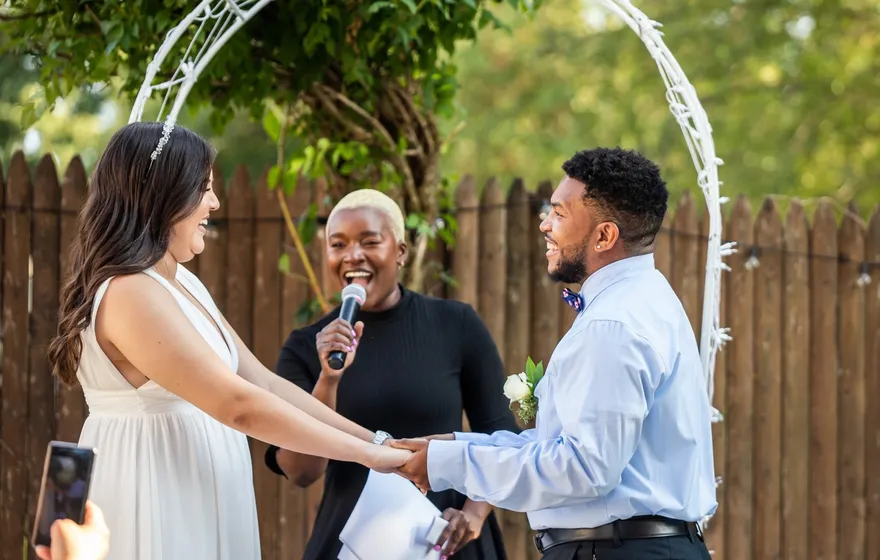
The whole ceremony runs about twenty to twenty-five minutes with no extras, or twenty-five to thirty if you add a unity ritual like a candle or a wine box. Your actual spoken portions, all of them added together, total roughly ten to fifteen minutes. That’s it. You’re not the headliner.
Inside that, the opening welcome and the couple’s story are the two hard limits. Here’s how the time breaks down:
| Part of the ceremony | How long |
|---|---|
| The opening welcome | One to three minutes, max (All Faith Ministry) |
| The couple’s-story section | Under five minutes (All Faith Ministry) |
| All your spoken parts, added together | About ten to fifteen minutes |
| The whole ceremony, no extras | About twenty to twenty-five minutes |
| The whole ceremony with a unity ritual | About twenty-five to thirty minutes |
The couple’s-story limit is the length rule everyone repeats, and it’s the exact spot where first-timers run long.
I want you to feel how short five minutes is when you read it out loud. It’s roughly 650 to 750 words. A page and a half. If your couple’s story is three pages, you don’t have a story, you have a chronology, and you need to cut.
CHAPTER 03
How do I open so the room actually stops talking?
This is the moment everyone underestimates. When you step up, half the guests are still finding their seats, somebody’s kid is melting down, and at least four people have their phones up filming the processional. Your opening has one job before anything else. Get the room to look at you.
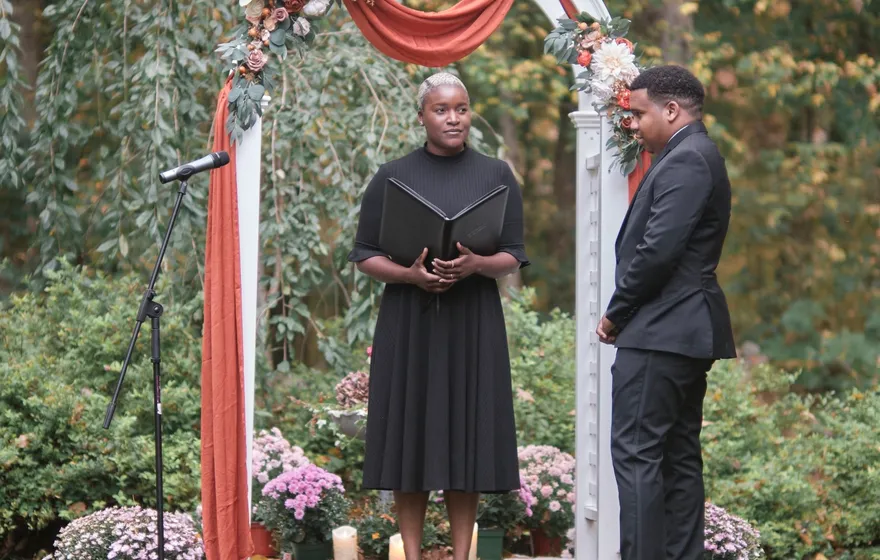
“Dearly beloved” doesn’t do it. It signals “generic ceremony, you can keep half-listening.” What works is to lead with one concrete, true detail from the couple’s story as your very first frame.
Something like this:
“We are here to celebrate a love story that started, of all places, over a shared and frankly indefensible love of bad sci-fi movies.”
The room’s attention snaps to the front, because in one sentence you’ve made the ceremony about them, the two specific people standing up here, and not about weddings in general.
There’s a second device I lean on, and it pulls double duty. The unplugged hook. You invite everyone to take one quick photo right now, then put the phones away and be fully present. It breaks the formal silence, gets the whole room looking at you instead of their screens, and quietly fixes the problem of forty guests blocking the professional photographer.
After your hook, your opening covers three quick beats and then gets out of the way:
The opening, after your hook
-
Greet and name
Welcome everyone, and name a few key family members, the parents especially. People feel seen when you say their names.
-
Introduce yourself in one line, then pivot off yourself
“I’m Marcus, and I’ve known the groom since we were both too broke to afford the dorm furniture.” Then go straight back to the couple. The opening is not about you.
-
Logistics
The phones request, and if anyone needs to be seated, now’s the time.
And please, somewhere in here, tell the guests to be seated. I have watched whole ceremonies where the guests stood the entire time because the officiant never said the words “please, take your seats”. It feels too obvious to script. Script it anyway.
CHAPTER 04
How do I tell the couple’s story without it dragging?
Your story drags because you’re telling it as a timeline. They met in 2019, moved in together in 2021, the dog came in 2022. Nobody at a wedding wants a résumé of a relationship.
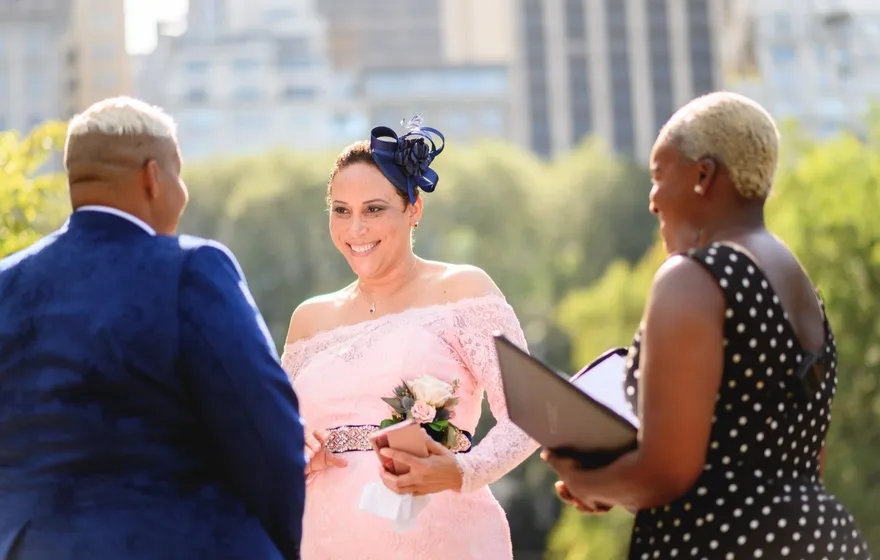
Build it on a story arc instead (American Marriage Ministries):
The story arc
-
Before
Who were they each, separately, before they met? One vivid line each.
-
The meeting
The moment it started. The night, the app, the mutual friend’s party. This is your scene.
-
The future
This is the beat first-timers skip, and it’s the one that pays off in the room. Before you move to the vows, you invite the guests to picture this couple’s future together. Their first cramped apartment, the holidays, the ordinary Tuesdays. That forward look is what makes someone in the third row reach for a tissue.
Pick two or three specific, true details and let the rest go. The texture lives in the specifics: the inside joke, the disastrous first date, the exact thing he said. Generalities like “they just complete each other” are where ceremonies go to die. If you’re starting from scratch on the story, how to write the ceremony goes deeper on pulling those details out of the couple without it turning into an interrogation.
CHAPTER 05
What can I cut when it’s running long?
Every ceremony I’ve ever timed in rehearsal ran long. The cut I make isn’t about importance. It’s about truth read aloud.
Your honest, plain sentence beats a famous poem that doesn’t sound like you.
The test for any reading, poem, or quote isn’t whether it’s famous. It’s whether it feels true when you say it out loud. If a borrowed passage sounds like a greeting card in your mouth, cut it, no matter how beloved it is. Your honest, plain sentence beats a famous poem that doesn’t sound like you.
So when you’re over time, here’s the order I cut in:
| Cut | What goes | Why |
|---|---|---|
| First | A second reading | One good one beats two okay ones. |
| Second | A long quote or poem | It doesn’t sound true in your voice. |
| Third | A unity ritual that’s there for tradition, not meaning | If nobody can tell you why the wine box matters to this couple, it’s a candle for the sake of a candle. |
What you never cut: the vows, the ring exchange, and the pronouncement. Those are the load-bearing walls. Everything else is negotiable.
CHAPTER 06
The full sample officiant address (steal this)
Here’s a complete, copy-ready address you can adapt. I’ve marked the cues in bold and the stage directions in italics. Swap in your couple’s real names and two or three true details, and you have a working ceremony.
Opening hook / unplugged request:
(Step up. Wait for the processional to fully settle. Make eye contact with the back row before you speak.)
“Good evening, everyone. Before we begin, do me one favor. Take one quick photo of these two right now.”
(Pause. Let them do it. This breaks the silence and gets the room looking forward.)
“Got it? Wonderful. Now put the phones away and just be here with us, because what happens in the next twenty minutes is better lived than filmed.”
Welcome and frame:
“We are here to celebrate a love story that began, of all places, [over a shared and indefensible love of bad horror movies]. I’m [Marcus], and I’ve known [Jordan] since [we were both too broke to afford real dorm furniture]. Friends, family, those who traveled across the country and those who walked down the block, welcome. [Couple], your parents are here, your people are here, and there is nowhere else any of us would rather be.”
Be seated:
“Please, take your seats.”
(Wait for everyone to actually sit. Do not rush this.)
The couple’s story (under five minutes):
“Before they met, [Jordan] was the kind of person who [made a five-year plan and color-coded it]. [Alex] was the kind of person who [had never once made a plan and somehow always came out fine]. And then one [rainy Tuesday in October], at [a party neither of them wanted to go to], they met. [Alex] said the wrong thing, [Jordan] laughed at the wrong moment, and something started that neither of them could plan their way out of.
What I love about these two is [how they make each other braver]. So I want all of you to do something. Close your eyes for a second and picture them five years from now. Picture the [tiny apartment], the [terrible Sunday-morning arguments about coffee], the ordinary Tuesdays that turn into a life. That future, the whole unwritten thing, is what we’re here to bless today.”
Transition to vows:
“[Jordan] and [Alex], you’ve each written words for the other. Whenever you’re ready.”
(Step half a pace back. This is their moment, not yours. Let the silence sit.)
Ring exchange:
“The rings you’re about to exchange are a circle, with no beginning and no end. [Jordan], take [Alex]‘s ring, and repeat after me: I give you this ring as a symbol of my love, and everything I have, and everything I am, is yours.”
(Repeat for the second partner. Watch their hands; cue them gently if they fumble.)
The pronouncement:
“By the power vested in me by [the State of New York], and by the love that brought every single person in this place here today, it is my absolute honor to pronounce you married.”
“You may kiss.”
(Step back, smile, and give them the moment.)
Print it in large type with the couple’s names in bold, then read the whole thing out loud twice before the rehearsal so you hear where you run out of breath.
CHAPTER 07
The first-timer mistakes that quietly wreck it
You’ve got the words. Now for the part that separates the friend who pulled it off from the friend everyone politely never mentions again.
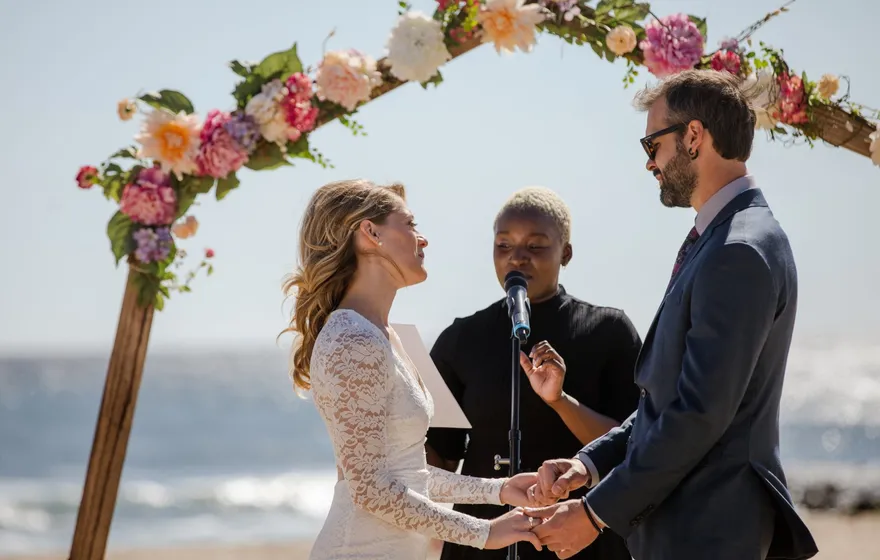
Reading versus memorizing. Read it. No one expects you to memorize a ceremony, and reading protects you from blanking when the emotion hits. The catch is how you carry it:
- Don’t use loose 8.5x11 printer paper, which is exactly what blew off that Brooklyn rooftop.
- Use note cards or a matte, dark-colored folder.
- Fit the whole script on about two pages so you never flip mid-vow.
- Skip white or glossy covers that catch the sun and the camera flash.
- Bring a backup print (American Marriage Ministries).
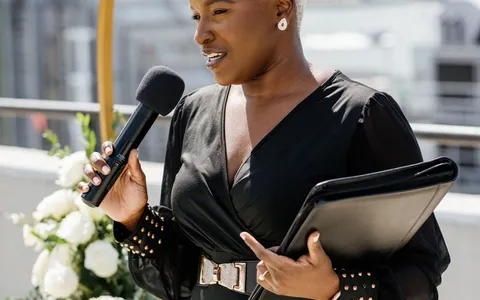
The mic. A handheld mic goes near your mouth, not your belly button, which is where nervous people let it drift. A lapel mic beats a handheld on a stand, because the stand blocks faces in every photo.
The reps. Read the whole thing out loud about twenty times before the day. Nothing builds confidence like being over-prepared, and you can’t wing timing. The pauses, the spots where you wait for a laugh, all of it gets built in practice.
The legal stuff that actually matters. Mispronouncing a name is the small disaster. Getting the license wrong is the big one. Signing without dating it, the wrong ink color, or any incorrect detail can get the whole license rejected. Confirm name pronunciation and full legal spelling with the couple before the day. A printable version of all of this lives in my officiant’s checklist so nothing falls through.
If you’re still mapping out the broader role, what a wedding officiant actually does covers the parts beyond the speech, and the friend-officiating playbook is written for exactly your situation: not a pro, just someone who loves these two and got asked.
ALSO READ How to Officiate a Wedding: A First-Timer's Step-by-Step Guide (2026)CHAPTER 08
A note on doing this for someone you love
If you got asked, you’re in good company. More couples ask a friend or family member to get ordained and marry them every year, a shift researchers have been tracking since online ordination took off (Secularism and Nonreligion). Couples are choosing the people who know them over a stranger in a robe, and they’re doing it on purpose.
That’s your real advantage. A pro can deliver a clean ceremony. You can deliver the one that only you could give, because you were there for the disastrous first date and the move-in and the dog. The structure, you can learn in an afternoon. The love is the part you already have.
CHAPTER 09
Want the version I actually work from?
Everything above is enough to write a good address. If you’d rather not build it from a blank page, the Officiant Kit is the whole system I hand the first-timers I coach: fill-in-the-blank script templates for every part of the ceremony, my opening lines that win the room, the timing notes, the license-and-legal walkthrough so you don’t get the marriage rejected on a technicality, and the delivery cues marked through every line.
It exists because I got tired of writing the same fourteen-paragraph email to every panicked best man. It’s $150, it’s yours forever, and it turns “I have no idea what I’m doing” into a two-page script you can read with your hands steady.
If you just want a head start, grab my free guide, Ready to Officiate. It has the structure above in order with your cue lines, plus a pocket card you cut out, fold, and pull out at the rehearsal.
CHAPTER 10
Frequently asked questions
How long should a wedding officiant speech be?
The officiant’s spoken portions across the whole ceremony usually total ten to fifteen minutes. Inside that, keep the opening welcome to one to three minutes and the couple’s-story section under five. The full ceremony runs around twenty to twenty-five minutes with no extras, or twenty-five to thirty if you add a unity ritual.
What should an officiant say to open the ceremony?
Open by pulling the room into the moment, not with “Dearly beloved.” Lead with one concrete, true detail from the couple’s story as your frame. Greet the guests, name a few key family members, introduce yourself in a single line, then pivot straight to the couple and handle the phones request.
How do I tell the couple’s story without it dragging?
Put it on an arc instead of a timeline: who they each were before they met, the moment they met, then an invitation for guests to picture their future together. Pick two or three specific true details over a full history, and time it out loud with a stopwatch. It always runs longer spoken than it reads on the page.
What can I cut to keep the ceremony from running long?
Cut borrowed words that don’t sound true in your own voice. The test for any reading isn’t whether it’s famous, it’s whether it feels true when you say it out loud. Trim a second reading, a long quote, or a ritual that’s there for tradition rather than meaning. Protect the vows, rings, and pronouncement.
I’ve never officiated before. What’s the one thing most first-timers get wrong?
They over-invest in the story and under-prepare the cues. Write the mechanical cues first (be seated, vows, rings, the kiss, the pronouncement), then the story last. Read the whole thing out loud about twenty times, confirm name pronunciation and the legal spelling on the license, and remember to tell guests to sit down after the processional.
Should I read from paper or memorize the officiant speech?
Read it. No one expects you to memorize a ceremony, and reading protects you from blanking. Just don’t carry loose printer paper. Use note cards or a matte dark folder, keep the whole script to about two pages so you never flip mid-vow, bring a backup print, and if you’re outdoors, plan for wind.
The Officiant Kit
What to say when the ring goes missing, the mic dies or you blank on a name
This post gets you through one part of the ceremony, and the Officiant Kit covers what surrounds it, from the weeks before and the rehearsal to what you do when something goes wrong in front of everyone.
- Eight full ceremony scripts, with names you type once
- The Story Builder, seven steps to the couple’s story
- The Rehearsal Run Sheet, a cue sheet and four pocket cards
- A marriage license reference for all fifty states
OFFICIANT
How to Officiate a Wedding: A First-Timer's Step-by-Step Guide (2026)
How to officiate a wedding when you've never done it before, from someone who's coached a lot of nervous first-timers through their first ceremony.
READ →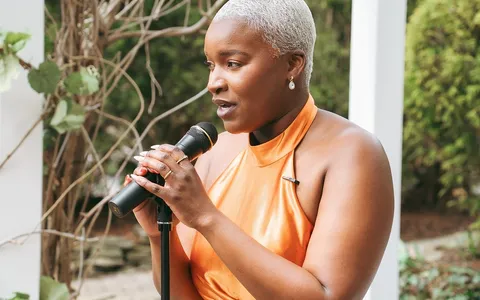
OFFICIANT
The One-Day Officiant License in NYC: How It Actually Works (2026)
NYC has two ways to legally officiate a wedding, and most articles confuse them. Here's the one-day license, the full registration, and which is yours.
READ →
OFFICIANT
Can a Friend Officiate Your Wedding? The Honest Guide (2026)
How to have a friend legally officiate your wedding, write the ceremony, and avoid the one mistake that actually matters, from an NYC officiant who's seen it go both ways.
READ →