CEREMONY
Jumping the Broom: The History, the Meaning, and How to Honor It
Jumping the broom, explained by a Black NYC officiant: the real history, what it symbolizes, how to do the jump, and how to honor the tradition with weight.
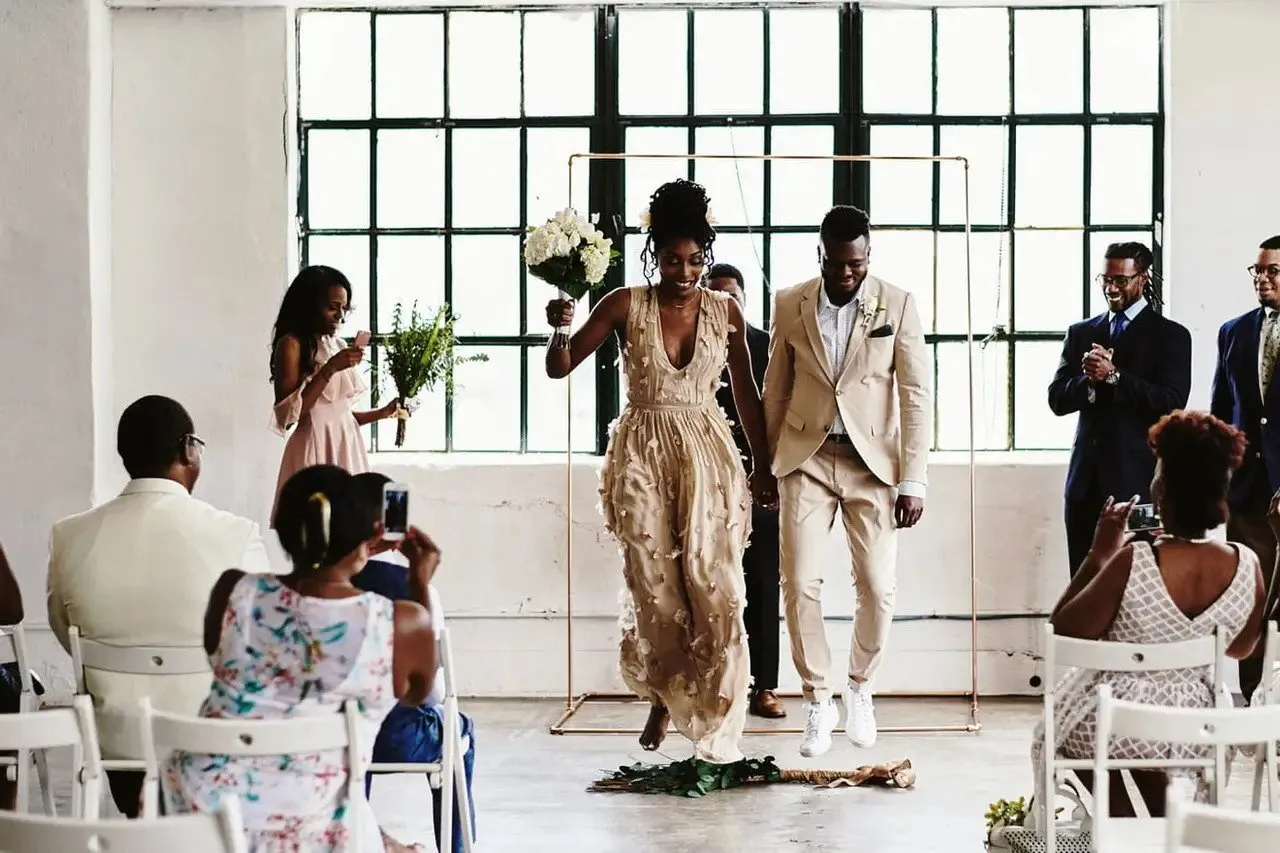
1, 2, 3… jump.
I’ve said those words at the close of many ceremonies, and the broom jump hits differently every time. It’s joyful and loud, the whole room counting along, but underneath the joy is something heavier and more beautiful. As a Black officiant, this is the ritual I carry the most care for, because the history behind it deserves to be told with weight, not flattened into a cute Pinterest moment.
So here’s the real story, what it means, and how to honor it well on your day.
What is jumping the broom?
Jumping the broom is a wedding ritual where the couple jumps together over a broom laid on the ground, usually at the very end of the ceremony, to mark their crossing into married life. The broom sweeps away the old and welcomes the new home they’re building.
For many Black couples it carries more than that. It’s a link between past and present, a way to honor ancestors and to stand in their own strength as a new family.
The history, told straight
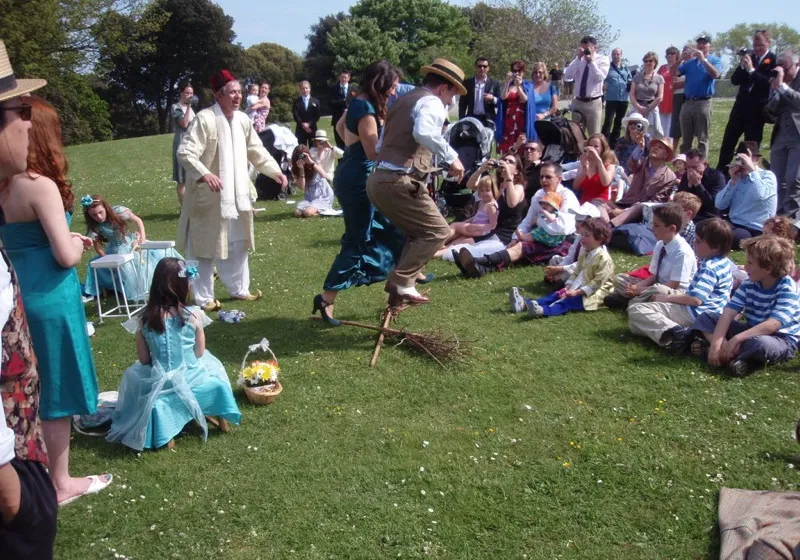
The ritual is most clearly documented as a marriage ceremony among enslaved African Americans in the US South in the 1840s and 1850s, who were legally barred from marrying. They created their own public ceremonies, and jumping the broom became one of the most common ways a couple declared, before witnesses, that they were as married as the law would ever let them be (African American Registry).
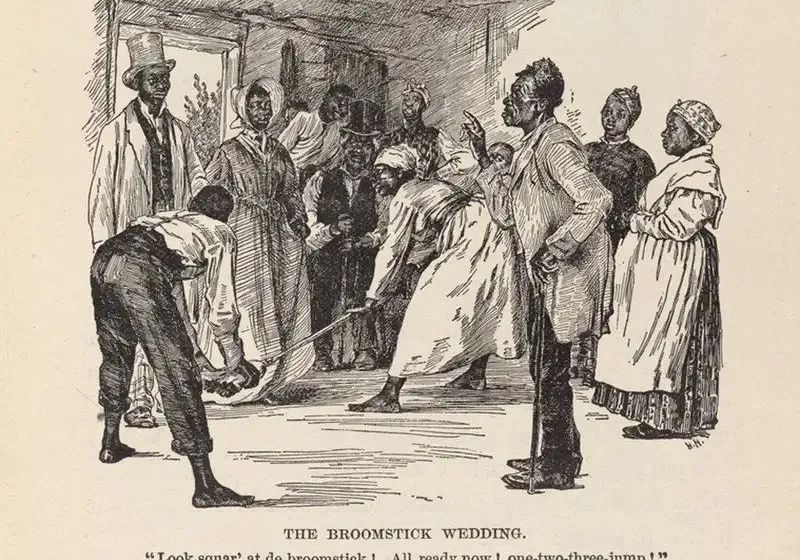
The deeper origins are genuinely debated, and I’d rather tell you that than pretend it’s settled. Historian Tyler D. Parry, who wrote the book on it, traces strong parallels to broomstick weddings among marginalized communities in the British Isles, including Romani and rural Welsh groups, and argues the enslaved community’s ritual has more in common with those than with a specific West African source, despite the West African custom of waving brooms that’s often cited (AAIHS). The honest version is that it’s a tradition with tangled, multicultural roots that Black Americans made unmistakably their own.
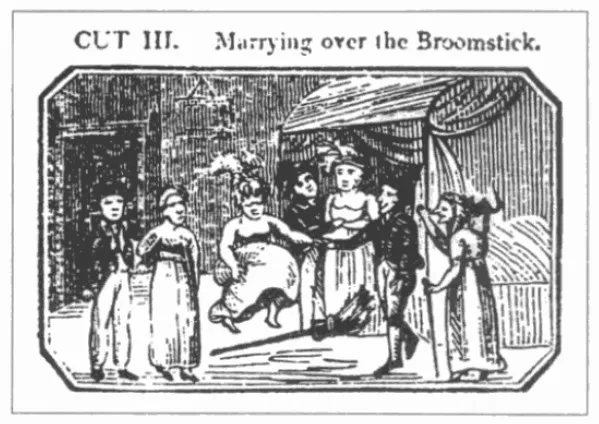
After emancipation, when legal marriage was finally available, many families set the broom down; for some it carried the sting of that era. It came roaring back in the 1970s after the novel and miniseries Roots, and Harriette Cole’s 1993 book Jumping the Broom carried it further into mainstream Black weddings (Wikipedia).
What the broom symbolizes
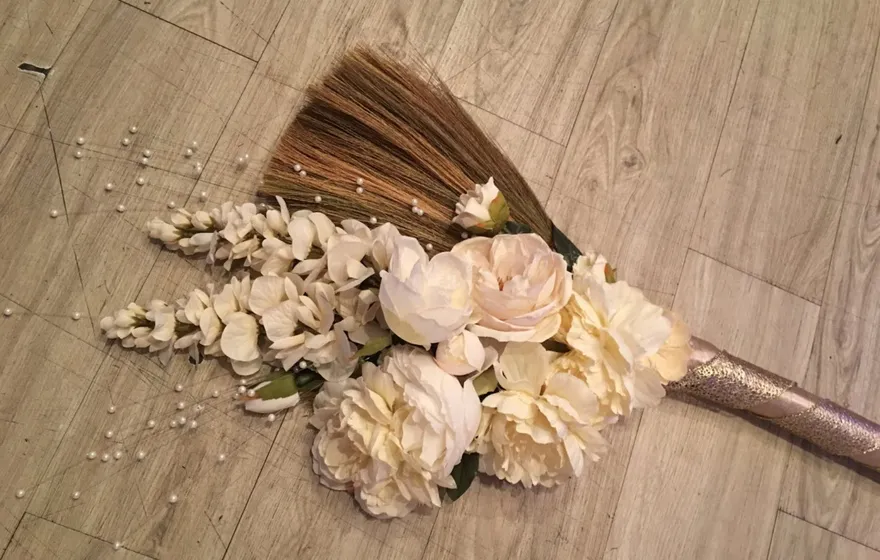
The broom is usually wooden, shorter than a household one (about three feet), and decorated. Each part can carry meaning.
| Part of the broom | What it can stand for |
|---|---|
| The handle | The strong center that holds everything together |
| The bristles | Your community, each strand adding to your strength as a couple |
| The ribbons | Two lives and two families bound together; white is a common choice for purity |
| Charms, beads and flowers | The values you’re building on, or simply the people and places that matter to you |
How to include it in your ceremony
The jump comes at the very end, after the vows, the rings, and the pronouncement. It’s the exclamation point.
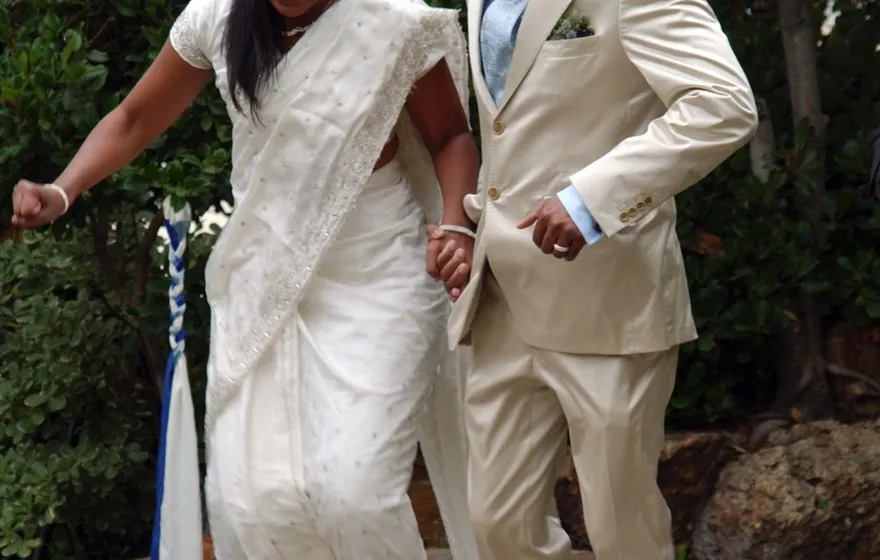
The jump itself is simple, but the order matters:
How the jump runs
-
Explain the tradition
The officiant explains the tradition to guests, so the room understands the weight of what they’re watching.
-
Lay the broom down
Someone (the officiant, a parent, a close friend) lays the broom on the ground in front of the couple.
-
Join hands and jump
The couple joins hands, and on the count, they jump together into married life.
When it’s time, I give the count out loud so the whole room can count along with us:
“1, 2, 3... jump.”
Most couples today jump together holding hands. Some traditions had partners jump in sequence; there’s no single rule. Do what feels right to you.
Make the broom yours
Source a broom that can become an heirloom. Many couples:
- Wrap the handle in ribbon in their wedding colors
- Add feathers or charms with personal meaning
- Engrave their names and date
After the wedding, it doesn’t go in a closet; couples display it at home or pass it down to the next generation.
Honor it with intention
If jumping the broom isn’t part of your own heritage and you’re drawn to it, that’s a conversation worth having with care. The most respectful versions I’ve seen name the history out loud during the ceremony rather than treating the broom as decor. The meaning is the point. Skip the meaning and you’ve skipped the ritual.
Plan your ceremony
If you want the broom-jump wording, plus scripts for the other rituals you might pair it with, the Couple’s Ceremony Kit has the full set. For other culturally-rooted rituals, see the lasso ceremony, and the full unity ceremony ideas guide, and if culture and inclusion are central to your day, my notes on LGBTQ+ weddings and interfaith ceremonies may help too.
And if you are tracing where the broom sits in the wider story, see my guides to Black, African, Jamaican, and Caribbean wedding traditions.
Frequently asked questions
When do you jump the broom?
At the very end, after the pronouncement.
Who places the broom?
Usually the officiant, but any meaningful person can.
Do you jump together or in turn?
Most jump together holding hands; both are valid.
What happens to the broom after?
You keep it, displayed at home or passed down.
The Couple’s Ceremony Kit
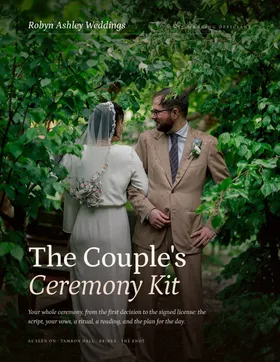
Walk in with a ceremony that sounds like the two of you
This post covers one part of the ceremony, and the Couple’s Ceremony Kit covers the rest, with five full scripts to start from and the prompts I use to help couples write their vows.
- Five full ceremony scripts in five different styles
- The Story Mine, thirty prompts for writing your vows
- Sixteen unity rituals, with the words and what to gather
- Thirty readings, each with my notes on when it fits
CEREMONY
Caribbean Wedding Traditions Worth Keeping
A couple sat in my office in Crown Heights, both second-generation, one side Guyanese and one side Trinidadian, and the bride said, "We want it to feel Caribbean, but we don't.
READ →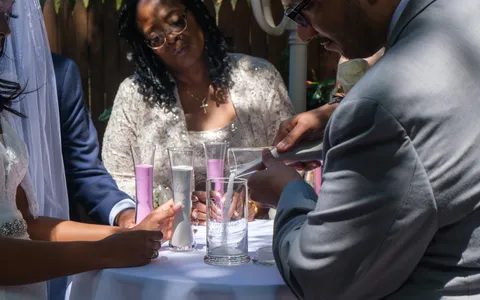
CEREMONY
What Is a Unity Ceremony? The Complete Guide
What a unity ceremony is, where it fits in your wedding, and how to choose the right ritual, from an officiant who's performed them at 300+ weddings.
READ →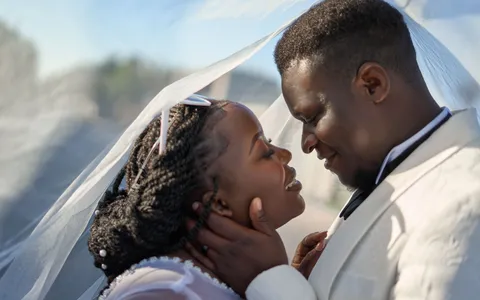
CEREMONY
African Wedding Traditions, Explained With Respect
African wedding traditions by people and region: the Akan knocking, the Yoruba engagement, the Igbo kola and wine-carrying, libation, aso ebi and the broom, with how to include one or two without flattening them.
READ →