CEREMONY
23 Unity Ceremony Ideas, Ranked by an Officiant Who's Performed Them All
Every unity ceremony idea worth considering, ranked and explained by an officiant who's performed them at 300+ weddings, with a compare-at-a-glance table and how to choose yours.
The unity ceremony is the moment that catches people off guard. Guests who were checking their phones during the readings suddenly look up. The couple’s hands start shaking. Someone in the front row reaches for a tissue.
I’ve performed a lot of these at NYC weddings, from the four classics to one-of-a-kind rituals couples dreamed up themselves, and I can tell you the magic has almost nothing to do with which one you pick. It has everything to do with whether it actually means something to you.
So this isn’t a list of pretty options. It’s a ranked, honest guide to every unity ceremony worth considering: what each one means, who it’s right for, and where it goes wrong. There’s a compare-at-a-glance table up top so you can find yours fast, then the detail underneath.
What is a unity ceremony?
A unity ceremony is a symbolic ritual performed during your wedding, usually right after the vows and before the pronouncement, where you do one thing together to represent two lives becoming one. You’ve said the words. Now you’re making them visible.
The idea is ancient. Celtic couples bound their hands with cord. Hindu couples circle a sacred fire. Jewish couples share wine and break a glass. African American couples jump the broom. Every culture found a way to turn a spoken promise into something the room can actually see. Modern couples have only widened the menu: sand, candles, trees, whiskey, paint, puzzles, padlocks.
Compare every unity ceremony at a glance
Here’s the fast version. Skim for what fits your wedding, then read the detail below.
| Unity Ceremony | Best For | Indoor / Outdoor | Keepsake? | Kids Can Join | Time |
|---|---|---|---|---|---|
| Sand ceremony | Outdoor, blended families, beach | Both | Yes (vase) | Yes | 3–5 min |
| Unity candle | Traditional, indoor, religious | Indoor | Yes (candle) | Hard | 3–5 min |
| Handfasting | Celtic, nature, symbolism lovers | Both | Yes (cord) | No | 5–8 min |
| Jumping the broom | Honoring Black heritage | Both | Yes (broom) | No | 2–3 min |
| Wine / whiskey box | Sentimental, foodie, anniversary | Both | Yes (box) | No | 4–6 min |
| Tree planting | Eco-minded, garden weddings | Outdoor | Yes (tree) | Yes | 4–6 min |
| Love lock | Modern, elopements, destination | Both | Yes (lock) | No | 2–3 min |
| Paint / canvas pour | Creative couples, artists | Both | Yes (canvas) | Yes | 4–6 min |
| Puzzle piece | Blended families, playful couples | Both | Yes (puzzle) | Yes | 3–5 min |
| Ring warming | Small, intimate, spiritual | Both | No | Yes | 5–10 min |
| Lasso (el lazo) | Catholic, Latin/Hispanic | Both | No | No | 3–5 min |
| Wine sharing / Kiddush | Religious, classic | Both | No | No | 2–4 min |
How to choose yours in four questions
Before the list pulls you in twelve directions, narrow it fast. I ask every couple the same four things.
- Indoors or outdoors? Open flame and wind are enemies. If you’re outside, skip the unity candle and go sand, handfasting, tree, or broom. I’ve watched too many outdoor candle ceremonies turn into a relighting comedy.
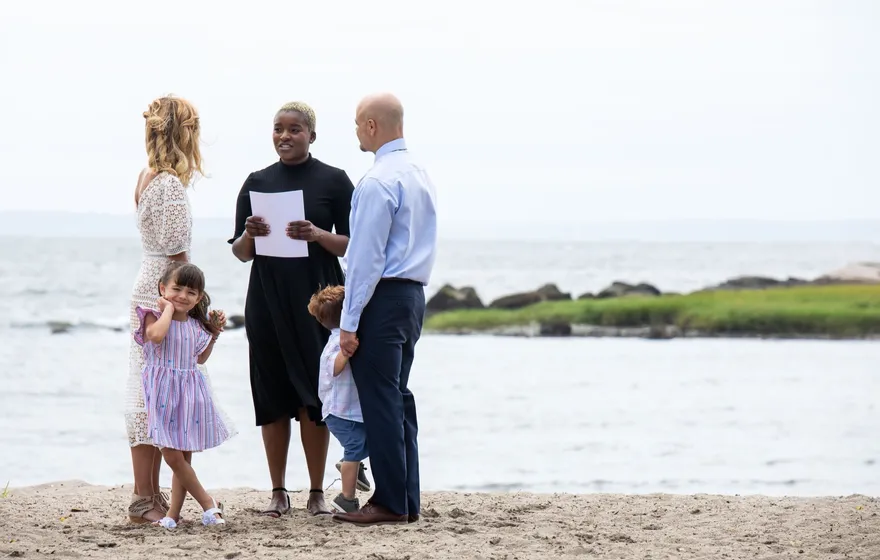
- Just the two of you, or family too? If kids are part of this, sand, tree planting, and puzzle ceremonies are built for little hands. Solo rituals like handfasting stay intimate.
- Do you want to keep something? Sand vases, planted trees, locks, wine boxes, and cords all become keepsakes. Candle and drink rituals are gorgeous but temporary.
- What do you actually do together? Cook? Blend something. Garden? Plant. Hike? A stone from a place that matters. The best unity ceremony reflects your real life, not a trend.
The proven classics
These are the four I’ve performed the most, and the four that most reliably work in the room.
Sand ceremony
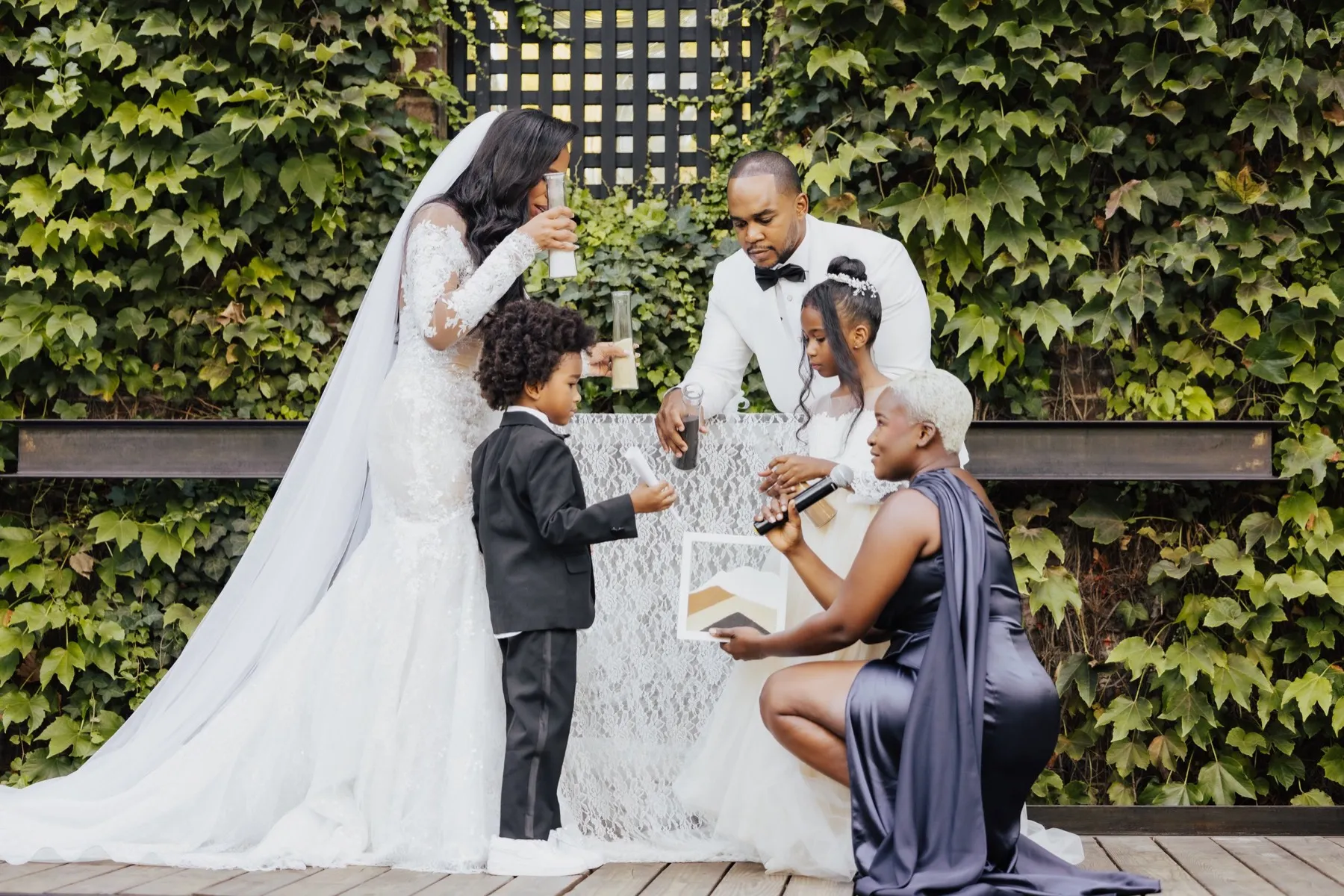
Each partner pours a different colored sand into one vessel, the layers combining into a pattern you keep forever. It’s the most popular ritual today for good reason: windproof, simple, and beautiful with zero open flame.
Best for: outdoor and beach weddings, blended families, anyone who wants a keepsake.
I once did a sand ceremony in Central Park where four kids from the couple’s two families each poured their own color into the family vase. The full how-to, including the blended-family version and a color-meaning chart, is in my unity sand ceremony guide.
Unity candle
Two outer candles, each representing a partner’s individual life, light one center candle for the new union. It’s the most traditional ritual and doubles as something you can relight on anniversaries.
Best for: indoor, traditional, and religious weddings.
The one rule: keep it indoors. Wind is its only enemy, and it always wins. Full scripts (traditional, secular, interfaith) and the outdoor workaround live in my unity candle ceremony guide.
Handfasting
The officiant binds the couple’s joined hands with cords or ribbons, often one at a time with a blessing for each. This is the literal origin of the phrase “tying the knot,” which traces back to the Celtic cord-binding tradition (Humanist Society Scotland).
Best for: Celtic, Pagan, and nature-inspired weddings, and couples who love visual drama.
My favorite version uses three cords, each tied by a different family member with a blessing, leaving the couple’s hands bound for the pronouncement and kiss. The cord choreography and color meanings are in my handfasting ceremony guide.
Jumping the broom
The couple jumps a decorated broom together, usually to close the ceremony. The ritual is most associated with enslaved African Americans in the 1800s, who were barred from legal marriage and created their own public ceremonies; it was widely revived in Black American culture after the novel and miniseries Roots (African American Registry).
Best for: couples honoring Black heritage and ancestral resilience.
As a Black officiant, this one means a great deal to me, and the history deserves more room than a list entry.
As a Black officiant, this one means a great deal to me, and the history deserves more room than a list entry. I give it the full treatment, including the honest conversation about its origins, in my jumping the broom guide.
Keepsake rituals (you take something home)
For couples who want a physical reminder on the shelf.
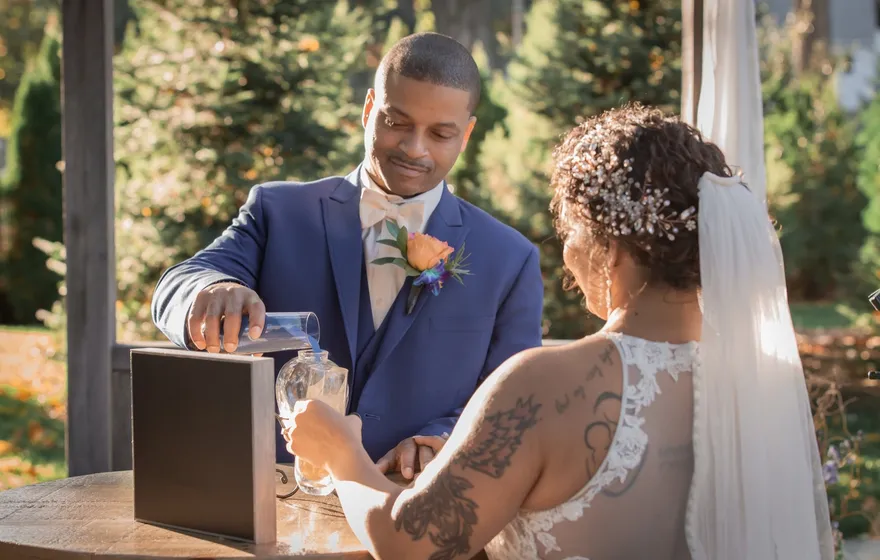
- Wine or whiskey box. Seal a bottle and your handwritten letters in a box, to open on a milestone anniversary. Some couples blend two spirits into one instead. Full version in my wine box ceremony guide and whiskey unity ceremony guide.
- Tree planting. Add soil and water to a tree or potted plant together. Apartment dwellers: start with a pot, transplant later. Succulents and bonsai are forgiving.
- Love lock. Engrave a padlock, lock it to a display piece, toss the key. One NYC warning: never attach it to a public bridge, because the city posts no-lock signs and cuts them off. Bring your own frame. Full guide: love lock ceremony.
- Paint or canvas pour. Each partner pours paint onto a shared canvas for instant wall art. Use a drop cloth, I learned that the hard way when acrylic hit the stone at Bethesda Terrace.
Family and guest rituals (bring people in)
When you want the ceremony to include more than the two of you.
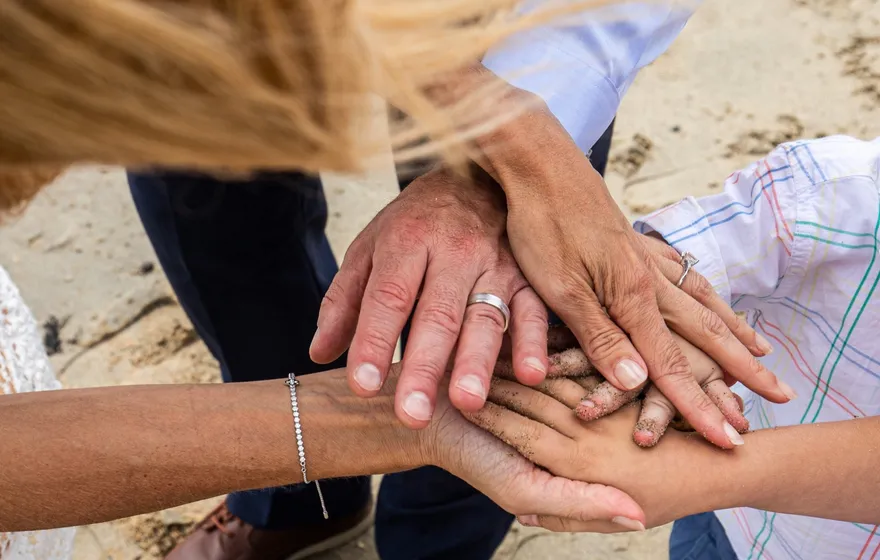
- Puzzle piece. Each person places a piece to complete the picture, often made from your engagement photo. Perfect for blended families and kids.
- Ring warming. The rings pass through the guests, each silently making a wish before the exchange. Beautiful under about 30 guests; beyond that it eats your whole timeline, so pass through the front rows only.
Cultural and religious traditions
These carry meaning that long predates the wedding-blog era. Honor the source.
| Tradition | Where it comes from | What happens |
|---|---|---|
| Lasso (el lazo) | Catholic and Latin/Hispanic ceremonies | A floral rope or rosary is draped in a figure-eight over both partners’ shoulders, symbolizing an eternal bond. Full guide: lasso ceremony. |
| Wine sharing and breaking the glass | Jewish | A shared cup for a shared life; the broken glass a reminder that love is precious because it’s fragile. |
| Saptapadi | Hindu | Seven steps around a sacred fire, each a vow: nourishment, strength, prosperity, happiness, children, longevity, and friendship. One of the most moving rituals I’ve witnessed. |
| Arras (thirteen coins) | Common in Latin and Filipino ceremonies | Exchanged as a symbol of shared prosperity and trust. |
Where it goes in your ceremony
Most unity rituals sit about two-thirds of the way through, right after the rings:
- Processional
- Welcome and opening words
- Reading (optional)
- Love story or address
- Vows
- Ring exchange
- Unity ceremony
- Pronouncement
- Kiss and recessional
Placing it after the rings works because you’ve already made the verbal promise; the ritual becomes the physical seal on it. Keep the ritual itself to three to seven minutes so your whole ceremony stays in the 20-to-30-minute range, which is right about where guest attention starts to fade.
The six mistakes I see most
After hundreds of ceremonies, the same handful of things go wrong, and all of them are avoidable.
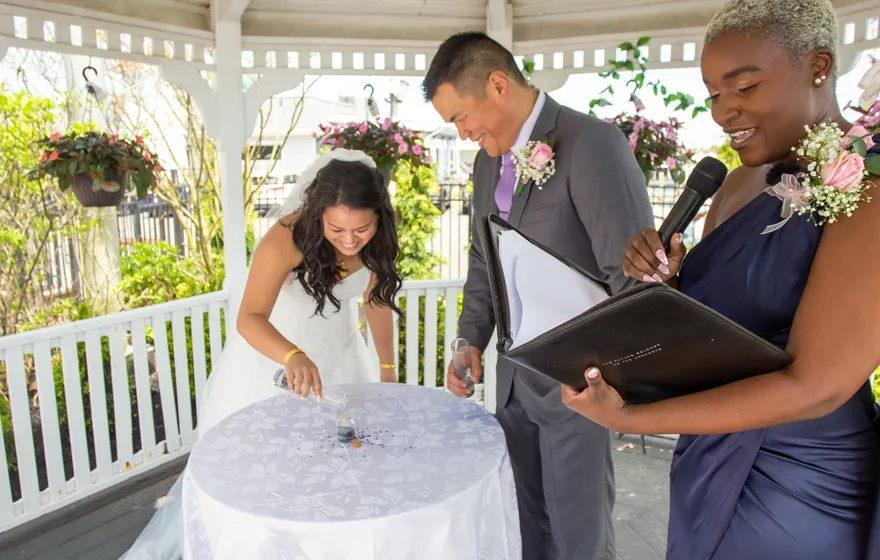
- No narration. The officiant’s explanation IS the ceremony. Unnarrated, it’s just pouring sand into a vase while guests wait.
- Chosen for the look, not the meaning. A ritual that’s gorgeous on Instagram and hollow to you will feel hollow on the day.
- No rehearsal. Sand pours fast when your hands shake, candles resist the first light, cords tangle. Practice once.
- A candle outdoors. Said it above, saying it again. Wind wins.
- Running long. Past seven minutes you lose the room. The power is in the simplicity.
- Forgotten supplies. Assign one person, a coordinator or a bridesmaid, to own the sand, lighter, or cord on the day.
How to actually pull it off
Here’s the order I walk my couples through.
Getting your unity ceremony ready
-
Choose your ritual
Use the four questions above.
-
Order supplies
A month out
Order them a month out, not the week before.
-
Get or write your script
It should tell guests what’s happening and why.
-
Assign roles
So everyone knows their part before the rehearsal.
-
Rehearse the physical action once
Muscle memory beats nerves.
-
Brief the photographer
Tell them the timing.
Find the ritual that’s actually yours
If you’ve read this far and still can’t decide between two or three, that’s normal. The right unity ceremony depends on who you are together, not what’s trending.
I built a quick Unity Ceremony Quiz that matches you to a ritual in about two minutes, based on your venue, your family, and what you actually do together. It’s free.
And if you want the word-for-word scripts, supply lists, and color-meaning charts for all of these, the Couple’s Ceremony Kit has the full set, the same resource I hand my own couples when we plan their ceremony together.
Frequently asked questions
Do we have to do a unity ceremony?
No. Many beautiful weddings skip it. It adds a visual moment and a few minutes, nothing more.
Can we do more than one?
You can, but I’d steer you away from it. One strong ritual beats two rushed ones. Pick your favorite and commit.
We’re not religious. Can we still do one?
Absolutely. Sand, candles, handfasting, trees, locks, and drink rituals are all secular unless you add a religious element.
Who brings the supplies?
You do, or your coordinator. Your officiant will tell you exactly what’s needed.
Can our kids take part?
Yes. Sand, tree planting, and puzzle ceremonies are built for it. The blended-family sand version gives each child their own color.
The Couple’s Ceremony Kit
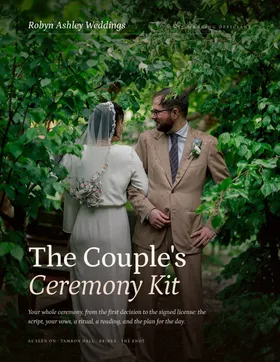
Walk in with a ceremony that sounds like the two of you
This post covers one part of the ceremony, and the Couple’s Ceremony Kit covers the rest, with five full scripts to start from and the prompts I use to help couples write their vows.
- Five full ceremony scripts in five different styles
- The Story Mine, thirty prompts for writing your vows
- Sixteen unity rituals, with the words and what to gather
- Thirty readings, each with my notes on when it fits
CEREMONY
Caribbean Wedding Traditions Worth Keeping
A couple sat in my office in Crown Heights, both second-generation, one side Guyanese and one side Trinidadian, and the bride said, "We want it to feel Caribbean, but we don't.
READ →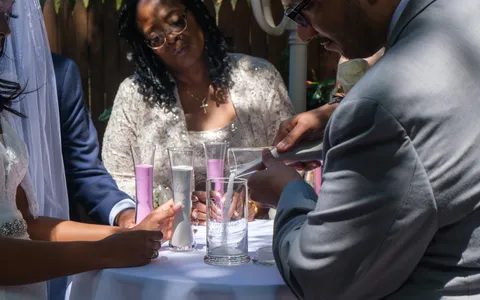
CEREMONY
What Is a Unity Ceremony? The Complete Guide
What a unity ceremony is, where it fits in your wedding, and how to choose the right ritual, from an officiant who's performed them at 300+ weddings.
READ →
CEREMONY
African Wedding Traditions, Explained With Respect
African wedding traditions by people and region: the Akan knocking, the Yoruba engagement, the Igbo kola and wine-carrying, libation, aso ebi and the broom, with how to include one or two without flattening them.
READ →