CEREMONY
Black Wedding Traditions: History and How to Honor Them
A Black NYC officiant's sourced guide to Black wedding traditions: jumping the broom, libation, the four elements, the money dance, and how to choose.
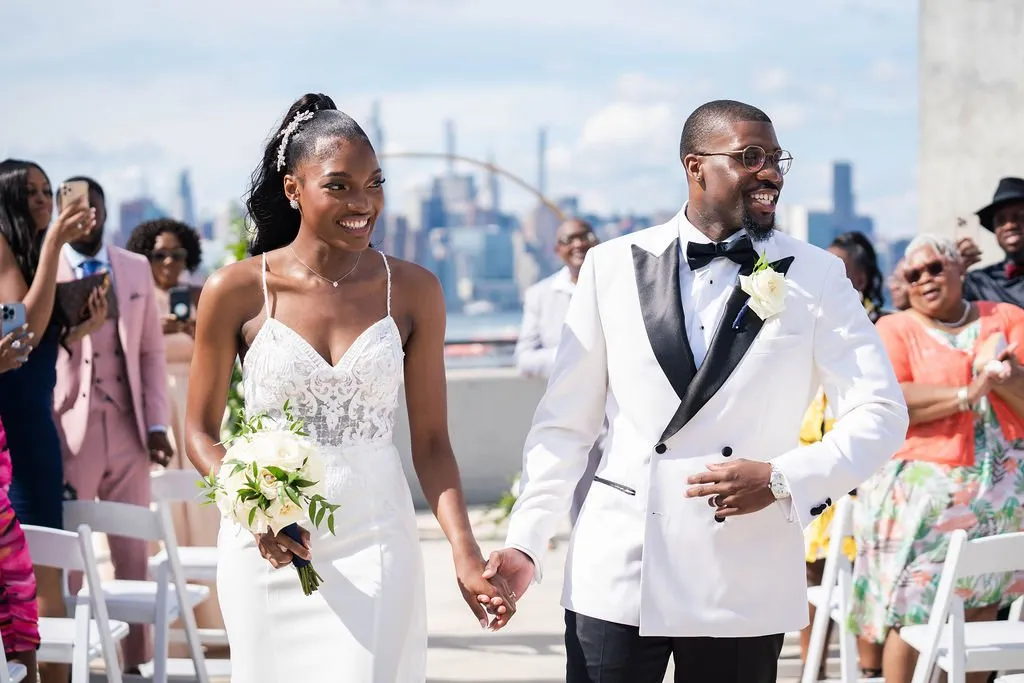
A few summers ago I stood with a couple in a Brooklyn backyard, both of them in their forties, both a little nervous about the broom leaning against the fence. The bride leaned over to me right before the vows and whispered, “My grandmother did this. I don’t want to mess it up for her.” Then they jumped, and her aunt in the second row let out a sound I can only describe as a whole church arriving at once.
I am a Black officiant. I was born in Jamaica, I work in New York, and I have spent years standing beside couples while they decide which threads of their heritage to carry down the aisle and which to leave folded in the drawer. That decision is the real work, and most wedding blogs skip right past it to the listicle.
So here is the honest version: what these traditions are, where they actually come from, what they feel like in a real ceremony, and how I help couples choose.
The short answer: Black wedding traditions include jumping the broom, the libation ceremony that honors ancestors, the tasting of the four elements, the money dance, and the rituals shaped by the Black church. Most of them are cultural rather than strictly religious, which means you can carry them into a secular, interfaith, or church wedding. You do not have to do all of them. You should do the ones that say something true about who you are.
Start with the broom, because it carries the most history and the most myths.
Where does jumping the broom actually come from?
Here is where I push back on almost every article you have read. The clean story goes like this: enslaved Africans brought the broom ritual from West Africa, kept it alive through bondage, and Black couples revived it as a link to the homeland. It is a beautiful story. It is also not quite what the historians found.
When historian Tyler D. Parry went looking for the broom in pre-slave-trade Africa, he found nothing. In his 2020 book on the subject, he traces the ritual’s form not to a single West African origin but to marginalized groups in the British Isles, including Welsh Kale and English Romanichal Romani communities, where a besom wedding was its own folk custom (University of North Carolina Press). Folklorist Alan Dundes had pointed the same direction years earlier, naming the Welsh and Romani practice (priodas coes ysgub) as the likely root (Wikipedia).
So the broom is an Atlantic-world story, not a straight line from one continent. Marginalized people on both sides of the ocean, locked out of legal marriage, made their own public ritual instead. The brilliance of it is that enslaved people in the American South took a custom and made it carry the weight of a wedding the law refused to give them.
And the law really did refuse it. Enslaved people were treated as property, unable to enter contracts, so their marriages were not legally recognized (Wikipedia). Couples who lived on different plantations had what was called a “broad” or “abroad” marriage, often unable to live together, with any children belonging to the enslaver of the mother. Once you understand that, you understand why a public ritual mattered so much.
The broom was the witness the courthouse would not be.
We even have names. The WPA Federal Writers’ Project recorded former slaves in their own words, and ex-slave George Eason of Georgia described enslaved people jumping the broom to marry (Wikipedia). It steadies a couple to know this is not a vague “our ancestors” but real people whose names survived.
Why did the tradition come back?
Because for a long stretch, it did not exist at all. After Emancipation, many formerly enslaved couples wanted nothing to do with the broom. They saw it as a humiliating mark of bondage and rushed instead to make their unions legal, often through Union Army clergy and the Freedmen’s Bureau. Surviving registers document thousands of these registrations, including more than 4,000 freedmen recorded around Natchez, Mississippi, though the records are incomplete and vary by state (U.S. National Archives).
The revival has a date you can point to. It traces to Roots, Alex Haley’s 1976 novel and the 1977 ABC miniseries, where Kunta Kinte and Belle jump the broom in front of a national audience (Wikipedia). A whole generation watched that scene and took the broom back on their own terms. The 2011 film Jumping the Broom carried the argument forward, using the ritual to dramatize the way Black families still disagree about whether the custom belongs in a modern wedding (Wikipedia).
Here are the dates in one place.
| Year | What happened |
|---|---|
| 1976 | Roots, the novel |
| 1977 | Roots, the ABC miniseries |
| 2011 | Jumping the Broom, the film |
| 2020 | Tyler D. Parry’s book |
I tell couples this history on purpose, because the bitter irony in it is real. As Dundes put it, “a custom which slaves were forced to observe by their white masters has been revived a century later by African Americans as a treasured tradition.” Once you know that, the jump stops being a cute photo op and becomes a choice with some spine to it.
If you want the full ritual itself, the wording I use to introduce it, where to place it in the ceremony, who holds the broom, and the staging that keeps anyone from tripping, I broke all of that down in my deep dive on how to jump the broom at your wedding. What follows here is the wider family of traditions it sits inside.
What is the libation ceremony, and how do you do it?
In a libation ceremony, an elder or the officiant pours a liquid (blessed water, wine, or liquor) toward the four cardinal directions while speaking the names of ancestors, inviting their blessing and protection over the marriage. The practice draws on West African, particularly Yoruba, roots, and the pour to north, south, east, and west is part of the form.
Here is the question I get most: “What if I don’t know my ancestors’ names?” For a lot of Black American couples, the paper trail simply does not exist. Officiant Kim Kirkley frames this honestly. African American couples “may not be able to claim a specific lineage,” yet they can still pour to thank their ancestors for surviving so that this day could happen (TheGrio). I have done it both ways, with named grandparents and with a single line for “all who came before us so we could stand here.” Both work.
Here is a libation I have used, written so you can hand it to whoever is pouring.
Officiant or Elder: (holding the vessel, addressing the gathering)
“Before these two make their promises, we pause to remember those who made them possible. We pour this water for the ones who are not in these seats, the ones whose names we know and the ones whose names were taken from us.”
(Pour toward the east.)
“To the East, we honor those who came before. Thank you for your courage.”
(Pour toward the west.)
“To the West, we honor those we have lost this year. We feel you here.”
(Pour toward the north.)
“To the North, we honor the elders still with us, the ones who taught us how to love and how to last.”
(Pour toward the south.)
“To the South, we honor the children, born and unborn, who will carry this love forward.”
Officiant or Elder: (to the couple)
“Your people are standing with you. Now let us begin.”
(Set the vessel down. Move into the ceremony.)
The last pour, to the South, is for the children, so if there are kids in the family, that’s the line to slow down on.
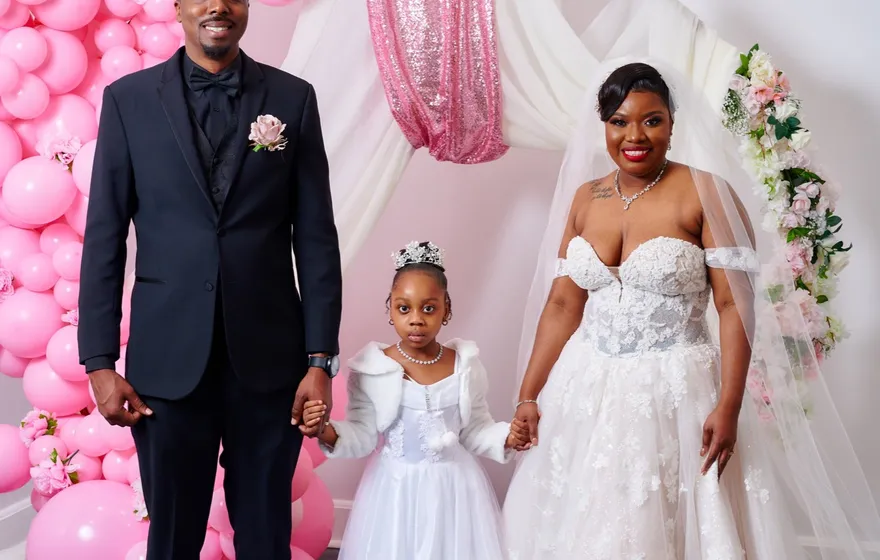
Whoever is pouring sets the pace for the whole libation, which is why this next part matters.
What is the tasting of the four elements?
This one is intimate, and it photographs beautifully without trying to. The couple tastes four flavors, and each one stands for a season of married life (TheGrio):
| Taste | What to use |
|---|---|
| Sour | A slice of lemon |
| Bitter | Vinegar or unsweetened chocolate |
| Sweet | Honey or fruit |
| Spicy | Cayenne or a little chili |
It is “for better or worse” you can actually taste. I once watched a groom screw up his whole face at the vinegar, then look at his partner and say, “Even this.” The guests laughed, and then several of them went quiet, because everyone in that room knew exactly what the bitter year had been.
You can have a parent or the maid of honor present each element, or you can keep it just between the two of you. Four little spoons, four small dishes, and a willingness to make a face in front of everyone you love.
What about the money dance and the money spray?
Be careful with this one, because “the money dance” is really several different traditions wearing the same name, and I would not want you to flatten them.
The Nigerian money spray, where guests shower the couple with bills as they dance, traces to communities in 1940s Nigeria (Yoruba, Igbo, and Ghanaian among them) and became a public display of joy and abundance during the oil boom of the 1960s and 70s. The dollar dance, where guests pin money to the couple for a turn around the floor, has its own separate roots, including a Polish-American version from the early twentieth century (Wikipedia).
| Tradition | Roots |
|---|---|
| Money spray | Nigeria, 1940s |
| Dollar dance | Polish-American |
I mention the difference because I have seen couples bill a Polish-style dollar dance as “an African tradition,” and an auntie who actually grew up with the spray will clock it in a second. Know which one you are doing and where it comes from. Either is joyful. Neither needs to borrow a backstory.
What did the Black church give Black weddings?
Even for couples getting married in a park or a loft with no religion in the program, the Black church is usually in the room. It shaped the sound and the shape of the ceremony more than people realize.
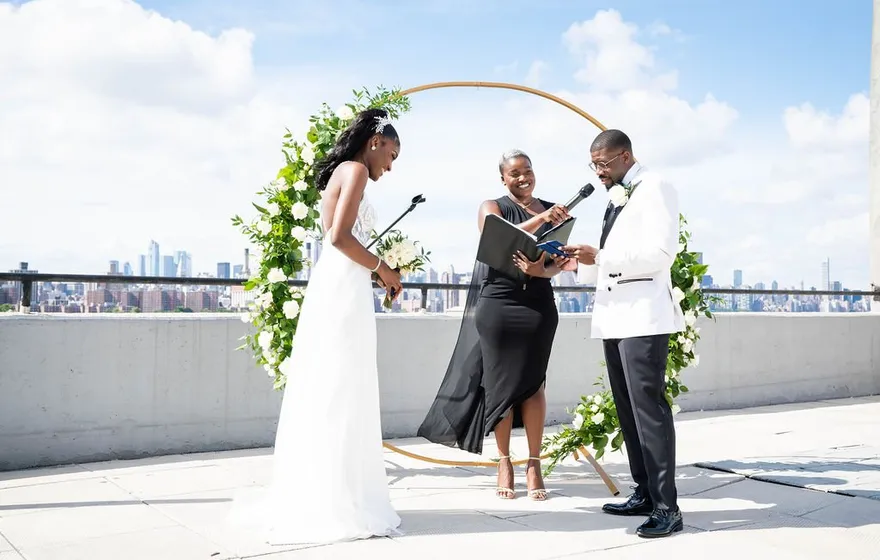
It gave us three things you’ll hear even at a secular wedding:
- The call-and-response, the way a “yes” from the crowd lifts the couple
- The music that turns a processional into an event
- A particular role for the officiant, less a clerk reading lines and more a witness who testifies
When I officiate a fully secular Black wedding, that energy still runs underneath it, because that is the cadence many of us grew up inside.
If your wedding is bringing two faiths or two cultures together, the same principle holds, and you get to braid more than one heritage on purpose. I walk through how that works in my guide to building an interfaith wedding ceremony without watering either side down.
How do these connect to African and Caribbean traditions?
The broom is not the whole story, and the diaspora is wide. Plenty of couples reach past the American customs toward the continent and the islands directly.
Some Nigerian and Nigerian-American couples switch from a Western gown into aso ebi, the Yoruba “family cloth,” with a gele head wrap for the traditional portion of the day.
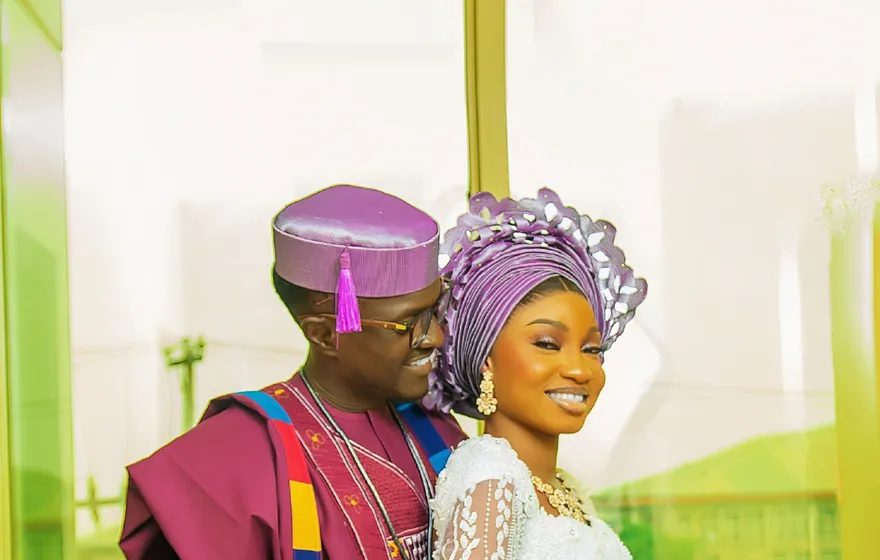
When couples build a handfasting, the materials carry coded meaning, with kente colors and cowrie shells, which were historical currency, standing in for wealth and prosperity.
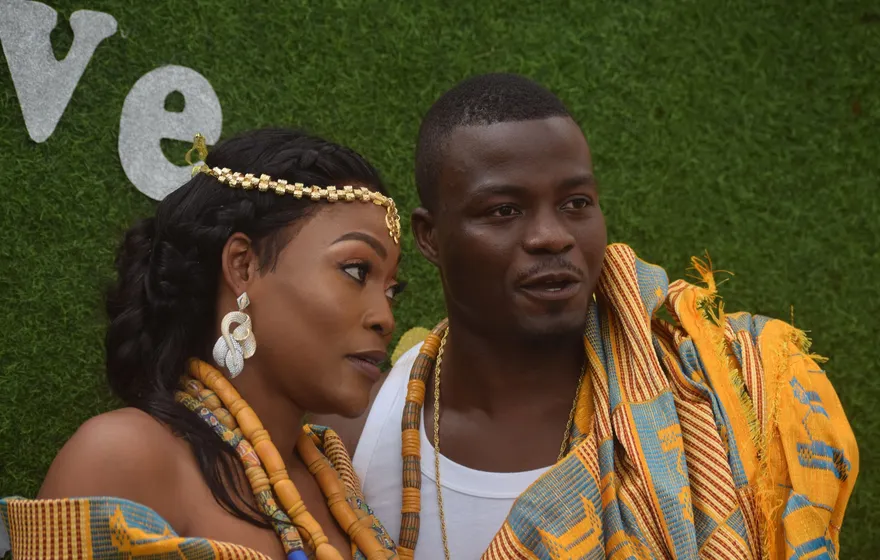
As a Jamaican myself, I love when couples pull threads from the continent and the islands into the day, the food, the music, the rum-soaked black cake, the head wraps and family cloth. All of it sits under the broader map of wedding traditions explained across cultures, if you want to see where Black customs fit in the larger picture.
How do you choose which traditions to actually include?
This is the conversation I am hired for, so let me give it to you straight.
Start with meaning, not the checklist. I have sat with couples who felt they had to include all six rituals to “do it right,” and the ceremony buckled under the weight. Pick one or two that say something specific about the two of you. The broom because your grandmother jumped it. The libation because you lost your father this year and you need him in the room. Let the rest go.
Then learn the real history, so you can stand behind your choice if someone questions it at the reception. A couple who can say “we know exactly where this comes from and that is why we are doing it” never looks unsure.
Last, decide how much history you want narrated aloud. There is a real judgment call between explaining the broom’s origins to a mixed crowd and simply letting the moment carry without a lecture. I usually keep the spoken framing to a sentence or two and let the ritual do the talking. The room understands more than you think.
A note on building the ceremony itself
If you are planning to work a few of these in, the hardest part is not the rituals. It is the connective tissue, the words that move you from the vows to the libation to the broom without it feeling like a variety show.
That stitching is exactly what I built the Couple’s Ceremony Kit to handle. It gives you the full ceremony structure, the transitions between rituals, and language you can make your own, so the heritage moments sit inside a ceremony that actually flows instead of floating as disconnected set pieces. It is built for couples writing their own day, with or without a hired officiant.
If you just want to feel the shape of a real ceremony first, grab a free sample ceremony script and read it out loud. Hearing where a ritual lives inside the whole arc tells you more than any checklist can.
Frequently asked questions
Is jumping the broom offensive because it comes from slavery?
It is not offensive, but it is worth understanding before you decide. Enslaved people were legally barred from marriage, so they made public rituals to declare their commitment in front of witnesses. The history is also more layered than most assume, with historians like Tyler D. Parry tracing the ritual’s form to marginalized groups in the British Isles rather than to a single West African source. Many couples choose it because it reclaims dignity their ancestors were denied. Others sit it out, and both are valid.
Where does jumping the broom actually come from?
It is documented among enslaved people in the antebellum South, but its roots are multicultural. Folklorist Alan Dundes attributed the custom to Welsh Kale and English Romanichal Romani communities, where it was called a besom wedding. Tyler D. Parry, in his 2020 book, frames it as Atlantic-world cultural exchange among marginalized people on both sides of the ocean. The widespread modern revival in Black American weddings dates to the 1976 novel and 1977 miniseries Roots.
What is the tasting of the four elements?
The couple tastes four flavors, each standing for a season of married life: sour (lemon), bitter (vinegar or unsweetened chocolate), sweet (honey or fruit), and spicy (cayenne or chili). It is a way of vowing to stay together through every taste of life, a physical version of “for better or worse.”
What is a libation ceremony at a wedding?
An elder or the officiant pours a liquid, usually blessed water, wine, or liquor, toward the four cardinal directions while speaking the names of ancestors, inviting their blessing over the marriage. It draws on West African, particularly Yoruba, practice. Even couples who cannot trace a specific lineage can use it to honor their ancestors’ perseverance.
Do you have to be religious or go through a Black church to use these traditions?
No. Libation, the four elements, and jumping the broom are cultural rather than strictly religious, so they fit secular, interfaith, and church ceremonies alike. The Black church shaped the music, the call-and-response energy, and the role of the officiant in many Black weddings, but you can carry the heritage without a church wedding.
How do we choose which Black wedding traditions to include?
Start with meaning, not the checklist. Pick the one or two traditions that actually say something about who you are as a couple, learn the real history so you can stand behind it, and decide how much of that history you want narrated aloud. An officiant who knows these rituals can help you place them well, like jumping the broom right after the vows, so the moment carries instead of feeling tacked on.
The Couple’s Ceremony Kit
Walk in with a ceremony that sounds like the two of you
This post covers one part of the ceremony, and the Couple’s Ceremony Kit covers the rest, with five full scripts to start from and the prompts I use to help couples write their vows.
- Five full ceremony scripts in five different styles
- The Story Mine, thirty prompts for writing your vows
- Sixteen unity rituals, with the words and what to gather
- Thirty readings, each with my notes on when it fits
CEREMONY
Caribbean Wedding Traditions Worth Keeping
A couple sat in my office in Crown Heights, both second-generation, one side Guyanese and one side Trinidadian, and the bride said, "We want it to feel Caribbean, but we don't.
READ →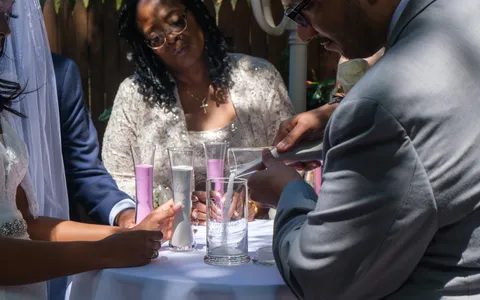
CEREMONY
What Is a Unity Ceremony? The Complete Guide
What a unity ceremony is, where it fits in your wedding, and how to choose the right ritual, from an officiant who's performed them at 300+ weddings.
READ →
CEREMONY
African Wedding Traditions, Explained With Respect
African wedding traditions by people and region: the Akan knocking, the Yoruba engagement, the Igbo kola and wine-carrying, libation, aso ebi and the broom, with how to include one or two without flattening them.
READ →