CEREMONY
Lasso Ceremony (El Lazo): Meaning, How It Works, and the Script
The wedding lasso explained: el lazo's meaning, who the padrinos are, how it works in a Catholic Mass, and the full script, honored properly.
The first time I performed a lasso ceremony, the bride’s grandmother was crying before we even started. She’d been married with a lazo fifty-two years earlier in Puebla, and she never expected to see her granddaughter under one too. That’s the thing about this ritual: it carries generations in it. When you drape the lazo, you’re not just symbolizing a bond, you’re joining a line of marriages that came before.
So I treat it with the weight it deserves, and if you’re including it, I’d ask you to as well.
What is the lasso ceremony (el lazo)?
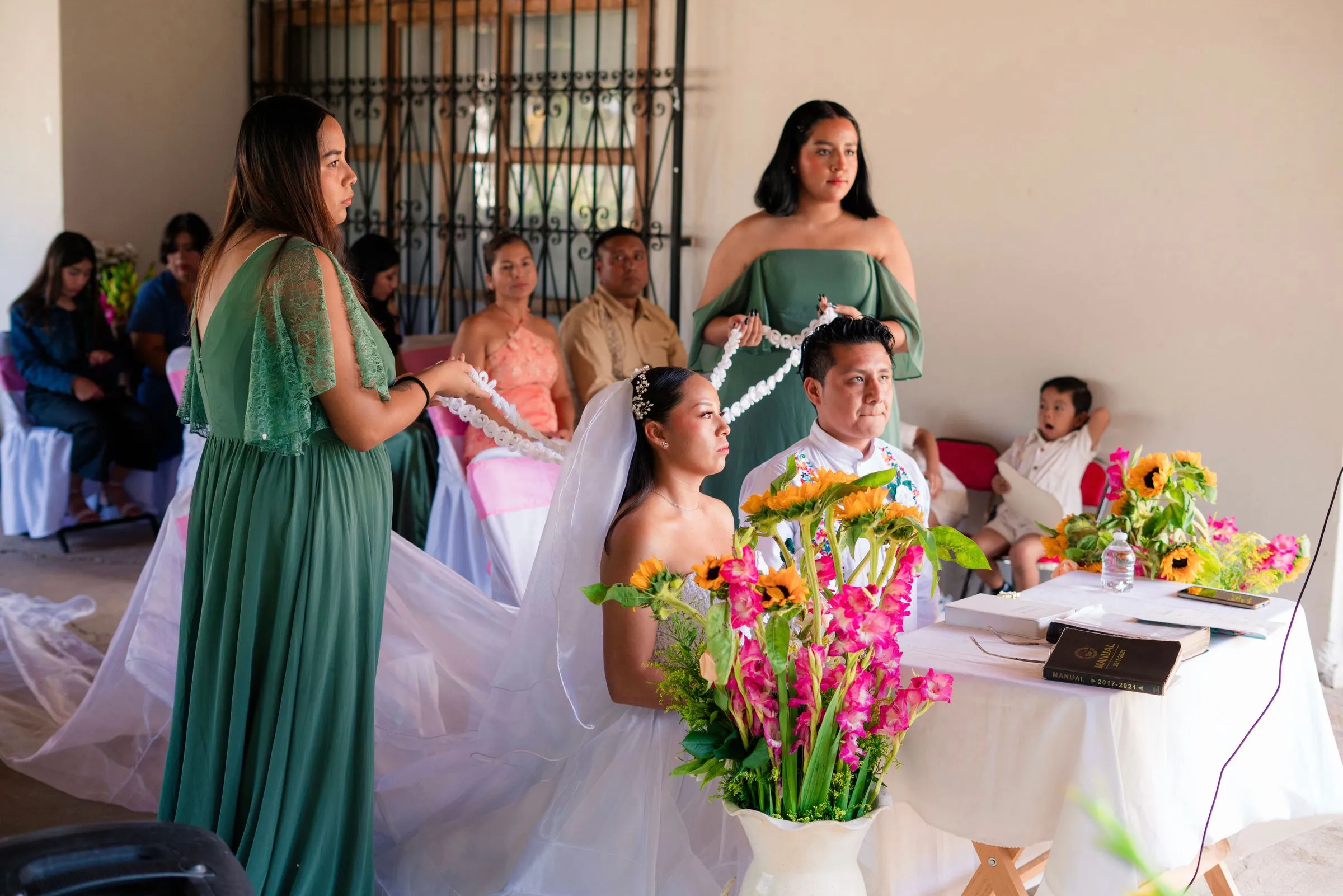
The lasso ceremony, el lazo, drapes a large rosary, cord, or floral garland in a figure-eight over both partners’ shoulders after the vows, symbolizing their eternal, unbreakable bond. The figure eight is an infinity loop: no beginning, no end.
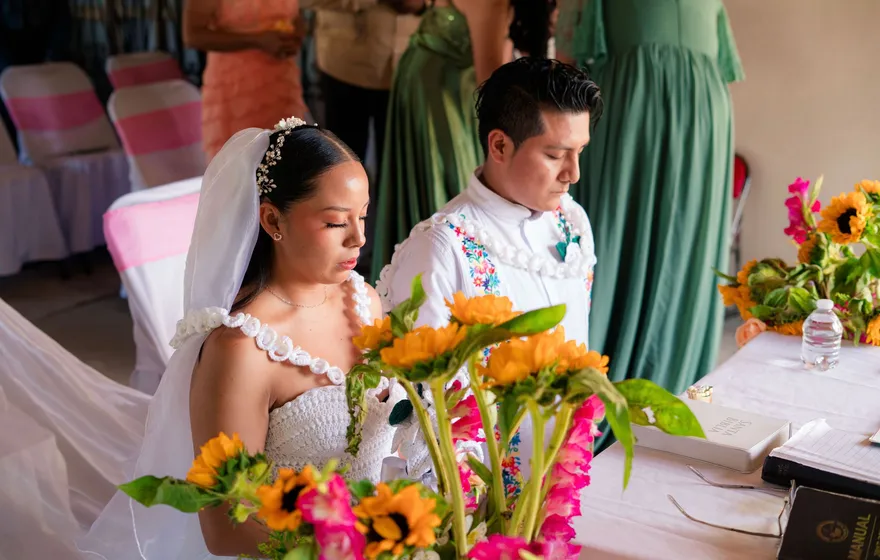
It’s a tradition of Catholic and Hispanic weddings. In a Catholic Mass the lazo is blessed and placed just before the Nuptial Blessing, which comes after the Our Father (Order of Celebrating Matrimony), and the couple usually wears it until the Mass ends.
Who places it, and when
This is the part that matters most, and the part generic guides get wrong. The lazo is placed by the padrinos de lazo, sponsors the couple chooses, traditionally a happily married couple held up as an example of a strong marriage. They place it over the groom’s shoulders first, then the bride’s, forming the figure eight. At the end of the Mass, the priest or the same padrinos remove it.
How the lazo moves through a Mass
-
The padrinos come forward
After the vows and rings
In a Mass, this falls during the Nuptial Blessing, after the Our Father.
-
Over the groom's shoulders first
Then over the bride’s, so the lazo forms the figure eight.
-
Worn through the blessing
The couple stays under the lazo until the Mass ends.
-
Lifted off at the end
The priest or the same padrinos remove it.
The lazo is often given as a gift by the padrinos. In many Catholic weddings it’s a long beaded rosary with a crucifix at the center rather than a plain cord.
Side by side, the two traditions look like this.
| El lazo | Las arras | |
|---|---|---|
| What it is | Cord, rosary or garland | Thirteen coins |
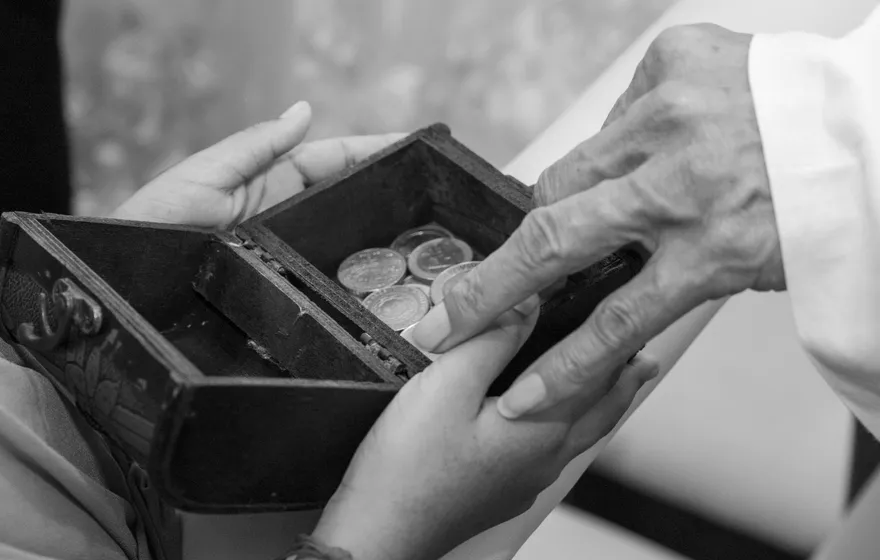
| Stands for | Union | Prosperity and trust |
| Given by | The padrinos | The groom, or both |
Many Hispanic ceremonies include both, each with padrinos who sponsor it.
The full lasso ceremony script
OFFICIANT:
[Partner A] and [Partner B], having joined yourselves in marriage, will now be united by el lazo.
[The padrinos come forward.]
[Padrino names] will place the lazo, a sign that these two are now bound together as one.
[The padrinos drape the lazo over the groom’s shoulders, then the bride’s, forming a figure eight.]
This cord forms an infinity, with no beginning and no end. Let it remind you, and everyone who loves you, that your lives are now a single, unbroken circle.
[The couple remains under the lazo through the blessing.]
May your union be as strong and as endless as the bond now resting on your shoulders.
Read it aloud once with your padrinos so they know the moment you’ll nod them forward.
Honoring the tradition
If el lazo is part of your heritage or faith, build it in with your family’s blessing and let it carry its full meaning. If you’re drawn to it from outside the tradition, learn what it means and name that meaning in the ceremony, rather than using it as a pretty prop. The respect is the point.
Get the full kit
The Couple’s Ceremony Kit has sixteen other unity rituals written out in full. The lasso’s closest cousin is handfasting, which binds the hands instead of the shoulders. See how both fit in the unity ceremony ideas guide, or take the free Unity Ceremony Quiz.
Frequently asked questions
Who places the lazo?
The padrinos de lazo, a sponsor couple, groom’s shoulders then bride’s.
When?
After the vows and rings; during the Nuptial Blessing in a Mass.
El lazo vs las arras?
The lazo is the cord; las arras is the thirteen coins. Many weddings include both.
Can non-Catholic couples do it?
Honor the source; include it with meaning, not as decor.
The Couple’s Ceremony Kit
Walk in with a ceremony that sounds like the two of you
This post covers one part of the ceremony, and the Couple’s Ceremony Kit covers the rest, with five full scripts to start from and the prompts I use to help couples write their vows.
- Five full ceremony scripts in five different styles
- The Story Mine, thirty prompts for writing your vows
- Sixteen unity rituals, with the words and what to gather
- Thirty readings, each with my notes on when it fits

CEREMONY
Caribbean Wedding Traditions Worth Keeping
A couple sat in my office in Crown Heights, both second-generation, one side Guyanese and one side Trinidadian, and the bride said, "We want it to feel Caribbean, but we don't.
READ →
CEREMONY
What Is a Unity Ceremony? The Complete Guide
What a unity ceremony is, where it fits in your wedding, and how to choose the right ritual, from an officiant who's performed them at 300+ weddings.
READ →
CEREMONY
African Wedding Traditions, Explained With Respect
African wedding traditions by people and region: the Akan knocking, the Yoruba engagement, the Igbo kola and wine-carrying, libation, aso ebi and the broom, with how to include one or two without flattening them.
READ →