CEREMONY
Jamaican Wedding Traditions: A Jamaican Officiant's Guide
A Jamaican-born NYC officiant on real Jamaican wedding traditions: the rum-soaked black cake, the church-and-yard celebration, and Tun T'anks Sunday.
The first time I officiated a wedding for a Jamaican family in Brooklyn, the bride’s aunt pulled me aside before the ceremony and whispered a question. Had the cake been soaking long enough? I told her it had been sitting in rum since the engagement. She nodded, satisfied, and went to find her seat. That one question held more of our heritage than half the “Jamaican wedding” articles I’ve ever read.
I was born in Jamaica. I marry couples in New York City now, where about 234,000 Jamaica-born New Yorkers live (Times Caribbean), most of them in East Flatbush, Canarsie, Crown Heights, and the Bronx. I’ve stood in both worlds: the church-and-yard weddings of the island, and the Brooklyn weddings where families work hard to carry the old customs across the water.
So this is not a listicle by someone who Googled “island wedding ideas.” This is what I grew up with, and what I tell my couples when they want to honor where they come from.
Here’s the short version. Real Jamaican wedding traditions center on the rum-soaked black cake started at the engagement, a church ceremony followed by a celebration at the groom’s home, godparents who formally give the couple to each other, a curry-goat feast, and Tun T’anks Sunday the week after. The one ritual most lists open with, jumping the broom, isn’t actually Jamaican.
Let me show you the difference, and how to bring the real thing into a modern ceremony.
Is jumping the broom a Jamaican tradition?
I’ll start here because it’s the question I get most, and the honest answer surprises people.
Jumping the broom is not a documented Jamaican custom. It shows up among enslaved people in the US South in the 1840s and 1850s, and the historian Tyler Parry traces its closest parallels to the British Isles, including Welsh and Romani “broomstick weddings,” rather than to West Africa (Wikipedia). It spread across the wider Black diaspora largely after the 1977 Roots miniseries, not through any unbroken line from the islands.
That doesn’t make it wrong to include. Plenty of my Jamaican-American couples jump the broom as a pan-diaspora act of remembrance, a nod to ancestors who were denied a legal wedding. When a couple chooses it knowing exactly what it is, I love officiating that moment.
What I gently steer couples away from is a venue or planner selling broom-jumping as “your authentic Jamaican ritual.” It isn’t, and the genuinely Jamaican customs are right there waiting. If you want the real history of the broom and how to do it with intention, I’ve written that up in my guide to jumping the broom so I won’t flatten it here.
The black cake: the tradition that starts at “yes”
If there’s one custom I’d fight for, it’s this one. The Jamaican wedding cake is a dark, dense, rum-soaked fruitcake, and the whole thing lives or dies on the timing.
The dried fruit (raisins, currants, prunes) goes into rum and wine the moment you get engaged, often soaking for months, sometimes a full year. That long bath is why the cake keeps for well over a year, which is the entire point. Couples traditionally save a slice to eat on their first anniversary (The Seasoned Skillet).
In my house growing up, the fruit lived in a covered jar in the cupboard, and you topped up the rum every so often like you were tending something alive. By the wedding, the kitchen smelled like Christmas and church at the same time.
In the old days the cakes were covered in white lace so the bride wouldn’t see them before the day, and married women in white head-ties carried them in a procession, moving in complete silence (Jamaica Observer). You don’t need the lace and the head-ties to honor this. You need the soak.
What happens at a traditional Jamaican wedding?
The ceremony itself was Christian and held in church, but the heart of the celebration moved outdoors afterward.
The reception happened at the groom’s home, in a purpose-built “booth” or bower made of coconut boughs and decorated with flowers (Jamaicans.com). No hotel ballroom. The yard became the room, and the whole district turned up whether they were formally invited or not.
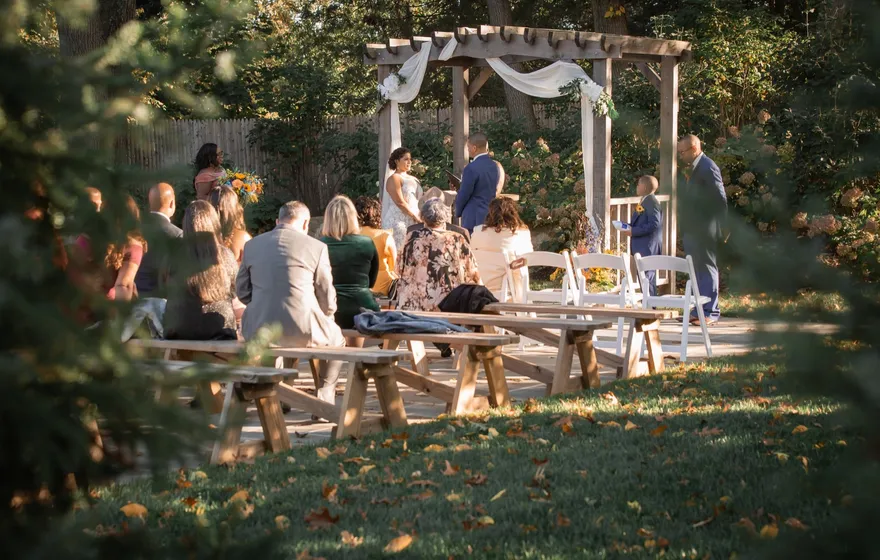
The processions were their own kind of ceremony. Alongside the silent cake procession, a line of girls walked in order of height, the shortest in white at the front and the tallest, alone, in black at the back (Jamaica Observer). It was solemn and a little theatrical, the way the best rituals are.
And it was loud with live music: fife, banjo, and guitar, with quadrilles danced by the bride, groom, both sets of parents, the maid of honour, and the best man, often running deep into the evening (Jamaicans.com). This is folk music and folk dancing, not a DJ and a dance floor.
For couples blending a Jamaican celebration with another culture’s customs, the structure matters more than you’d guess. I walk through how to braid two sets of traditions together without either one feeling like an afterthought in my piece on building an interfaith or cross-cultural wedding ceremony.
The godparents who give you to each other
This one gets me every time, and most couples have never heard of it.
In a traditional Jamaican wedding, the “wedden godmadda” and “wedden godfadda” weren’t honorary titles. The godmother often sewed the bridal gown and the bridesmaid dresses herself, in satin and lace, and the godfather organized the music and the drink (Jamaicans.com). They were chosen community elders who took real responsibility for the marriage.
During the ceremony, the godparents took the couple’s hands and verbally gave the two to each other, often telling them to live as Isaac lived with Rebecca. It’s a beautiful inversion of the “who gives this woman” moment. Here, two trusted people give the couple to each other, as equals.
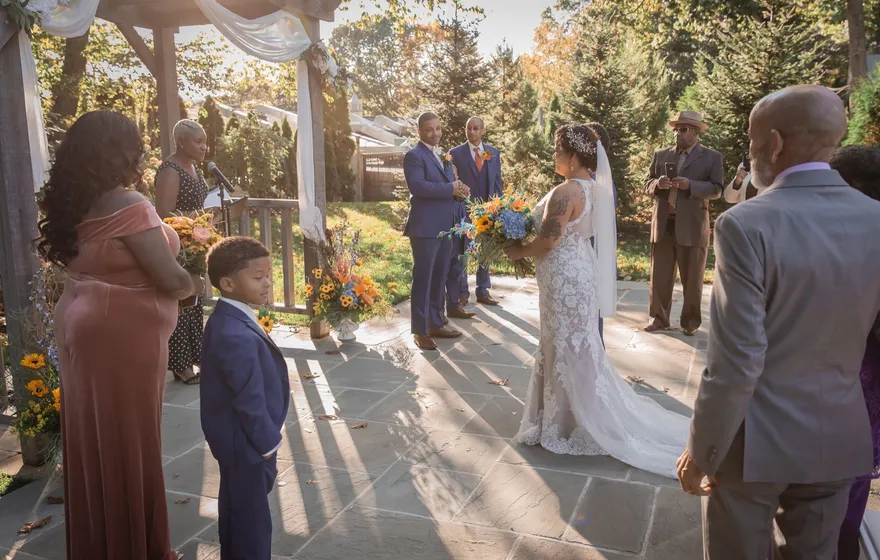
I’ve worked a modern version of this into ceremonies for couples who wanted their godparents or close mentors to play a part. Here’s a script you can lift directly.
Officiant: (invite the two godparents to step forward and stand on either side of the couple)
“In the Jamaican tradition, a couple is not simply joined by the one who marries them. They are given to each other by the people who raised them, fed them, and watched them grow. Today we honor that custom.”
Officiant: (to the godparents)
“[Godmother’s name] and [Godfather’s name], you have known these two long before this day. Will you give them to one another, and stand with them in the years to come?”
Godparents: (together, each taking one of the couple’s hands and joining them in the center)
“We give [Partner A] and [Partner B] to each other. Live in love and in patience, the way the old people taught us. Hold fast to one another, and never let the small things break what the big things built.”
Officiant: (to the couple)
“Take these hands that were given to you. They are yours now to keep.”
If you want a full, copy-ready ceremony you can build this blessing into, I keep a sample ceremony script you can grab and personalize.
The food: curry goat is the headline
You cannot talk about a Jamaican wedding without talking about what’s in the pot.
Curry goat is the centerpiece, and that’s on purpose. Goat was a costly meat, saved for the occasions that mattered most. Here’s what went around it, by the old accounts (Jamaica Observer):
| On the table | What was served |
|---|---|
| The centerpiece | Curry goat |
| Around it | Rice and peas, mannish water (goat soup), roast breadfruit, roast yam, boiled banana, and rundown |
| To drink | Rum, cane liquor, wine, ginger beer, and coconut water |
| The cake | The rum-soaked black cake |
There was even a decorated “show bread,” twisted and twirled and topped with two birds to signify love. The food wasn’t catering. It was the family’s labor, cooked over days, and serving it was the celebration.
Tun T’anks Sunday: the wedding that comes after the wedding
This is the tradition I miss most, and the one I most want couples to bring back.
Tun T’anks Sunday, or Turn Thanks Sunday, is the Sunday after the wedding. The couple and the full wedding party return to church to give thanks, and then everyone heads to a second reception at the bride’s family home, which was often bigger than the wedding day itself, with more food and more cake (Jamaica Observer).
Think about what that does. It stretches the first chapter of a marriage from one frantic day into a whole week of being held by your community. There’s no rushed exit, no “is it over already.” You get a second gathering, calmer, where the people who couldn’t fully celebrate on the day get their turn.
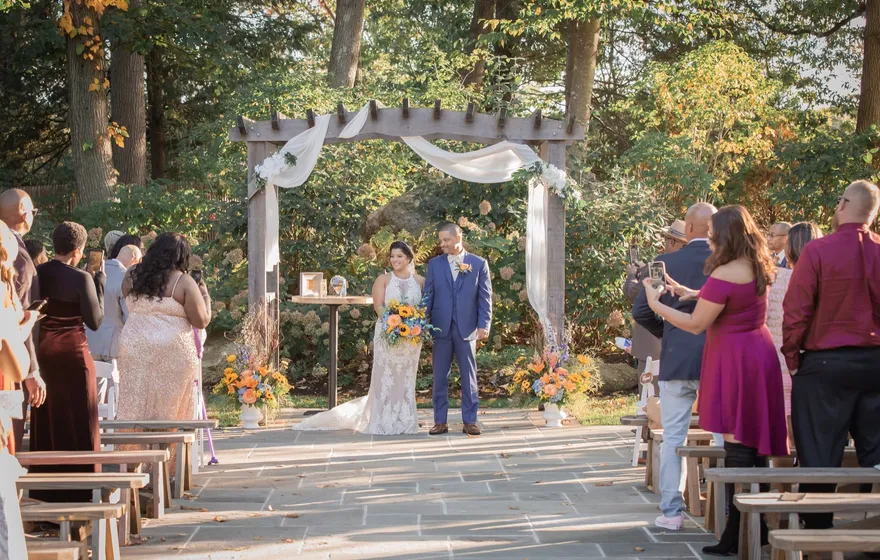
In NYC, I tell couples to do a “turn thanks” brunch the day after the wedding instead of a hurried send-off. It costs a fraction of the wedding, and it’s the part guests remember.
Are Jamaican wedding traditions the same as African American ones?
They share roots, and they aren’t identical. Both grew partly out of the realities of slavery and the diaspora, and both lean on community, food, and faith. But the specifics differ. The black cake, the coconut-bough booth, the godparents giving the couple to each other, Tun T’anks Sunday, mannish water in the pot: those are distinctly Jamaican.
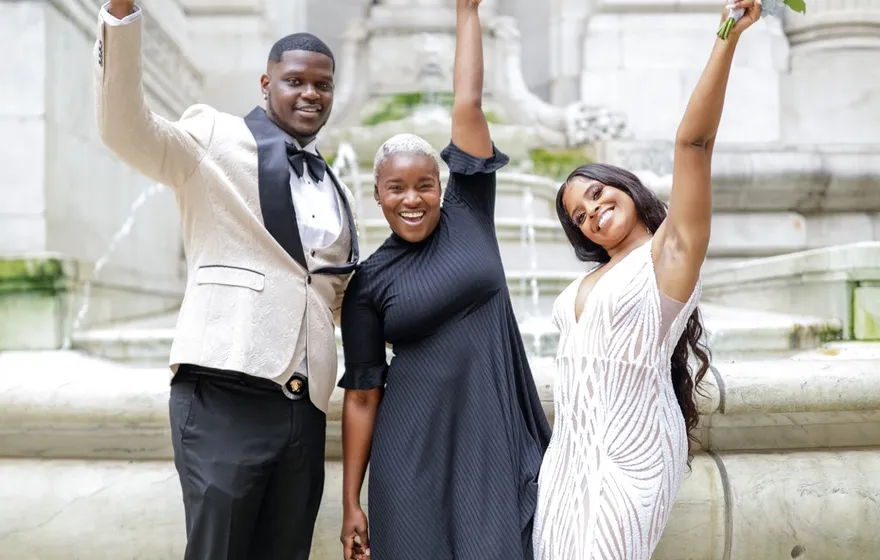
This is exactly why I push back on one-size-fits-all “diaspora” listicles. If your family is Jamaican, your traditions are particular, and they deserve to be named correctly instead of blended into a generic template.
| Custom | Where it comes from |
|---|---|
| The rum-soaked black cake | Jamaica |
| The coconut-bough booth at the groom’s home | Jamaica |
| Godparents giving the couple to each other | Jamaica |
| Tun T’anks Sunday | Jamaica |
| Mannish water in the pot | Jamaica |
| Jumping the broom | Enslaved communities in the US South in the 1840s and 1850s, spread across the diaspora after Roots |
If you want the full sweep of where any of these rituals come from and what they actually mean, my guide to wedding traditions and what they mean is the place to start. It maps where Jamaica’s customs are shared across the wider diaspora and where they stand alone.
How to honor your Jamaican heritage in a modern ceremony
Here’s the practical version I give couples, stripped to what actually carries the culture without feeling staged.
- Start the black cake at the engagement. Soak the fruit, bake with a family elder, and save a tier for your first anniversary.
- Have both parents walk you down the aisle. In Jamaica it’s customary, and it sidesteps the “who gives this woman away” question cleanly.
- Give godparents or chosen elders a real role. Use the blessing above, or have them speak over you. Let someone who shaped you stand in the center.
- Serve curry goat, cooked by family. And rice and peas, and ginger beer for the kids and the grandparents.
- Do a turn-thanks gathering the next day. A brunch, a backyard lime, a church visit. Stretch the joy across the weekend.
It requires asking your elders the right questions while they’re still here to answer them.
None of this requires a resort or a “cultural package.” It requires asking your elders the right questions while they’re still here to answer them. That, more than anything, is the tradition.
Bringing it into your actual ceremony
If you’re building a Jamaican-rooted wedding from scratch, the hard part isn’t the food or the cake. It’s the words. Writing a ceremony that holds the godparents’ blessing, your own vows, and the rhythm of where you come from is real work, and most couples have never had to do it before.
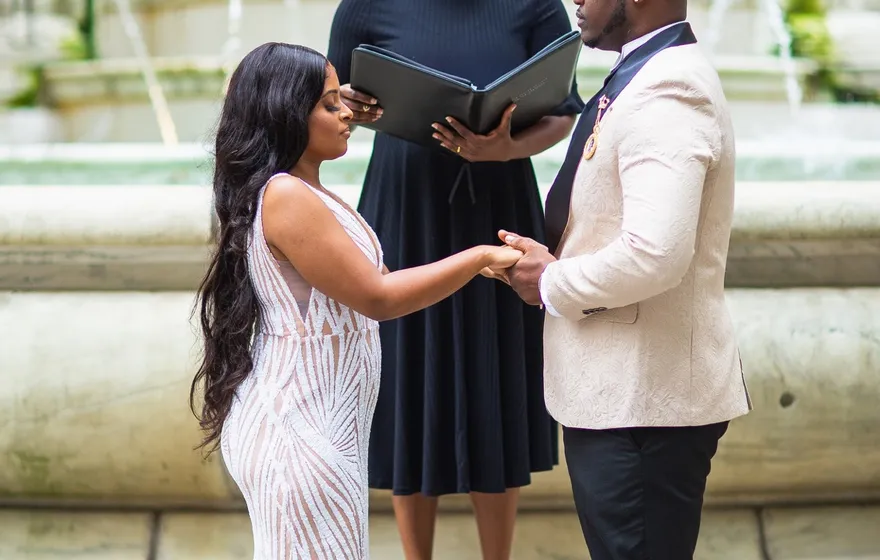
That’s why I put together the Couple’s Ceremony Kit. It’s the full structure I use with my couples, with ready-to-adapt scripts, vow prompts, and the cultural touches we just walked through, so you can write a ceremony that sounds like your family rather than a download. At $79 it does the heavy lifting, and every word stays yours.
You can absolutely do this yourself with the free script above. The kit just saves you the months of figuring out the order, the language, and where the heritage moments fit.
Frequently asked questions
Is jumping the broom a Jamaican wedding tradition?
Historically, no. Jumping the broom is documented among enslaved people in the US South in the 1840s and 1850s, and historian Tyler Parry traces its closest parallels to the British Isles rather than West Africa. It spread across the wider Black diaspora after the 1977 Roots miniseries. Plenty of Jamaican-heritage couples include it today as a pan-diaspora act of remembrance, which is a meaningful choice, but it is an adoption rather than an island custom. The deeper Jamaican rituals are the black cake, the church-and-yard celebration, and Tun T’anks Sunday.
How long do you soak the fruit for a Jamaican wedding cake?
Traditionally the fruit (raisins, currants, prunes) starts soaking in rum and wine at the time of the engagement, often for several months and sometimes a full year. A week at minimum will work, but the long soak is the point. It preserves the cake for over a year, which is why couples save a slice to eat on their first anniversary.
What is Tun T’anks Sunday?
Tun T’anks Sunday (Turn Thanks Sunday) is the Sunday after the wedding, when the couple and the full wedding party return to church to give thanks, then hold a second reception at the bride’s family home. Traditionally this second gathering was even bigger than the wedding day itself, with more food and more cake.
What food is served at a traditional Jamaican wedding?
Curry goat is the centerpiece, since goat was a costly special-occasion meat, served with rice and peas alongside mannish water (goat soup), roast breadfruit, roast yam, boiled banana and rundown. Drinks ranged from rum and cane liquor to ginger beer and coconut water. And always the rum-soaked black cake.
How can a couple with Jamaican roots honor their heritage in a modern wedding?
Start the black cake soaking at the engagement and save a tier for your first anniversary. Have both parents walk you down the aisle, as is customary in Jamaica. Give godparents a real role in the ceremony. Serve curry goat. Consider a turn-thanks brunch the day after instead of a rushed send-off. These choices are authentic rather than performative, and they carry the island into a modern ceremony naturally.
The Couple’s Ceremony Kit
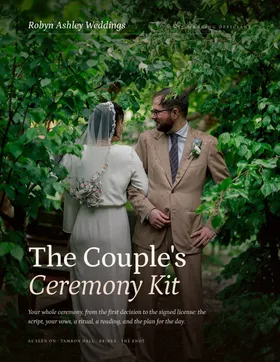
Walk in with a ceremony that sounds like the two of you
This post covers one part of the ceremony, and the Couple’s Ceremony Kit covers the rest, with five full scripts to start from and the prompts I use to help couples write their vows.
- Five full ceremony scripts in five different styles
- The Story Mine, thirty prompts for writing your vows
- Sixteen unity rituals, with the words and what to gather
- Thirty readings, each with my notes on when it fits
CEREMONY
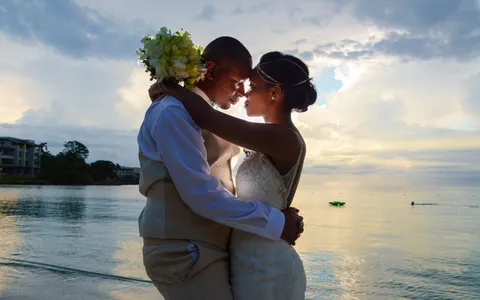
Caribbean Wedding Traditions Worth Keeping
A couple sat in my office in Crown Heights, both second-generation, one side Guyanese and one side Trinidadian, and the bride said, "We want it to feel Caribbean, but we don't.
READ →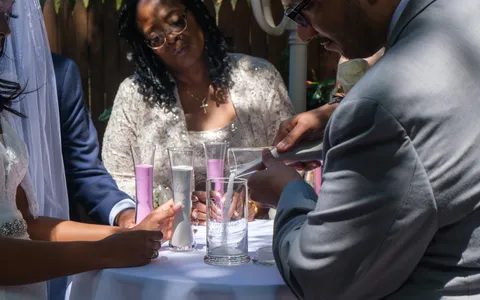
CEREMONY
What Is a Unity Ceremony? The Complete Guide
What a unity ceremony is, where it fits in your wedding, and how to choose the right ritual, from an officiant who's performed them at 300+ weddings.
READ →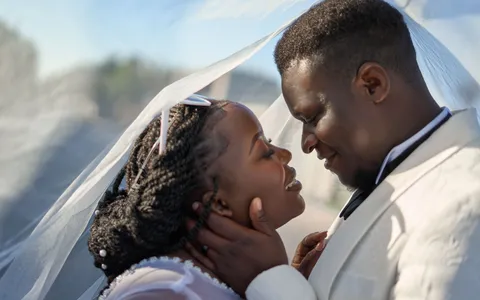
CEREMONY
African Wedding Traditions, Explained With Respect
African wedding traditions by people and region: the Akan knocking, the Yoruba engagement, the Igbo kola and wine-carrying, libation, aso ebi and the broom, with how to include one or two without flattening them.
READ →