VOWS
37 Vow Renewal Ideas, Intimate to Big Party
Honest vow renewal ideas ranked by what actually works in person, organized by scale and meaning, with costs, who each fits, and a how-to-choose framework.
I once officiated a vow renewal that cost more than my first car, and the room stayed dry-eyed the whole way through. Gorgeous florals, a string trio, a couple in second-look outfits that turned heads. Then they read vows a vendor template had handed them, all “you complete me” and “my best friend,” and I watched the front row check their phones.
Two weeks later I led a renewal for a couple on the rug in their living room. No guests. Just the two of them, their dog, and me. By the third sentence she was crying, and so was he, because he finally said out loud the thing he’d been carrying since her chemo year. Same officiant, opposite budgets, opposite results.
That gap is the whole reason I’m writing this. I’ve written and performed renewals in every format you can name, two-person rewrites, surprise reveals, milestone parties for a hundred and fifty, and I’ll tell you straight: the format almost never decides whether it works. The words do.
Scale is a budget and logistics decision. Meaning is a script decision. Most couples pour everything into the first and barely touch the second. So I’ve sorted these ideas two ways at once, by scale and by meaning, and I’ve stayed honest about which ones actually work in person versus which ones only look good in photos.
Start with the legal part, because it’s the reason every other choice is yours.
What actually makes a renewal move a room (and what doesn’t)
Before the list, here’s the honest sorting. The renewals that fall flat are almost always the ones secretly trying to be a wedding do-over. The tells are specific, and once you spot them you can’t stop spotting them.
Watch for a bridal party with assigned drama, a gift registry, a color-coded dress code for guests, attendants paying $300 for hair and makeup, showers and bachelorette weekends, lying to guests about your marital status or playing it like you’re a first-time bride. Etiquette writers flag every one of these, and they’re right to (Reader’s Digest). The reason they fall flat is simple. The couple is performing the past instead of marking the present.
Gifts are the clearest example. Wedding gifts exist to set up a new household. You already have one. A renewal that fishes for gifts plays like a costume party, and guests feel it even if they can’t name it.
The renewals that work do the opposite. They lean into the years between, the hard parts you survived, the specific life you’ve built. A wedding marks a beginning. A renewal marks everything you’ve made since, which is a richer thing to put into words and a much harder thing to fake.
The ideas, ranked by scale
Here’s the honest read on each format: roughly what it costs, who it fits, and whether it actually delivers in the room.
| Format | Rough cost | Headcount | Who it fits | Does it work in person? |
|---|---|---|---|---|
| Just the two of you | $0 to $500 | 2 | Private people, second-time-around couples | Yes, if you write real vows |
| Intimate (close family) | $500 to $3,000 | 5 to 20 | Couples who want witnesses, not a production | Almost always |
| Backyard gathering | $1,000 to $3,000 | 15 to 30 | Casual, food-and-people couples | Yes, when it stays casual |
| Surprise reveal | Varies wildly | 10 to 60 | One romantic partner, one who’d say “don’t fuss” | Strongly, when it’s a real surprise |
| Destination | $3,000 to $15,000+ | 2 to 20 | Couples who want the trip to be the gift | Mixed, depends on the script |
| Big party | $15,000 to $40,000 | 60 to 150 | Milestone anniversaries, big families | Only with real vows |
Those cost bands track published ranges. A backyard renewal for around 15 people runs roughly $1,000 to $3,000, while a formal sit-down dinner for 80 runs between $15,000 and $40,000, with most renewal budgets falling at 20 to 40 percent of a comparable wedding (Paperlust).
Just the two of you (the most underrated format)
No guests, no officiant required, no venue bill. You write vows to each other and say them somewhere that means something: the kitchen, the trailhead where he proposed, the hospital chapel where you waited out a scary night.
This is the format I push couples toward more than any other, because it strips away every reason to perform. There’s no audience to impress, so the words get honest fast. If you want a witness, your officiant can hold the moment for you in twenty minutes flat.
Intimate, with close family
Five to twenty people who actually know your marriage. This is the format that almost never misses, because everyone in the room has earned the right to hear your vows. Your kids can do a reading. A parent can walk you up. Nobody’s a spectator.
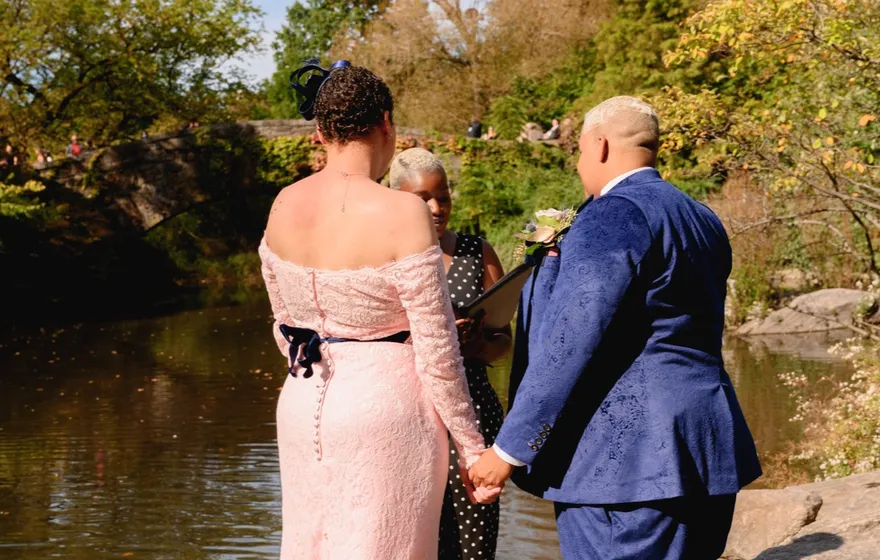
Cost stays low because you’re skipping the production. In a backyard or a living room, $500 to $3,000 covers food, a few flowers, and a real officiant to write and lead it.
Backyard gathering
The intimate format, scaled up to a party. Fifteen to thirty people, a tent or string lights, real food, a short ceremony before everyone eats. It works when it stays casual and the ceremony stays the centerpiece.
It falls apart the second it tries to become a wedding. Add a guest dress code and a registry and you’ve lost the warmth that made a backyard the right call.
The surprise reveal
This one has the highest ceiling when it’s pulled off for real. The mechanic that works: disguise the event entirely, then reveal the people. Design pro Emily Henderson’s husband hid the whole thing behind a barn door, where he’d gathered a dozen of their closest friends, many of whom missed the original wedding 27 years earlier, and flew them in for the night (Style by Emily Henderson). They replayed the original vows alongside new ones.
The “people who missed the first wedding” move is the part generic lists skip, and it’s the part that gives the surprise its meaning. It only works if one of you genuinely loves a grand gesture and the other won’t be furious about being ambushed. Know which partner you married.
Destination
The trip is the gift. The two of you on a beach, or twenty of you at a villa. This one’s a mixed bag in my experience, because couples often spend so hard on the location that they treat the ceremony as an afterthought. The setting does some emotional work for you, but it can’t carry the whole thing.
If you go destination, protect twenty minutes for a real ceremony with vows you wrote. The ocean is gorgeous, but it is not your marriage.
The big party
Sixty to a hundred and fifty people, a venue, a sit-down dinner, a milestone behind it. This is the format people picture when they hear “vow renewal,” and it’s the one that fails most often, because the scale tempts couples into vendor-template vows that vanish into the room.
It can, as long as the couple speaks about specific years instead of generic devotion. The published sweet spot is 30 to 60 guests, big enough to feel like a celebration, small enough that you actually connect with every person in the room (Paperlust).
For the full ceremony walkthrough, see the vow renewal ceremony script.
The ideas, organized by meaning
Scale answers “how big.” Meaning answers “why now,” and that’s the more important question by far. Here are the three meaning tracks I see most, each with its own emotional job.
| Track | Its job |
|---|---|
| Milestone | Honor the distance |
| Never-had ceremony | The real thing, late |
| After hard times | A new beginning |
Each one needs different words, so here’s what I mean by each.
The milestone marker
A 5th, 10th, 25th, or 40th anniversary. The job here is to honor the distance traveled. The best milestone renewals get specific to the era: the apartment you started in, the kid who arrived, the career change that scared you both. If you’re weighing which year to pick, I broke that decision down in detail in the guide to choosing your anniversary for a renewal.
The ceremony you never got to have
Courthouse couples. Pandemic couples. Couples who eloped on a Tuesday because that’s what life allowed, and always meant to do it properly. This renewal isn’t nostalgic, it’s the real thing arriving late, and it often carries more weight precisely because they’ve been waiting years for it.
After hard times
This is the track most guides ignore, and it’s the one that does the most work. Couples who renew after an affair, a serious illness, or a near-divorce don’t describe it as repeating the past. They describe it as a new beginning, and many say they only understood their original vows, the “in sickness and in health” part, after living the hard version of them.
That couple on the living room rug? Hard-times track. He’d nursed her through a year of treatment, and the vow he wrote wasn’t “you’re my best friend.” It was the specific Tuesday he realized he’d marry her again knowing every hard thing that came. Two people in a living room, and both of them were crying by the third sentence.
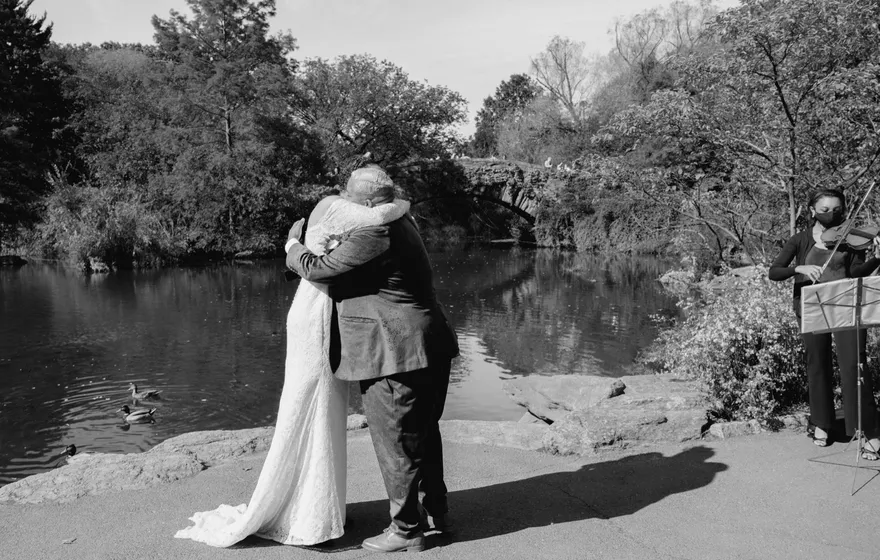
This track needs a different script than a party, which is exactly why I wrote a full piece on renewing vows after hard times. Don’t borrow milestone-party language for a recovery renewal. The jobs are different.
A fast framework for choosing your format
When a couple is stuck, I walk them through four questions in order. It takes about ten minutes and it cuts through most of the Pinterest noise.
Four questions, in order
-
Why now?
Milestone, late ceremony, or hard-times. Answer this before anything else, because it sets the tone for everything downstream.
-
Who has earned a seat?
Make the list of people who actually know your marriage. If that list is six, you have your headcount, and you’ve just saved yourself $30,000.
-
What's the budget honestly?
Aim for 20 to 40 percent of what a wedding for that headcount would cost. If the number stresses you out, shrink the guest list before you cut the things that matter.
-
Who's writing the vows, and when?
This is the one couples skip, and it’s the one that decides everything. Block real time for it. Renewal vows are different from first-time vows, because you have history to draw on, and that history is your best material.
Start your vow draft from questions, not a blank page. Ask each other things like this:
“what’s the hardest thing we got through, and what did you do that I never thanked you for?”
The answers are your vows. I pulled together a free set of these prompts to make it painless.
Do you actually need an officiant?
Legally, no. A renewal has no standing, so there’s no license, no paperwork, and no requirement that whoever leads it be ordained or registered with anyone. Your kids can lead it. You can do it with nobody officiating at all.
That’s the opposite of a real wedding, where the officiant has to be legally registered to sign your license. So when couples hire a pro for a renewal, they’re not buying paperwork. They’re buying the writing and the room-holding, the part that decides whether the ceremony sounds like the two of you.
Worth being honest about, because it changes what you’re shopping for. If you hire someone, hire them for the script and the steadiness, not the signature. I went deeper on what that role actually involves in the piece on who officiates a vow renewal.
A copy-ready renewal script you can use today
Here’s a full, modular renewal ceremony you can keep or cut to fit. It runs about three minutes as written and stretches to fifteen if you let the vows breathe. The whole structure is optional, which is the gift of a renewal: skip the processional, reorder the parts, add a reading from your kids, exchange rings or don’t.
Gathering Words:
(The officiant, or a person you love, addresses the room. If it’s just the two of you, your officiant says this to you directly.)
“We’re not here to start a marriage today. We’re here to look at one that’s already been lived in. [Name] and [Name] have been married [number] years. They’ve moved [number] times, survived [a specific hard thing they’ll let you name], and built a life that looks nothing like the one they imagined and somehow better. Today they’re choosing each other again, with their eyes open.”
The Reflection:
“When you marry, you make promises about a future you can’t see. You don’t know yet what ‘for better or worse’ will actually ask of you. [Name] and [Name] know now. They’ve lived the worse, they’re still here, and that’s what makes today different from a wedding. These aren’t hopeful vows. They’re proven ones.”
The Renewal Vows:
(Partners turn to face each other. They’ve written these separately and haven’t shared them. If you want a template to start from, replace the bracketed lines with your own specifics.)
“[Name], I married you [number] years ago not knowing [the hard thing]. I know it now. I’d choose this again, all of it, the [specific hard season] included, because the version of us on the other side of it is the one I wanted all along. I promise you [a concrete promise, not a feeling: ‘I’ll keep showing up for the unglamorous Tuesdays,’ not ‘I’ll always love you’].”
The Ring Warming or Re-Exchange (optional):
(If you’re re-exchanging rings, or warming the originals.)
“These are the same rings. They’ve been through everything you’ve been through. Put it back on each other now, and let it mean what it didn’t know how to mean the first time.”
The Closing:
“[Name] and [Name], you were married long before today, and you’ll be married long after we all go home. But you’ve said it out loud now, in front of the people who watched you build this. So I’ll just say the obvious. You’re still married. Go live the rest of it.”
Read the whole thing aloud once before you start cutting, and time it.
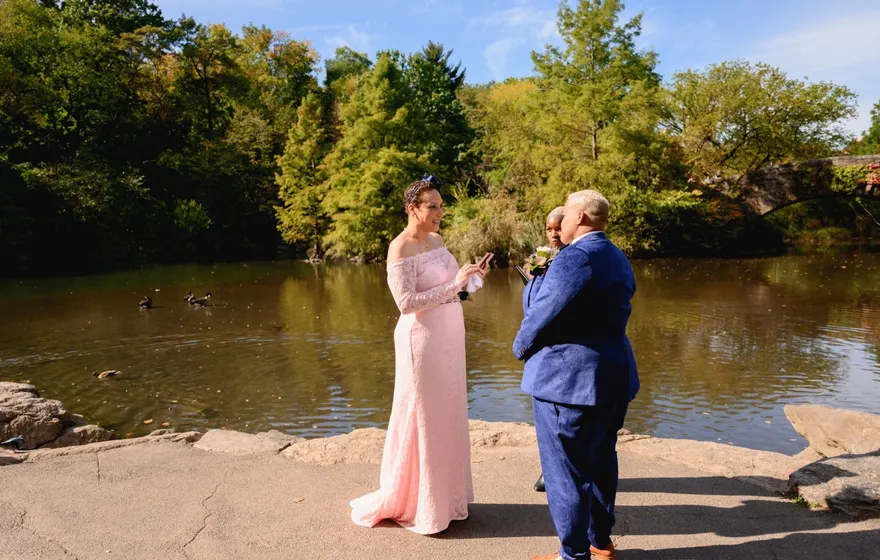
That script is a starting point, not a straitjacket. The bracketed specifics are where your marriage shows up, and they’re the difference between a renewal that sounds like your marriage and one that could belong to anyone. For help turning your history into the actual vow lines, I walk through it line by line in the guide to writing renewal vows, and the craft of writing wedding vows from scratch applies here too.
Renewing your vows in NYC
If you’re local, skip the obvious move. People assume “just go to City Hall,” but the City Clerk ceremony is a short, standard civil ceremony with one witness and no other guests. For a renewal, where the vows are the entire point, City Hall is the wrong room.
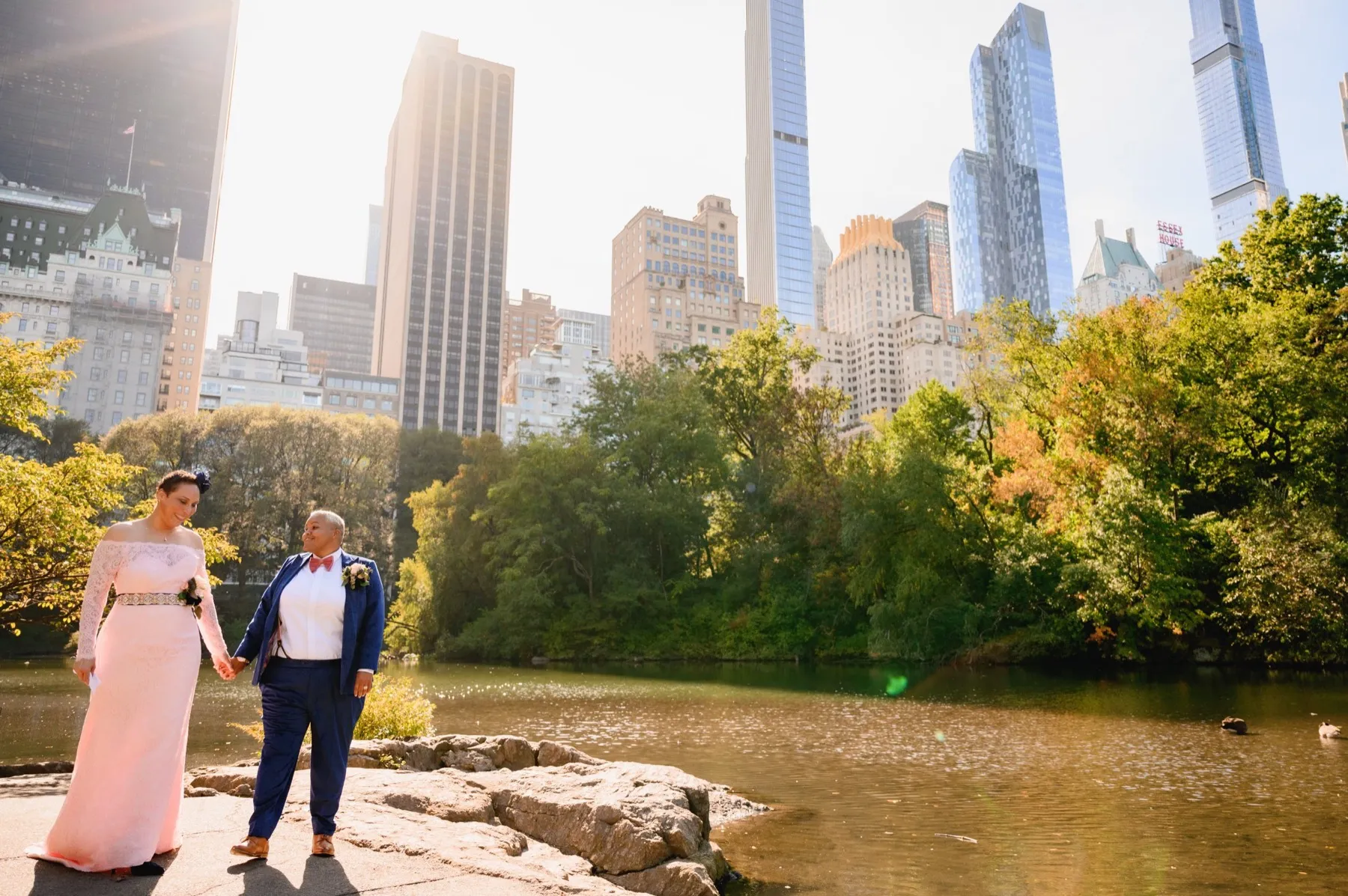
The better NYC move is a park. Central Park and other public spaces are free for groups under 20 people, and you only need a permit, $25 with up to 30 days to process, once you hit 20 or more guests or pick a named spot like the Ladies Pavilion. That makes an intimate Central Park renewal one of the lowest-cost meaningful formats available anywhere, with a private officiant writing you a script you can keep to three minutes or stretch to fifteen.
I broke down the spots, the permits, and the timing in the full guide to renewing your vows in NYC.
The part most couples skip, and how I’d help
Here’s what I keep circling back to. You can nail the venue, the flowers, the guest list, and still end up with vows that could belong to any couple. And you can do the whole thing in your living room and say things you have never said out loud, because the vows were true.
The hardest part isn’t planning. It’s sitting down and figuring out what to actually say after all these years, when the easy phrases (“my best friend,” “you complete me”) feel too small for what you’ve been through.
That’s the work I care about. My Couple’s Ceremony Kit is built for exactly this. It walks you through writing a ceremony and vows that sound like your real marriage, with prompts that pull the specifics out of you, structure you can follow, and example language for renewals at every scale. It’s $79, and it gets the real specifics of your marriage onto the page.
Two quick companions as you plan: my vow renewal vs wedding breakdown of how a renewal really differs, and vow renewal invitation wording for when it is time to tell people.
If you want to start for free, I put together a set of vow-writing questions that do the first and hardest part: getting your real history onto the page. Answer those honestly and you’re most of the way to vows that work.
Frequently asked questions
Do you need an officiant to renew your vows?
No. A vow renewal has no legal standing because you’re already married, so no license or ordained officiant is required. Anyone can lead it, including your own kids, or you can simply exchange vows with each other. People hire an officiant for a renewal not for paperwork but for the writing and for holding the room, which is the part that decides whether the ceremony sounds like your marriage.
How much does a vow renewal cost?
It tracks with scale. A backyard renewal for around 15 people runs roughly $1,000 to $3,000 with catering, florals, and invitations. A formal sit-down dinner for 80 guests at a venue runs $15,000 to $40,000. As a rule of thumb, renewal budgets come in at about 20 to 40 percent of an original wedding budget for the same headcount, and the reported sweet spot is 30 to 60 guests.
Is a vow renewal legally binding?
No. You’re already legally married, so a renewal is entirely ceremonial. There’s no new marriage license, no paperwork, and no legal requirement for how it’s conducted. That flexibility is the gift: you can skip the processional, reorder everything, include your children, and write vows that sound like your actual life.
What anniversary is best for renewing your vows?
There’s no rule. The 25th anniversary is the most recognized milestone, but couples renew at 5, 10, and 20 years, every single year, or at no anniversary at all. Common triggers beyond milestones include finally having the ceremony you skipped the first time, including kids who weren’t born yet, a move, or marking your way out of a hard season together.
Can you renew your vows at NYC City Hall?
In practice no, and that surprises people. The City Clerk ceremony is a short civil wedding for couples holding a new NYC marriage license, so it isn’t set up for a couple who is already married. A renewal is about the vows anyway, which a clerk’s standard ceremony leaves no room for. A better NYC option is an intimate Central Park ceremony, free for groups under 20 people, with a private officiant who writes you a custom script.
The Couple’s Ceremony Kit
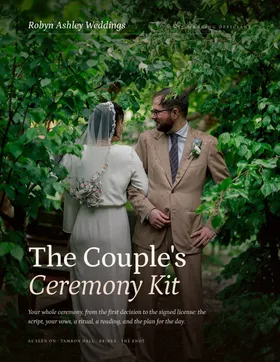
Walk in with a ceremony that sounds like the two of you
This post covers one part of the ceremony, and the Couple’s Ceremony Kit covers the rest, with five full scripts to start from and the prompts I use to help couples write their vows.
- Five full ceremony scripts in five different styles
- The Story Mine, thirty prompts for writing your vows
- Sixteen unity rituals, with the words and what to gather
- Thirty readings, each with my notes on when it fits
VOWS
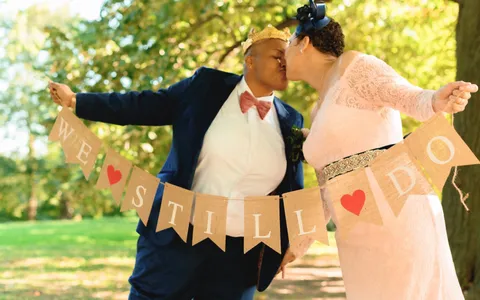
Best Anniversaries to Renew Vows | Don't Wait
A couple I worked with spent years saying "we'll do it at 25." Then her mother got sick, and waiting four more years for a tidy number suddenly felt absurd. They renewed at year.
READ →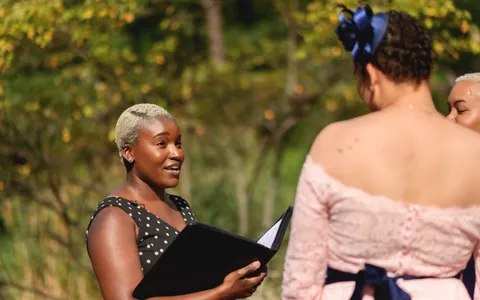
VOWS
Vow Renewal Officiant, How to Ask + What to Send
A couple who'd been married twenty-two years got on a call with me and asked, almost sheepishly, who they were supposed to "get" to make the renewal official. I told them the.
READ →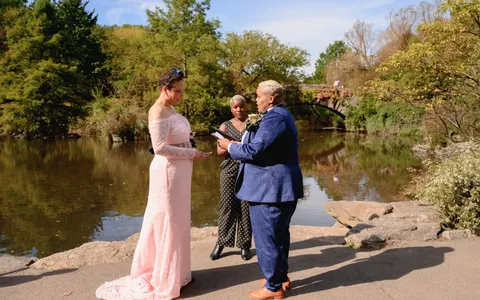
VOWS
Vow Renewal vs Wedding: The Real Differences
A couple sat across from me last spring, planning what they kept calling their vow renewal. Twenty minutes in, the wife asked me, almost shyly, whether they'd "sign something" at.
READ →