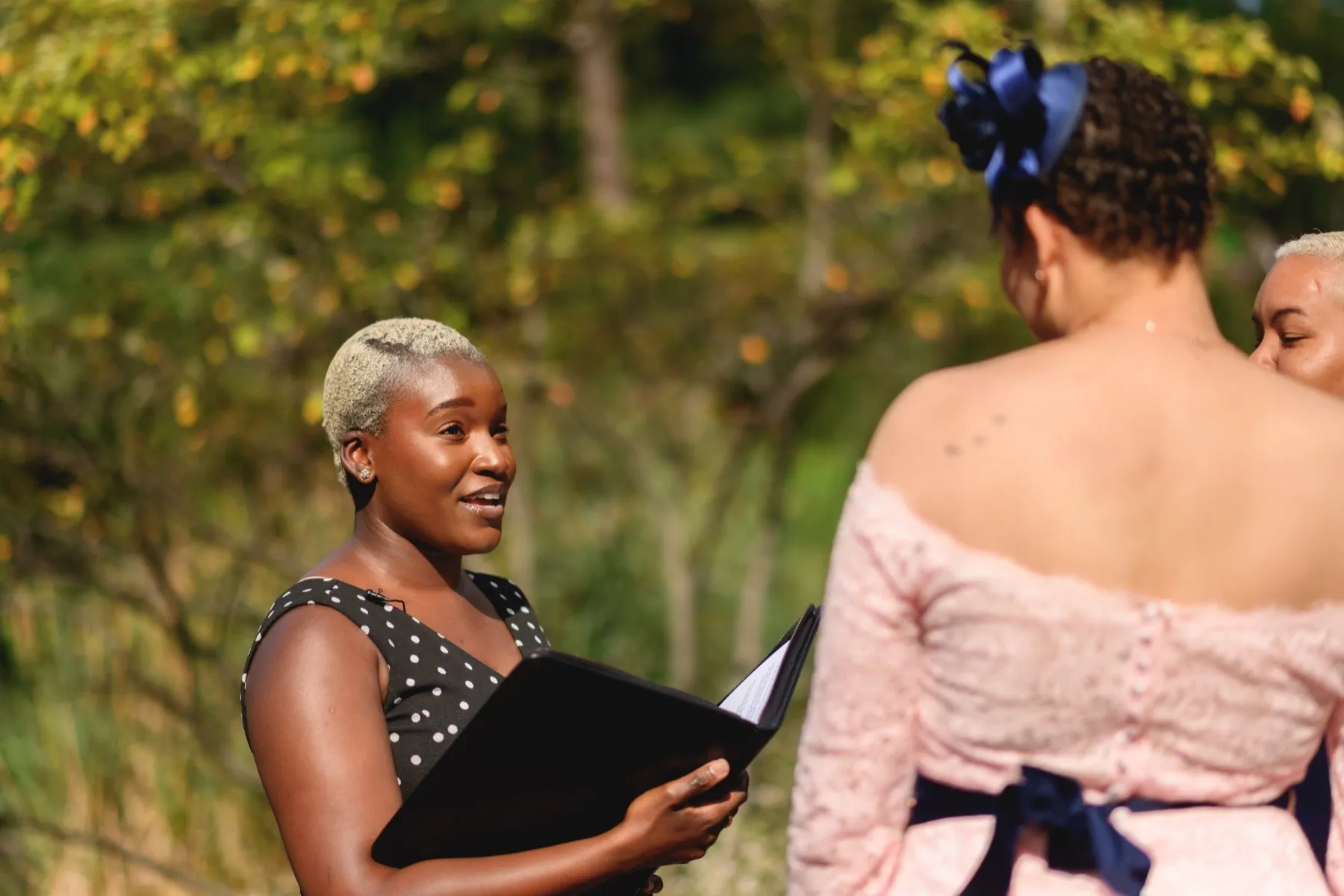
VOWS
Vow Renewal Officiant, How to Ask + What to Send
You don't need a licensed vow renewal officiant. Here's how to ask a friend, what to send them, the script, and when to hire a pro instead.
A couple who’d been married twenty-two years got on a call with me and asked, almost sheepishly, who they were supposed to “get” to make the renewal official. I told them the truth, and it felt almost too easy to say out loud: nobody. They were already married. There was nothing to make official, nothing to file, no license waiting at a clerk’s office. Their faces did the thing I’ve watched happen a hundred times, half relief and half “wait, that’s it?”
That’s the part most articles skip. So here’s the whole thing, in order: why you don’t legally need anyone, how to ask a friend if you want one, the exact message and one-page brief to send them, what that friend actually needs to know, a script they can read off the page, and the honest line for when you should call a professional instead.
The short version: a vow renewal isn’t legally binding, so you don’t need a licensed officiant or a marriage license, and anyone you trust can lead it. That one fact changes how you plan everything else.
Everything in that box is covered below, in the order you’ll need it.
Do you actually need an officiant for a vow renewal?
No. And I want to be precise about why, because the “why” is what takes the stress out of the rest of this.
A marriage license exists to legally create a marriage. You already did that. A renewal doesn’t create anything new in the eyes of the law. It reaffirms a promise that’s already on the books. So there’s no license to apply for, no document to sign, no paperwork to mail back, and no clerk who needs the ceremony to happen a certain way.
The person leading it doesn’t need to be ordained, registered, or licensed (American Marriage Ministries). There’s no role to qualify for. They’re a host with a lovely job to do.
If you want a keepsake, some couples ask their friend to present a decorative, non-legal certificate at the end, the kind you can order online or design yourself (American Marriage Ministries). It holds zero legal weight and it photographs beautifully. Purely optional, and a sweet touch if your spouse likes a prop in their hands.
Who can officiate a vow renewal?
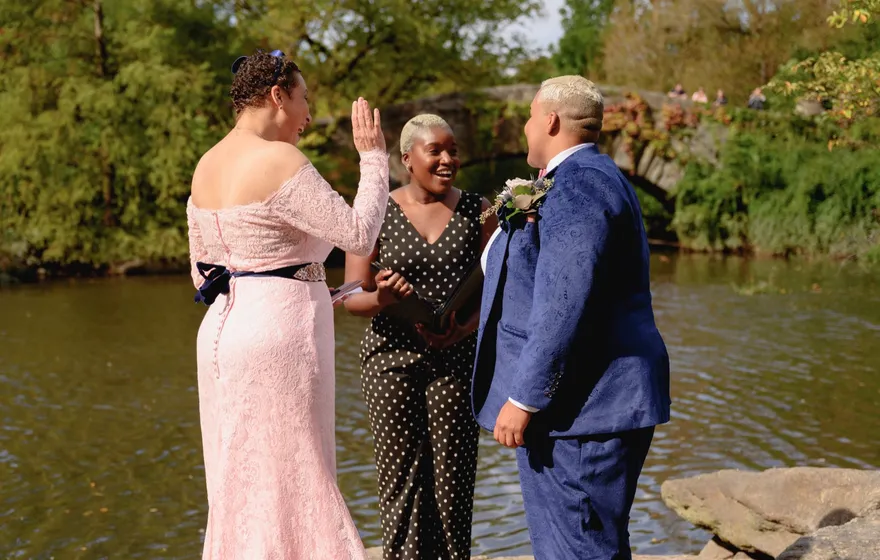
Anyone you’d trust to stand up and speak warmly for ten minutes. I’ve watched all of these go beautifully:
- A close friend who tells a good story
- Your adult son or daughter (a favorite of mine, because they’ve watched the marriage up close)
- A sibling, or your original best man or maid of honor from the wedding
- A grandparent, if you want the elder-of-the-family energy in the room
- You and your partner, leading it yourselves with no officiant at all
That last option surprises people. There’s no rule that says someone else has to stand between you. Plenty of couples just face each other, say their piece, and let a friend cue the music. For more shapes a renewal can take, I keep a running list in vow renewal ideas, my hub for the whole topic.
How to ask a friend to officiate (and the exact words)
The ask matters more than people think. If you make it sound like a heavy obligation with legal weight, your friend’s stomach drops. If you make it sound like the honor it is, with the pressure taken off, they say yes and mean it.
Two things have to come through: this is a real honor, and there’s nothing legal or scary to handle. Here’s a message you can adapt and send tonight.
“We’ve decided to renew our vows this fall, and there’s nobody we’d rather have stand up and lead it than you. Before you panic, there’s no legal part. We’re already married, so nothing’s official, nothing gets filed. It’s really just you welcoming everyone, telling a little of our story, and walking us through saying our vows again. I’ll send you everything written out. Would you do it?”
Notice what that does. It names the honor, kills the fear in the second sentence, and promises you’ll hand them the materials so they’re not staring at a blank page. That last promise is the one most couples forget to make, and it’s the one that turns a nervous yes into a confident one.
What to send them: the one-page brief
Here’s where I earn my keep. I’ve coached first-time officiants, friends and family who’d never done this, through ceremonies they were terrified of. They almost never freeze on the big stuff. They freeze on logistics: where do I stand, when do I start, what do I say first, what if someone cries.
Solve that ahead of time with one page. Send your friend a brief that covers:
- The date, location, and rough timeline. When do they need to be in place, and what happens right before they speak (a song, a processional, a clinked glass)?
- Who’s in the room. Family only, or a hundred guests. Kids involved. Anyone who’ll read something.
- Original vows or new ones. Tell them whether you’re repeating the vows from your wedding or writing fresh ones. If you’re writing new ones, our guide on how to write vow renewal vows will help you both.
- Any readings or music cues they need to introduce or pause for.
- A script skeleton. The bones of what to say, so they’re filling in, not inventing. I give you a full one below.
- The backup-copy rule. Ask them to hold a printed copy of your vows during the ceremony, so if one of you gets emotional and blanks, they can quietly feed you the next line (Universal Life Church). This rule has saved more moments than anything else on this list.
One more move that makes a friend ten times better: have them send you a few questions before they write a word. Favorite moments from the marriage, what the years have taught you, a value you both hold (Universal Life Church). That’s where the personal material comes from, the stuff that doesn’t sound like a card from the drugstore. It can’t come from your friend’s memory. It has to come from you.
What the friend actually needs to know
Three things separate a friend who’s “fine” from a friend who’s genuinely good at this.
One: it’s a renewal, not a wedding, so the closing reaffirms, it doesn’t declare. The single line that signals your friend understands the assignment is the ending. They should say something like “you’ve renewed your vows and reaffirmed your commitment,” never “I now pronounce you married” (Universal Life Church). You’re already married. The ceremony honors that. It doesn’t redo it.
Two: hold the printed vows. I said it above and I’ll say it twice, because it’s the thing nobody plans for. Emotion shows up. When it does, the person with the paper saves the moment.
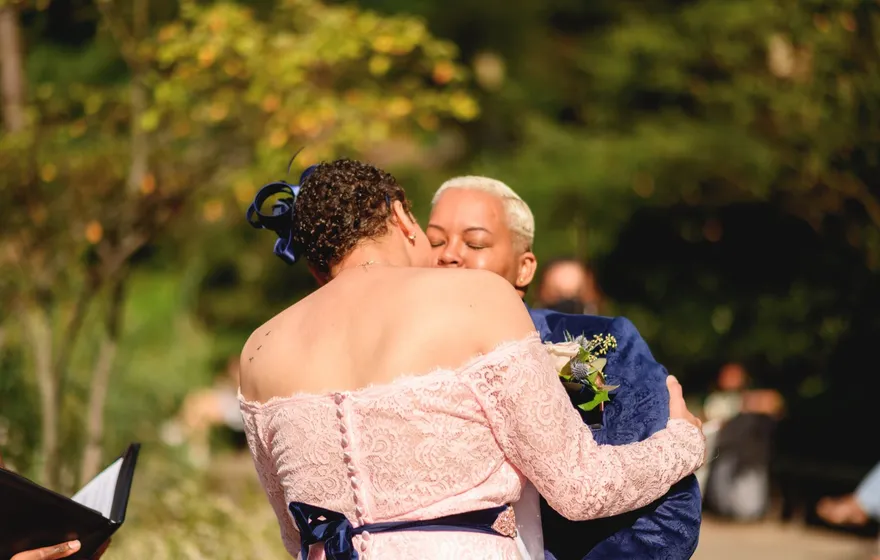
Three: slow down. Nervous first-timers rush. Tell your friend the room wants them to take their time, that the pauses are the good part. If your friend wants the deeper version of how to carry a ceremony, send them how to officiate a wedding and what a wedding officiant actually does. Both translate cleanly to a renewal, with the legal sections lifted out.
ALSO READ How to Officiate a Wedding: A First-Timer's Step-by-Step Guide (2026)A vow renewal script you can hand them today
Here’s a full skeleton, copy-ready. Your friend fills in the brackets from the questions you answer. It follows the structure that reliably works: welcome, why we’re here, your story, the renewal of vows, an optional ring moment, a blessing, and the reaffirming close (Universal Life Church).
Welcome:
“Thank you all for being here. We’re not here today because [Name] and [Name] are getting married. They already did that, [number] years ago, and they’ve been proving it ever since. We’re here because they wanted to say it all again, out loud, in front of the people who’ve watched it hold.”
Why we’re here:
“A wedding is a promise made on faith, two people betting on a future they can’t see yet. A renewal is different. It’s a promise made on evidence. [Name] and [Name] have lived the years now. They know exactly what they’re choosing, and they’re choosing it again on purpose.”
Their story: (read the two or three details the couple gave you, in their own words where you can)
“[A favorite moment, a hard season they came through, something the marriage has taught them. Keep it specific. The specific is what makes the room lean in.]”
The renewal of vows: (turn to the couple)
“[Name] and [Name], you can take it from here.”
(The couple recites their original vows or reads new ones to each other. Stay close with the printed copy in case either of them needs the next line.)
Optional ring moment: (if they’re exchanging rings again or adding new ones)
“You first gave these rings as a beginning. Today you give them again as a record of everything that came after. [Name], place it back on [Name]‘s hand and say what you mean by it.”
Blessing or affirmation:
“To everyone here: you are the witnesses. You’ve seen this marriage on its ordinary days and its hard ones. Hold them to this. Remind them, when they need it, of what they said today.”
The close: (reaffirming, not declaring)
“[Name] and [Name], you’ve renewed your vows and reaffirmed your commitment to each other, in front of all of us. There’s nothing left to make this official, you took care of that years ago. So I’ll just say what we’re all feeling. Here’s to the next chapter. You may kiss.”
If you want the spoken vows themselves done well, I wrote a whole companion piece with full examples in a vow renewal ceremony script your officiant can read start to finish.
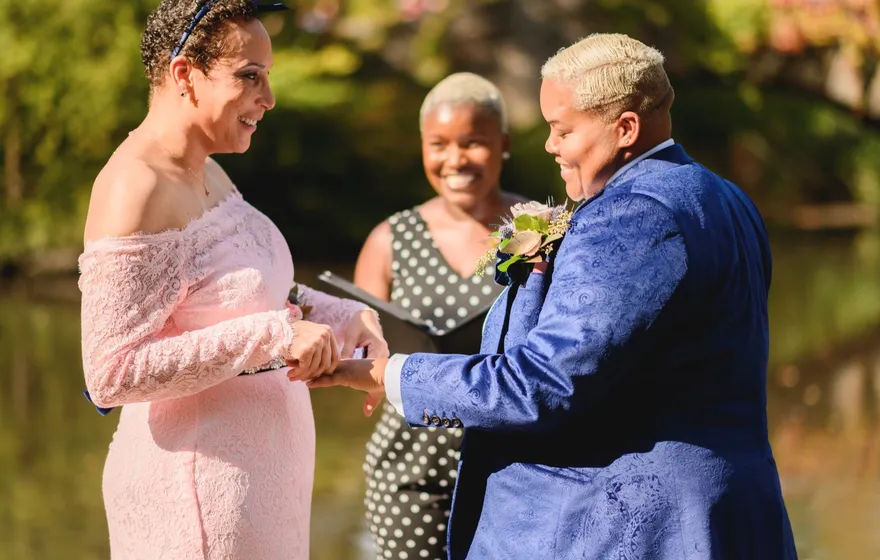
When you should hire a pro instead
I’m an officiant, so you’d expect me to push you toward hiring one. I’d rather be honest, because for a lot of renewals a friend is genuinely the better call. Here’s when I’d hand it back to a professional.
Your guest list is large. A friend who’s lovely across a dinner table can shrink in front of eighty people. A pro is built for the room.
Your would-be officiant freezes in front of crowds. Some people don’t get a little nervous, they get paralyzed, and they know it about themselves. Believe them when they tell you. Don’t make a good friendship pay the price for a moment you’ll only have once.
You want zero risk of a last-minute bail. This one’s real. A friend doing it as a favor can get cold feet close to the day, and an experienced officiant is rarely free to step in at the eleventh hour. A pro you’ve booked and paid shows up.
| Your situation | My pick |
|---|---|
| Small renewal at home | A confident friend |
| A large guest list | A pro |
| Friend freezes in crowds | A pro |
| No room for a bail | A pro |
If you’re in any of the bottom three rows, book a professional as early as you can, so you are choosing from more than one name.
On cost, so you can weigh it honestly: hiring a wedding officiant usually runs a few hundred dollars. Fully customized vow-renewal packages tend to run higher. For a small renewal in your backyard, a confident friend and a printed script is the right answer. For a hundred-guest event you’ve spent real money on, the professional is cheap insurance.
One thing on etiquette while we’re here
Two quick rules so nobody steps wrong. A renewal gift registry is widely considered poor form, because the point of a registry is helping a couple start out, and you started out long ago. Gifts aren’t expected, and “no gifts, please” belongs right on the invitation. Your original wedding party is welcome but optional, and nobody needs to squeeze back into a dress from two decades ago.
If you want help getting the words right
The hardest part of a renewal is never the legal part, since there isn’t one. It’s the words. Couples sit down to write what twenty or thirty years have meant and go blank, and then they hand their friend a blank too.
That’s the gap our Couple’s Ceremony Kit fills. It’s the writing engine behind everything in this post: the prompts that pull your real story onto the page, a renewal script you can hand any friend, and the vow framework so what you say to each other actually sounds like you and not a greeting card. You can see what’s inside the Couple’s Ceremony Kit here. It’s $79, and it means your friend reads words the two of you shaped, in order, instead of improvising.
If you’re not ready for the kit and just want a running start, I keep a free list of the questions I ask every couple before I write a word. Grab them at my vow questions page and use them to fill in your friend’s brief.
ALSO READ Vow Renewal Ceremony Script, Copy & CustomizeFrequently asked questions
Do you need an officiant for a vow renewal?
No. A vow renewal has no legal standing because you’re already married, so there’s no marriage license to sign and no officiant requirement. You can have a friend or family member lead it, hire a pro for the polish, or simply exchange vows with each other. Nothing gets filed either way.
Can a friend or family member officiate a vow renewal?
Yes, and they don’t need to be ordained or registered. Since nothing is legally filed, anyone can lead the ceremony, which is why a renewal is one of the easiest ceremonies to hand to a friend, your adult child, a sibling, or your original best man or maid of honor.
Do you need a marriage license for a vow renewal?
No. A marriage license legally creates a marriage, and you’re already married. A renewal reaffirms vows you’ve already made, so there’s no license to apply for, sign, or return. That’s the main reason the legal stakes are zero.
How do I ask a friend to officiate, and what do I send them?
Ask in person or with a short, warm message that makes clear it’s an honor and that there’s nothing legal to handle. Then send a one-page brief: the date and rough timeline, who’s in the room, whether you’re reciting original vows or new ones, any readings, and a simple script skeleton (welcome, your story, the vow exchange, optional rings, a blessing, the closing). Tell them to keep a printed copy of your vows on hand in case anyone gets emotional.
When should we hire a professional officiant instead of asking a friend?
Lean professional if you have a large guest list, your would-be friend-officiant genuinely freezes in front of crowds, or you want zero risk of a last-minute bail. Pros handle the room, write a tight personalized script, and won’t back out the week of. Hiring an officiant usually runs a few hundred dollars, with fully customized renewal packages going higher.
The Couple’s Ceremony Kit
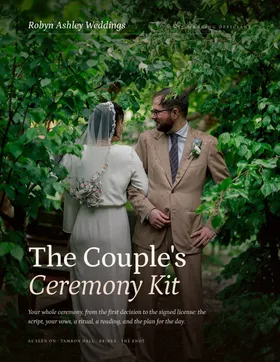
Walk in with a ceremony that sounds like the two of you
This post covers one part of the ceremony, and the Couple’s Ceremony Kit covers the rest, with five full scripts to start from and the prompts I use to help couples write their vows.
- Five full ceremony scripts in five different styles
- The Story Mine, thirty prompts for writing your vows
- Sixteen unity rituals, with the words and what to gather
- Thirty readings, each with my notes on when it fits
VOWS
Best Anniversaries to Renew Vows | Don't Wait
A couple I worked with spent years saying "we'll do it at 25." Then her mother got sick, and waiting four more years for a tidy number suddenly felt absurd. They renewed at year.
READ →
VOWS
Vow Renewal vs Wedding: The Real Differences
A couple sat across from me last spring, planning what they kept calling their vow renewal. Twenty minutes in, the wife asked me, almost shyly, whether they'd "sign something" at.
READ →
VOWS
37 Vow Renewal Ideas, Intimate to Big Party
I once officiated a vow renewal that cost more than my first car, and the room stayed dry-eyed the whole way through. Gorgeous florals, a string trio, a couple in second-look.
READ →