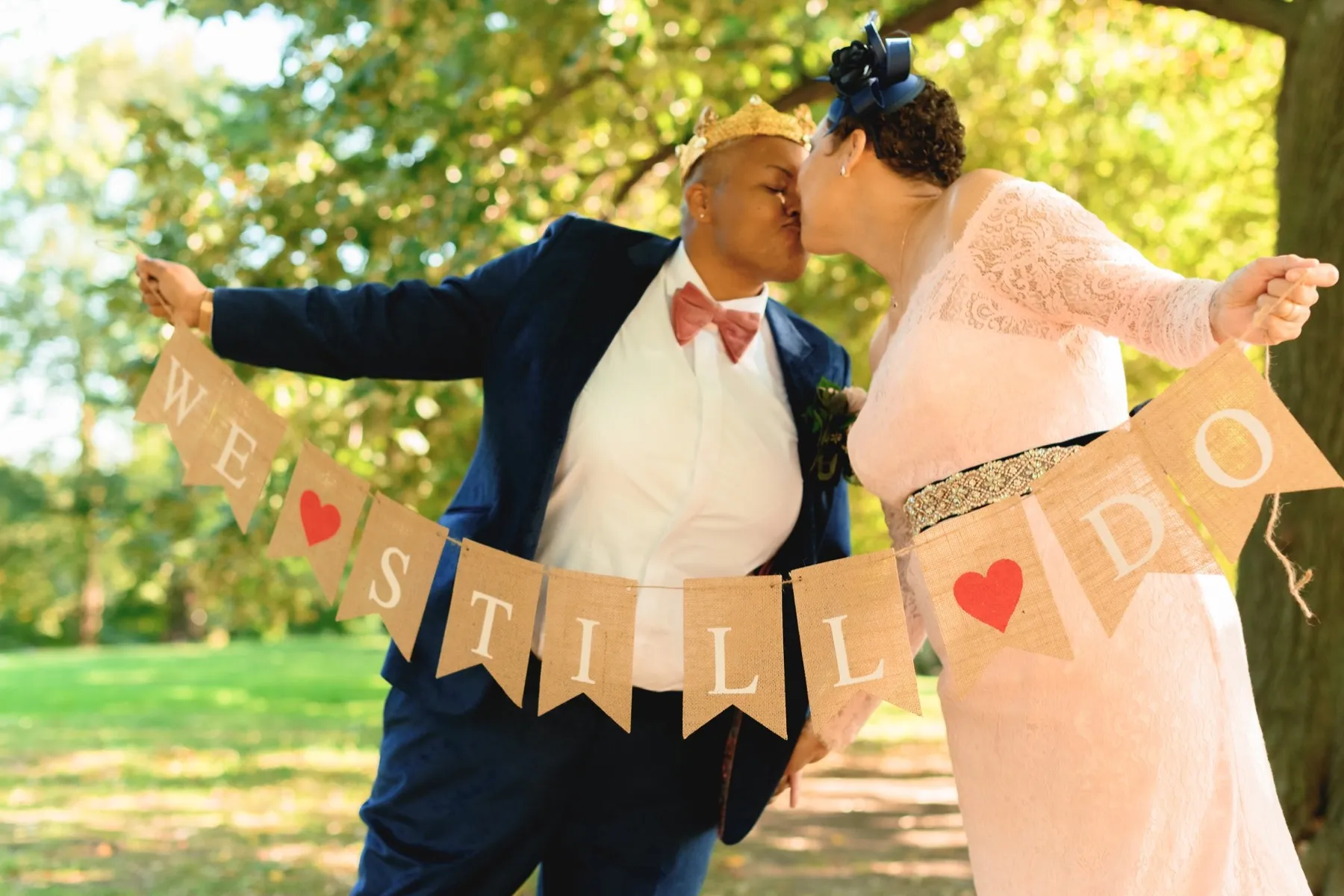
VOWS
Best Anniversaries to Renew Vows | Don't Wait
The best anniversary to renew vows depends on what you survived, not the gift chart. A NYC officiant breaks down 5, 10, 25, 40, 50 and off-year renewals.
A couple I worked with spent years saying “we’ll do it at 25.” Then her mother got sick, and waiting four more years for a tidy number suddenly felt absurd. They renewed at year 21, in her mother’s living room, so the woman who raised the bride could see it happen. Nobody in that room cared that 21 isn’t on the gift chart.
I officiate vow renewals at every milestone you can name, and the question I hear most is some version of “which anniversary is the right one?” Couples want permission. They want to know what counts as normal, and whether they’re jumping the gun or letting the moment slip past them.
Here’s the honest answer first, then the long one.
There is no single best anniversary to renew your vows. The 10th and 25th get chosen most, but the renewals that have wrecked me were almost always the off-milestone ones, because the couple picked a year to mark something they survived instead of a number that simply arrived. The bigger mistake, by a wide margin, is waiting.
What does each milestone anniversary actually mean?
There’s a long tradition of pairing anniversaries with materials, and it maps cleanly onto the years couples tend to pick: 5th is wood, 10th is tin or aluminum, 25th is silver, 40th is ruby, 50th is gold, 60th is diamond. The silver and gold associations go back to the 1500s in Germanic countries (Wikipedia). You can theme a renewal around any of these. Honestly, though, what matters more is how each year tends to feel once everyone’s in the room.
| Anniversary | What I’ve watched it carry |
|---|---|
| 5th (wood) | The hopeful do-over |
| 10th (tin) | The earned mid-point |
| 25th (silver) | The legacy moment |
| 40th (ruby) | Quiet endurance |
| 50th (gold) | The capstone |
Here’s what I’ve watched these years carry.
5 years is the hopeful do-over. It’s the youngest renewal I see often, and right now it’s everywhere. Five years is the first real milestone for couples who married small or over a screen in 2020, which is why 2025 got flagged as a record vow-renewal year. For a lot of these couples the renewal isn’t a quiet recommitment. It’s the wedding they never got. Officiant, attendants, a real walk down the aisle, an afterparty (American Marriage Ministries). If you eloped during COVID and feel like you missed your day, you did, and you’re allowed to take it back.
10 years is the earned mid-point. This is the year most couples reach for first when they think “renewal,” and I get why. Ten years is long enough that you’ve weathered actual things, money stress, a move, maybe a kid or a loss, and short enough that you’re not waiting half your life to celebrate. The tone is usually “we’re still here, and we’re better at this now.”
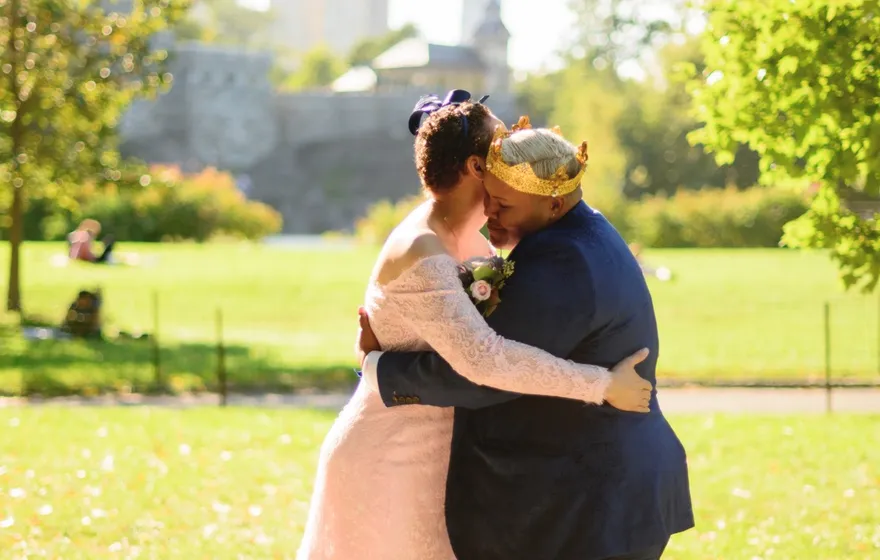
25 years (silver) is the legacy moment. These renewals skew large. By 25 years, decades of people have watched your marriage happen, so the guest list writes itself. The ceremony tends to look back and honor what you built, and the room fills with people who remember the original wedding.
40 years (ruby) is quiet endurance. Smaller, calmer, and often the most understated of the milestones. Couples at 40 aren’t trying to prove anything to anybody. The vows get plainer and truer.
50 years (gold) is the capstone, and it’s usually not the couple’s idea. Golden renewals are often organized by the children or grandchildren. That flip in who’s hosting is what makes them different from every other renewal. The couple shows up thinking they’re going to a nice lunch, and their family has built them a ceremony. I’ve cried at more than one.
Is it weird to renew vows on an odd or non-milestone year?
It’s not weird, and I’d argue it’s frequently the more honest choice.
The renewals that have left guests in pieces, in my experience, are rarely the round numbers. They’re the 7th after a brutal year. The 16th after one of them got a diagnosis and beat it. Couples pick these off-calendar years on purpose, to mark surviving something rather than to celebrate a milestone that just showed up on the calendar. When a couple stands up to say “we almost didn’t make it through this, and we did,” nobody is checking whether the year ends in a zero or a five. If the hard stretch is the whole reason you’re doing this, the case for renewing your vows after a hard chapter is worth reading before you set a date.
Plenty of well-known couples have normalized this. Alec and Hilaria Baldwin renewed at 5 years; Heidi Klum and Seal renewed every single year. The point isn’t to copy a celebrity. It’s that the “right” year is the one that means something to you.
There’s a beautiful version of this from The Gottman Institute: a couple who renews every year, rewriting their personal vows plus a “manifesto for their marriage” on each anniversary. The writer found that renewing after 14 years carried far more weight than the original wedding did. In her words: “I really had no idea what I was promising on our wedding day all those years ago. They were just words” (The Gottman Institute). That’s the whole case for not waiting, right there. The longer you’ve actually been married, the more your vows mean when you say them again.
The real mistake: waiting for the perfect milestone
I’ve watched this pattern enough times to name it. A couple decides they’ll renew “at 25,” or “at 30,” or “once the kids are grown.” It’s a lovely plan. Then a parent gets sick, a kid moves across the country, money gets tight, and the perfect milestone keeps sliding out of reach. Sometimes it never comes.
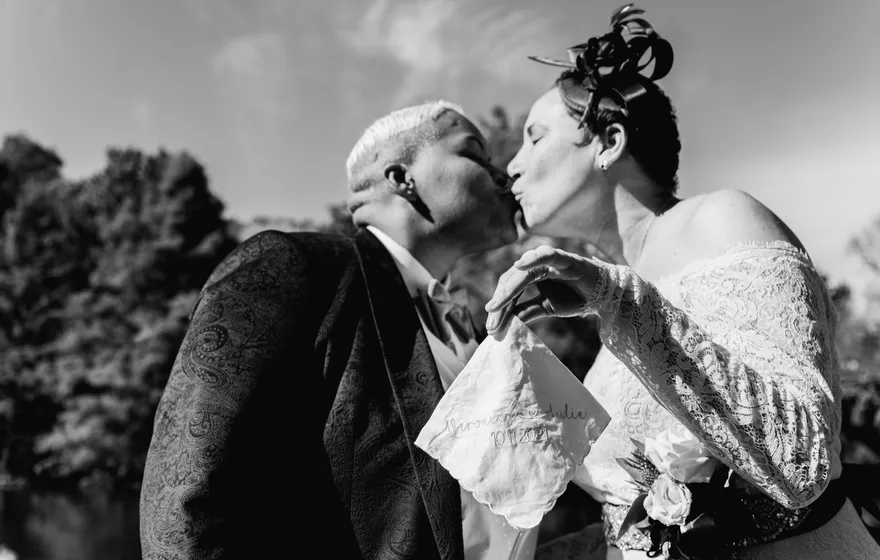
A vow renewal isn’t legally binding. There’s no marriage license, no waiting period, and no rule about which year you’re allowed to pick. So the only thing stopping you from renewing this year is the idea that this year isn’t special enough. I’d gently push on that. The year you’re in right now is a year you survived together, and that already qualifies.
The year you’re in right now is a year you survived together, and that already qualifies.
If you want help getting clear on what you’d even want to say, I put together a short set of vow renewal questions you can work through together before you write a word. It’s the same prompt list I give couples in our first session.
A short renewal vow you can actually use
Renewal vows differ from first-wedding vows in one big way: you have proof now. You’re not promising into the unknown. You’re testifying to what you’ve already done. Here’s a free, copy-ready set you can speak as-is or rewrite in your own words. It works whether you’re at year 3 or year 50.
Partner A:
(face each other, hold hands)
“When we married, I promised you my life without really knowing what I was promising. Now I do. I know what your patience looks like at 2 a.m. I know how you show up when things fall apart. [Add one specific thing you’ve survived together.]”
“So I’m not making the same vows I made then. I’m making better ones, because I’ve seen you keep yours. I choose you again, on purpose, with my eyes open.”
Partner B:
(repeat, then continue)
“I’d marry you again in any year, on any date, with or without the cake. The years didn’t wear this down. They proved it. I’m yours, still, and gladly.”
Both:
(officiant cues you, you say it together)
“Again, and on purpose, we choose this.”
If you want the longer version with full ceremony structure, the complete vow renewal ceremony script walks through the whole order, from welcome to pronouncement.
Do you need an officiant for a renewal?
Technically, no. Since a renewal isn’t legal, an officiant is optional. For a backyard 5-year between just the two of you, you may not want one at all.
That said, most couples bring someone in to hold the room, especially for the bigger milestone renewals where there’s a guest list and an actual ceremony to run. It can be a professional, or a close friend, or one of your adult kids. If you’re going the friend route, send them how to plan and run the renewal as the officiant first so they’re not improvising on the day. The structure is what keeps it from feeling like a toast that ran long.
How I’d help you decide which year
The Couple’s Ceremony Kit exists for exactly this couple: the one who knows they want to renew but freezes at “what do we even say, and in what order?” It gives you the ceremony spine, the vow prompts, and the readings, so you’re not staring at a blank page two weeks out. You bring the marriage. The kit handles the words.
It’s the same backbone I use with couples in person, which means you can run a renewal that feels finished and intentional without hiring anyone, if you don’t want to. If you’re choosing your year and trying to make the ceremony itself match the weight of the moment, that’s what it’s built for.
And if you’re still circling the year, sitting with more vow renewal ideas across different milestones and styles tends to make the decision obvious. Usually one of them tugs at you harder than the rest. That tug is your answer.
Frequently asked questions
What is the most common anniversary to renew your vows?
The 10th and 25th anniversaries get chosen most, with 10 years being the year most couples reach for first. Ten years feels earned without making you wait half your life, and 25 (silver) tends to draw the bigger guest list because by then decades of family and friends have watched the marriage happen.
Is it weird to renew your vows on a non-milestone year like 7 or 13?
No, and it’s often more meaningful. Couples frequently pick a non-round year to mark something they actually lived through, like a serious illness or a hard stretch in the marriage, instead of a number on a chart. There’s no rule that a renewal has to fall on a milestone or even on your wedding date.
Should we renew our vows at 5 years if we eloped or married during COVID?
Yes, and you’re far from alone. Five years is the first big milestone for couples who married small or over a screen in 2020, which is why 2025 was forecast as a record vow-renewal year. For many of these couples the 5-year renewal is effectively the wedding they never got to have.
Is it too soon to renew vows after only a year or two?
It isn’t. There’s no minimum waiting period, and some couples renew every year as a ritual rather than a one-time event. The real mistake runs the other way: waiting for a perfect milestone that keeps moving while life does not.
Do you need an officiant or a marriage license to renew your vows?
No. A vow renewal isn’t legally binding, so there’s no marriage license and no legal officiant requirement. That said, many couples bring in an officiant so the ceremony has shape and someone to hold the room, especially for larger milestone renewals.
The Couple’s Ceremony Kit
Walk in with a ceremony that sounds like the two of you
This post covers one part of the ceremony, and the Couple’s Ceremony Kit covers the rest, with five full scripts to start from and the prompts I use to help couples write their vows.
- Five full ceremony scripts in five different styles
- The Story Mine, thirty prompts for writing your vows
- Sixteen unity rituals, with the words and what to gather
- Thirty readings, each with my notes on when it fits
VOWS
Vow Renewal Officiant, How to Ask + What to Send
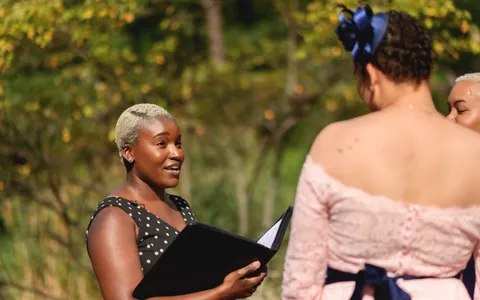
A couple who'd been married twenty-two years got on a call with me and asked, almost sheepishly, who they were supposed to "get" to make the renewal official. I told them the.
READ →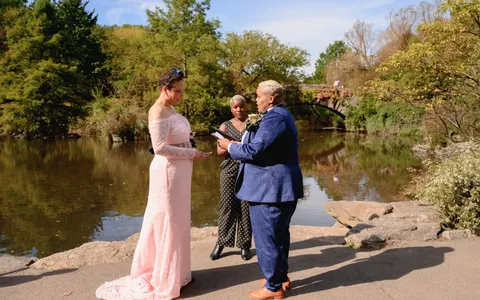
VOWS
Vow Renewal vs Wedding: The Real Differences
A couple sat across from me last spring, planning what they kept calling their vow renewal. Twenty minutes in, the wife asked me, almost shyly, whether they'd "sign something" at.
READ →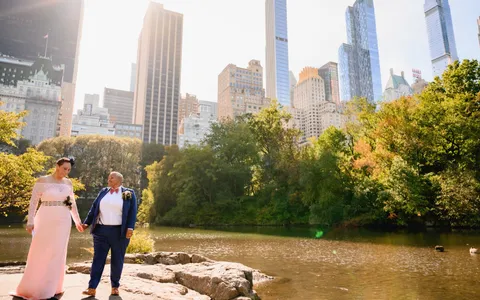
VOWS
37 Vow Renewal Ideas, Intimate to Big Party
I once officiated a vow renewal that cost more than my first car, and the room stayed dry-eyed the whole way through. Gorgeous florals, a string trio, a couple in second-look.
READ →