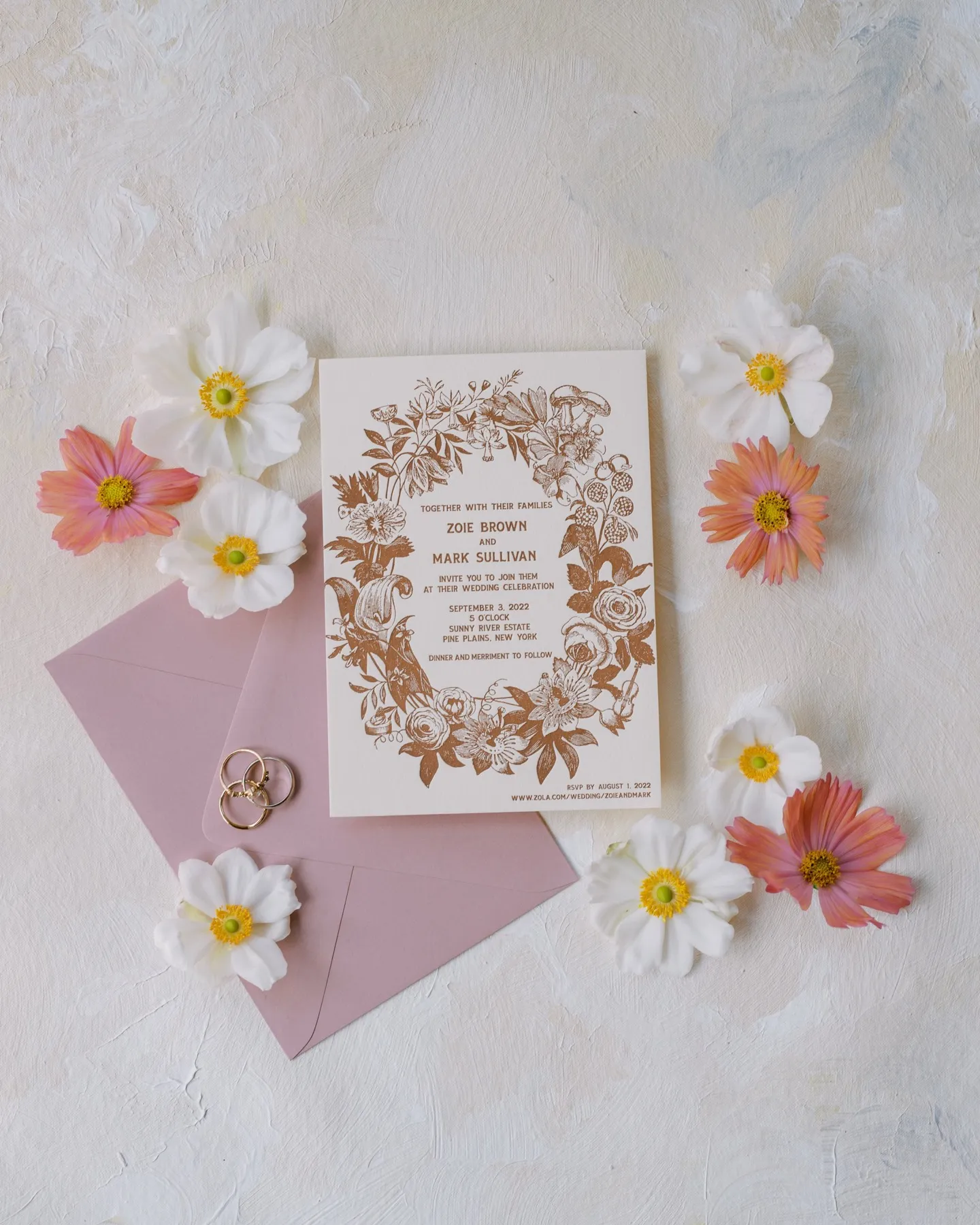
VOWS
Vow Renewal Invitation Wording: Examples for Every Style
Vow renewal invitation wording that signals you're already married. Examples by tone and milestone, plus gift etiquette and how to avoid guest confusion.
I was standing at the front of a garden renewal for a couple celebrating thirty years when I caught a guest in the third row lean over to her husband and whisper, loud enough for me to hear it, “Wait, did they get divorced?” They had not. They were happily, stubbornly, thirty years married. The whole mess started weeks before the ceremony, on the invitation, which read like a first-wedding invite and never once said the word “again.”
That whisper is the whole problem with a vow renewal invitation. The card has a job no wedding invite ever has to do.
A wedding announces something new. A renewal has to announce that nothing legal is changing, that two people who are already married want a room full of the people they love to watch them say it on purpose. If the card doesn’t carry that, your guests fill the gap themselves, and they usually fill it with the wrong story.
I write and perform these ceremonies, the ones with no marriage license and no paperwork holding them up, where the whole event lives or dies on how clearly it’s framed. By the time everyone is seated, the invitation has already done half my job for me, or it has quietly worked against me. Here’s how to make it work for you.
What should a vow renewal invitation actually say?
Three things, ideally in this order: who’s hosting, what the day is, and what to expect.
That middle piece is where most couples slip. They borrow a wedding template, swap in their names, and end up with a card that promises a wedding to people who know full well there already was one. After years of writing these, I’ll tell you plainly: leave “bride,” “groom,” and “wedding” off the card. A guest who shows up expecting a first wedding and pieces together that you’ve been married twenty years can feel quietly tricked, and you don’t want anyone doing math in the pews.
The fix is small. Trade “request the pleasure of your company at the wedding of” for “as we renew our vows” or “to celebrate twenty-five years of marriage.” Same warmth, none of the confusion.
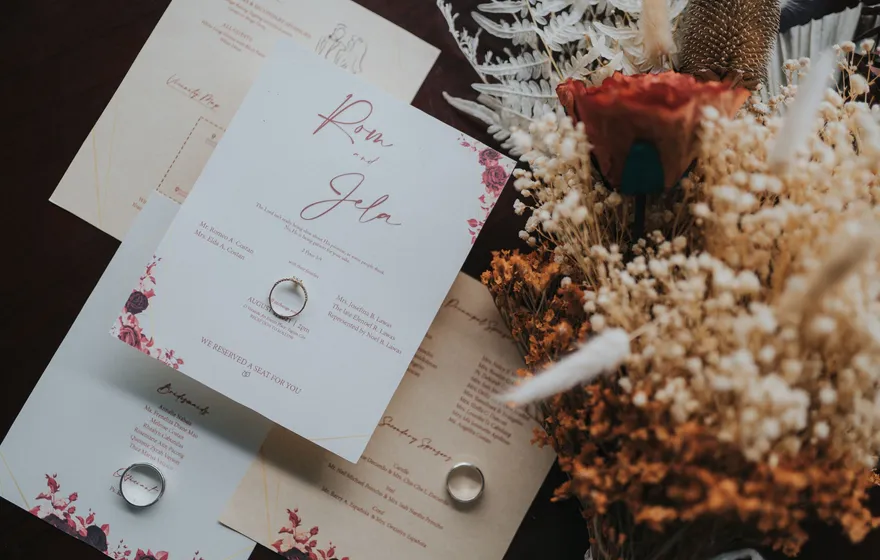
The single most useful word on the card is the milestone year. “As we celebrate 25 years together” does two jobs at once. It names the occasion, and it tells everyone you’re already married, all before a guest can form the question. A renewal is one of the rare invitations where stating the “why” right up front earns its space.
Who hosts a vow renewal, and why the host line gives it away
This is the one structural piece that genuinely changes from a wedding invite, and it does more quiet work than any other line. It’s also where the difference between a renewal and a first wedding shows up most plainly on paper, and I’ve gathered the rest of the planning in my vow renewal ideas hub.
At a traditional wedding, the parents host: “Mr. and Mrs. So-and-So request the honour of your presence at the marriage of their daughter.” At a renewal, that framing makes no sense, because the couple are grown, established, and usually parents themselves. So the host line shifts. Either the couple hosts themselves, or their adult children host them.
My favorite version reads something like this: “The children of Michael and Karie Barrett request the honour of your presence at the reaffirmation of their parents’ vows.” Nobody has to be told this is a long marriage with a grown family. The host line says it for you, gracefully, without a single word of explanation.
One quick technical note if you go formal. The classic wedding split still applies: use “the honour of your presence” (British spelling, on purpose) only when the ceremony is in a house of worship, and “the pleasure of your company” for any other venue, a backyard, a restaurant, a beach. Couples copying a wedding sample often grab the wrong one.
Do you put “no gifts” on a vow renewal invitation?
Short answer: don’t print the word “registry,” and don’t print a blunt “no gifts” either.
Gifts aren’t expected at a renewal, and a registry tends to read as inappropriate, because you’re not setting up a household, you’re celebrating one that’s been running for years. A registry link on this particular card reads as a grab, even when you don’t mean it that way.
If you want to head off the gift question, do it warmly. A line like “Your presence is the only gift we ask for” handles it without sounding like a rule. For guests who simply cannot arrive empty-handed, an anniversary-themed gesture or a donation to a cause you love gives them somewhere to put the impulse. You can mention that on a details card or wedding website rather than the main invitation, where it would crowd the moment.
Vow renewal invitation wording by tone
Here’s the part you came for. Lift any of these straight, and change the names, years, and venue. I’ve sorted them by feel, because the tone of the card should match the tone of the day.
For a big milestone in a house of worship, go formal and let the children share the host line:
Together with their children,
Karen and David Abara
request the honour of your presence
as they reaffirm the vows they made
twenty-five years ago
Saturday, the fourteenth of September
two thousand twenty-six, at four o’clock
St. Bartholomew’s Church, New York City
Celebration to follow
For a home or restaurant renewal, warm and classic does the job:
Ten years, two kids, and one very patient marriage later,
Mara and Joel Whitfield
invite you to celebrate as they renew their vows.
Sunday, June 7th at 5 o’clock
The garden at 14 Linden Road
Dinner and dancing to follow
Your presence is the only gift we ask for
For a backyard party at any milestone, keep it short:
We did it. We’re still doing it.
Come watch Sam and Priya promise it all over again,
ten years in and counting.
Saturday, May 2nd, 4pm, our backyard.
Bring an appetite. Leave the gifts at home.
For a destination renewal, lead with the recommitment:
Ten years ago, we said “I do.”
We’re saying it again, this time in Maui.
Join Elena and Marcus for a weekend of sun,
vows, and the people we love most.
October 18-20, 2026
Travel details enclosed
That last one matters for a reason beyond tone. Destination renewals run on a different clock. From what I’ve seen with couples doing these abroad, send a save-the-date four to six months out, then the formal invitation eight to ten weeks ahead, so guests can actually book flights and rooms. For a local renewal, standard wedding timing is plenty, roughly six to eight weeks before.
| What you send | When |
|---|---|
| Local invitation | 6 to 8 weeks out |
| Destination save-the-date | 4 to 6 months out |
| Destination invitation | 8 to 10 weeks out |
Put those mailing dates in your calendar the day you set the renewal date.
How to handle the “wait, are they getting married again?” question on the card
You don’t argue with the confusion. You make it impossible to have.
A vow renewal is a ceremony where an already-married couple reaffirm their existing vows, with no legal component, separate from a remarriage (Wikipedia). Most of your guests have never been to one and don’t know that going in. So the card has to teach them in three small moves.
First, name the milestone. “As we celebrate twenty years together” answers the question before it forms.
Second, use the real word. “Renewal” or “reaffirmation,” printed plainly, leaves no room for a divorce-and-remarry theory. Don’t dress it up so much that the actual event disappears.
Third, if the reason behind the day means something, give it one warm sentence. Couples renew at the usual marks, five, ten, twenty-five, fifty years, but plenty renew after a hard stretch, or to finally have the celebration they couldn’t afford the first time around. A single line like “After the year we had, we wanted to say it again, out loud, with all of you” tells guests why you’re doing this before they walk in. If your renewal grew out of something you came through together, I’ve written more about that kind of ceremony in renewing your vows after hard times.
There’s a reason the words carry so much weight here. A renewal has no marriage license, no required officiant, nothing legal anchoring it, so in the US a friend or one of your original wedding party can lead it (American Marriage Ministries). With no paperwork defining the event, the language defines it. The invitation isn’t just stationery. It’s the first line of the ceremony, and your guests have already read it before I say a word.
Make the words on the card match the words you’ll say
If you’ve nailed the invitation, you’re already most of the way to the vows. The tone you set on paper, formal or barefoot-in-the-grass, is the tone your spoken words should keep. A card that promises “still doing it, ten years in” shouldn’t open into a stiff, churchy script, and a formal reaffirmation shouldn’t dissolve into one-liners.
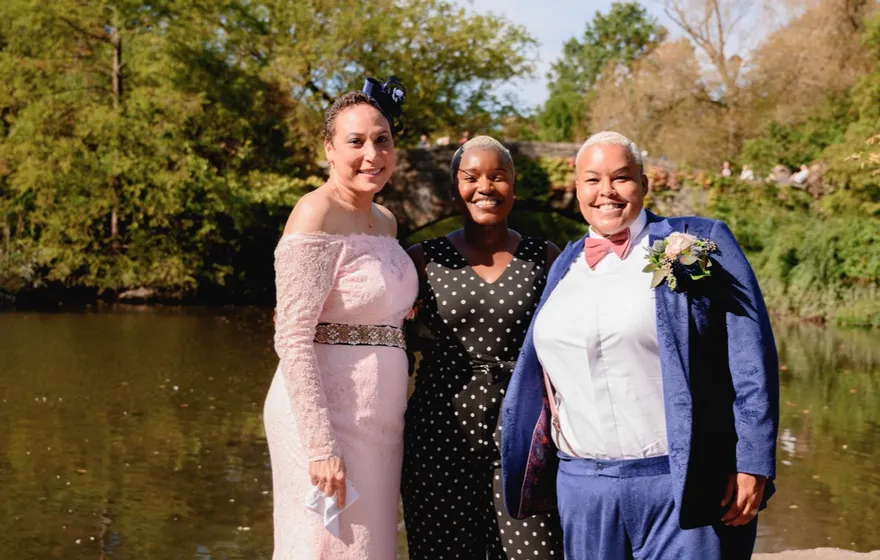
This is the part my couples agonize over, and it’s exactly what the Couple’s Ceremony Kit is built for. It walks you from the wording of the invitation through the structure of the ceremony to vows that sound like the two of you, so the language holds steady from the envelope to the moment you say “again.” If you’d rather start by simply finding your words, my list of vow questions is a free, gentle way to dig out what you actually want to promise this time around.
For more on the renewal itself, start with my guide to vow renewal ideas, the hub for planning the whole celebration. From there, the vow renewal ceremony script gives you a full, usable order of service, vow renewal vows helps you write the words themselves, and marking the right anniversary milestone covers which years tend to call for a ceremony and why.
Here’s a short, copy-ready script for the moment itself, the part your invitation has been promising all along.
Officiant:
“Ten years ago, in front of many of you, [Name] and [Name] made promises to each other. They didn’t know yet how those promises would be tested, stretched, kept. Now they do. And they’ve asked you here, not to start something, but to say it again, on purpose, with their eyes open.”
(turn to the couple)
“[Name] and [Name], do you choose each other again, knowing exactly what you’re choosing?”
Both:
“We do.”
Partner A:
“I married you when I was guessing. I’m renewing today because I’m sure. I promise you the same things I promised then, and I mean them more now than I knew how to mean them at the start.”
Partner B:
“You’re still the one I want at the kitchen table and at the end of the worst day. I renew every vow I made you, and I add this one: I’ll keep choosing this, on the easy days and the other ones.”
Officiant:
“Then by the years you’ve already lived and the ones still ahead, I’m glad to say what everyone here already knows. You’re married, you’ve always been married, and today you’ve made it new. Kiss each other. You’ve earned it twice.”
Frequently asked questions
Should a vow renewal invitation say “wedding”?
No. In my experience writing these, “wedding,” “bride,” or “groom” on a renewal invitation reads wrong, because guests who realize the couple is already married can feel misled. Use “renew our vows,” “reaffirm our commitment,” or “celebrate [X] years of marriage” instead. That single swap is the clearest way to signal a renewal, not a remarriage.
Do you put “no gifts” on a vow renewal invitation?
You can, gently. Gifts aren’t expected at a renewal, and a registry reads as a gift grab since you aren’t starting a household. Rather than a blunt “no gifts” or any mention of a registry, most couples use a warm line like “Your presence is the only gift we ask for.” If guests insist, an anniversary gesture or a charity donation is the graceful default.
Who hosts a vow renewal, the couple or their children?
Either, and the host line is the main structural difference from a wedding invite. At weddings, parents traditionally host. At a renewal, the couple usually hosts themselves, or their adult children host them: “The children of [names] request the honour of your presence as their parents renew their vows.” The host line alone tells guests this is an established marriage.
How do I make sure guests don’t think we’re getting married again?
Let the invitation explain before anyone can wonder. State the milestone (“as we celebrate 25 years together”), use “renewal” or “reaffirmation” plainly, and add one warm sentence of context if the reason is meaningful. A renewal isn’t a divorce-and-remarry or a second engagement, and the wording should make that obvious at a glance.
When should I send vow renewal invitations?
For a local renewal, standard wedding timing works, roughly six to eight weeks out. For a destination renewal, send a save-the-date four to six months ahead and the formal invitation eight to ten weeks out, so guests have time to book travel and accommodation.
The Couple’s Ceremony Kit
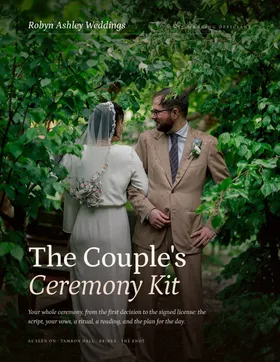
Walk in with a ceremony that sounds like the two of you
This post covers one part of the ceremony, and the Couple’s Ceremony Kit covers the rest, with five full scripts to start from and the prompts I use to help couples write their vows.
- Five full ceremony scripts in five different styles
- The Story Mine, thirty prompts for writing your vows
- Sixteen unity rituals, with the words and what to gather
- Thirty readings, each with my notes on when it fits
VOWS
Best Anniversaries to Renew Vows | Don't Wait
A couple I worked with spent years saying "we'll do it at 25." Then her mother got sick, and waiting four more years for a tidy number suddenly felt absurd. They renewed at year.
READ →
VOWS
Vow Renewal Officiant, How to Ask + What to Send
A couple who'd been married twenty-two years got on a call with me and asked, almost sheepishly, who they were supposed to "get" to make the renewal official. I told them the.
READ →
VOWS
Vow Renewal vs Wedding: The Real Differences
A couple sat across from me last spring, planning what they kept calling their vow renewal. Twenty minutes in, the wife asked me, almost shyly, whether they'd "sign something" at.
READ →