CEREMONY
Whiskey Unity Ceremony: Script, Barrel Logistics, and the Mistakes Nobody Warns You About
Everything for a whiskey unity ceremony: the word-for-word script, the barrel and spirit-type mistakes that ruin the blend, the infinity-bottle alternative, and how to do it if one of you doesn't drink.
The first whiskey unity ceremony I officiated almost ended with an empty barrel.
The couple had bought a gorgeous little one-litre oak barrel online. They’d filled it with two bottles of their favorite aged bourbon. They sealed it after the pour, kissed, and we all toasted. Beautiful moment. Then they texted me eleven months later, the week before their anniversary, asking why the barrel sounded half-empty when they shook it and why what was left tasted like furniture.
Two things had gone wrong, and both are completely avoidable. The barrel was far too small for a year of aging, so most of the spirit had evaporated. And they’d used finished, bottled bourbon instead of the raw spirit a barrel is built to age. The oak overpowered it.
I’ve folded whiskey blending into a handful of NYC ceremonies since, and I always have that conversation up front now. Done right, it’s one of the most quietly moving rituals I do, a thing you literally taste a year later. Done on Pinterest logic, it’s a $200 lesson in evaporation. This post is the version I wish that first couple had read.
What is a whiskey unity ceremony?
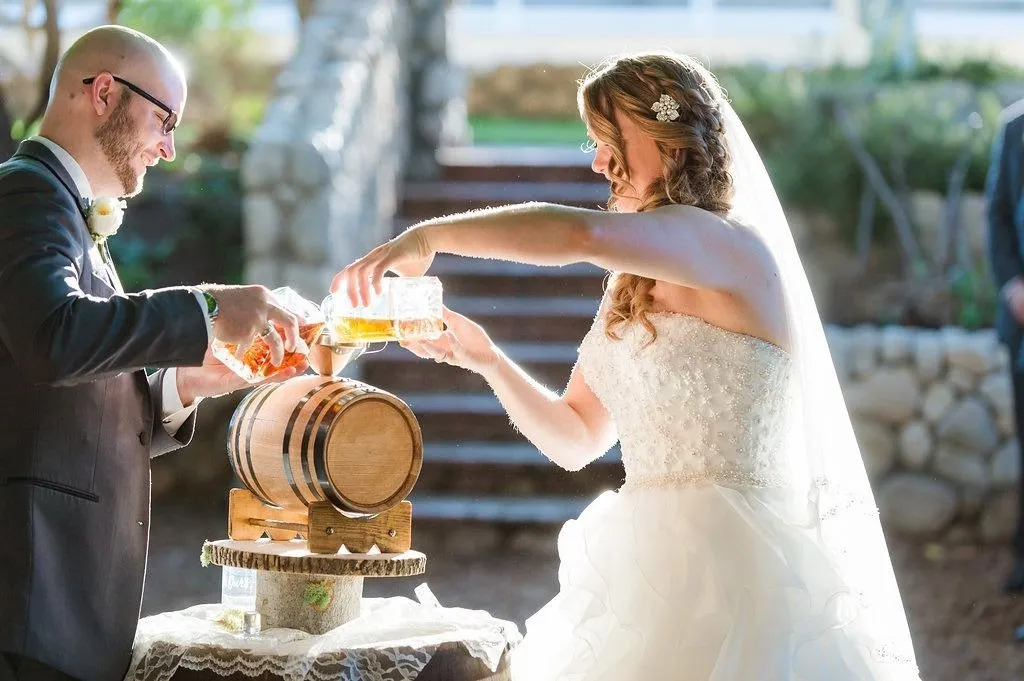
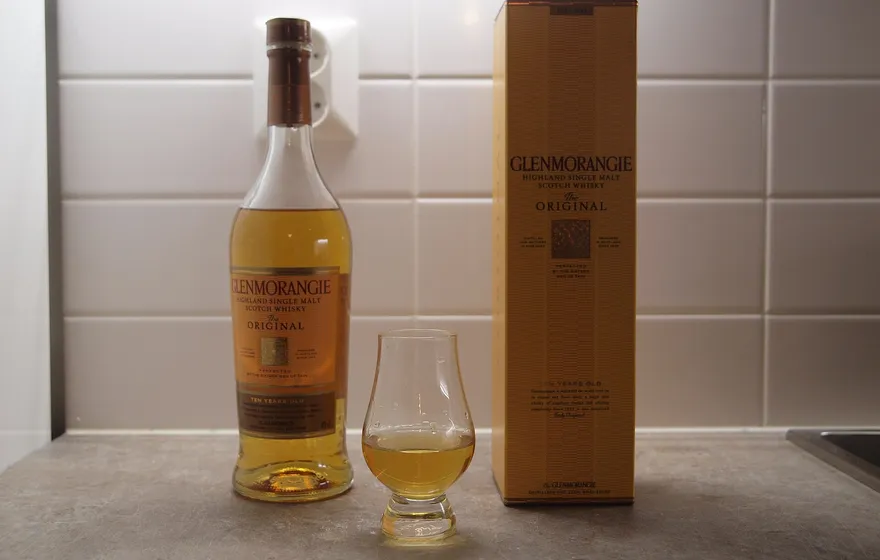
A whiskey unity ceremony is a wedding ritual where each partner pours a separate spirit into one shared barrel or vessel, blending two distinct characters into a single, more complex whole. The ceremony usually happens after the vows and before the pronouncement, and the couple often seals the barrel to age and opens it on a future date, most commonly the first anniversary (source).
The symbolism is unusually honest. You’re not pretending two people become identical. You’re saying two different things, with different strengths and edges, can combine into something richer than either was alone, and then improve with time and a little patience.
It’s a strong fit if whiskey already means something to you as a couple, if you want a ritual with a built-in future payoff, or if you’d rather drink your unity ceremony than light it on fire. It’s a weak fit if neither of you drinks and you’d feel hollow swapping the symbol, or if your venue or faith tradition has rules about alcohol in the ceremony. More on both of those below.
Where the whiskey unity ceremony comes from
This isn’t a recent wedding-blog invention dressed up as heritage. The roots are Gaelic. The ritual traces to Scotland around the 18th century, where whiskey carried meaning as a symbol of celebration and unity, and the word itself, in its original Gaelic form, translates to “water of life” (source). Water of life. That’s the line I open the script with, because once guests hear it, the rest of the ritual reads differently.
Naming a tradition’s origin is the opposite of appropriating it.
That etymology matters for a practical reason too. If you have Scottish or Irish heritage, this ceremony connects you to it directly. If you don’t, you can still do it with respect by naming where it comes from rather than treating it as generic content. I tell couples to let me say the “water of life” history out loud during the ceremony. Naming a tradition’s origin is the opposite of appropriating it, and guests lean in when they hear it.
Is it the same as a Scottish quaich ceremony?
This is the question I get most, and the answer is no. They’re two separate Scottish rituals that often get blended together by accident.
A whiskey blending ceremony is about transformation over time. You combine two spirits and let them age into something new that didn’t exist before.
A quaich ceremony is about sharing in the moment. The quaich is a two-handled cup, and the couple drinks from it together, both hands on the vessel. The tradition is genuinely old, recorded at the 1589 wedding of King James VI and Princess Anne of Denmark (source), and it symbolizes trust and the willingness to share everything ahead, the bitter and the sweet, from the same cup.
| Whiskey blending | Quaich ceremony |
|---|---|
| Change over time | Sharing in the moment |
| Two spirits blended | A two-handled cup |
| 18th-century Scotland | A 1589 royal wedding |
You can do one, the other, or both. I’ve had couples drink from a quaich first, in the moment, then pour the rest of their spirits into a barrel to age for later. The two-handled cup says “we share this now.” The barrel says “and we’ll share what this becomes.” Together they read as a complete arc, and almost nobody does both, so it feels original.
How to do a whiskey unity ceremony, step by step
The ritual itself is simple. The preparation is where couples get burned, so I’m going to be specific.
Before the wedding
-
Choose your two spirits
If you’re aging in a barrel, read the spirit-type section below before you buy anything, because this is the mistake that ruins more blends than any other. If you’re blending to drink the same day, pick two whiskeys you genuinely love.
-
Choose your vessel and size it correctly
A barrel for aging, a decanter or carafe for drinking now. If it’s a barrel, size is not a detail. See the timing section below.
-
Prep a new barrel
Six days out
This step is mandatory, not optional. Covered below in its own section because skipping it is a day-of disaster.
-
Decide who explains it
I recommend a trusted reader, a best man, maid of honor, or parent, delivers the explanation, not the couple themselves (source). You two should be looking at each other and pouring, not narrating.
During the ceremony
On the day, the ritual itself runs in five short beats.
-
Place the ritual
After your vows and before the pronouncement, where the emotional arc is already climbing.
-
The explanation
The reader or officiant explains the symbolism while you each take your bottle.
-
The two pours
You each pour your spirit into the barrel or vessel, one at a time, so guests can see two distinct pours becoming one. Pour gently. Never shake the bottles to “mix” them, only gentle rocking is acceptable, since shaking damages the spirit (source).
-
Sip or seal
Optionally, take a sip together, or seal the barrel for aging.
-
Toast
After the wedding
Store the sealed barrel somewhere cool and dark with stable temperature, on its side if it has a bung, and resist the urge to keep shaking it to check. Open it at the milestone you chose. The classic is the first anniversary, but I’ve had couples plan it for after their first big fight, a dark-humor option that’s surprisingly popular, or hold it for a ten- or twenty-year anniversary or a child’s birth.
The barrel mistakes that ruin the blend
Here’s the part the romantic descriptions leave out. Three preparation traps account for nearly every whiskey unity ceremony that goes wrong, and all three are invisible until months later.
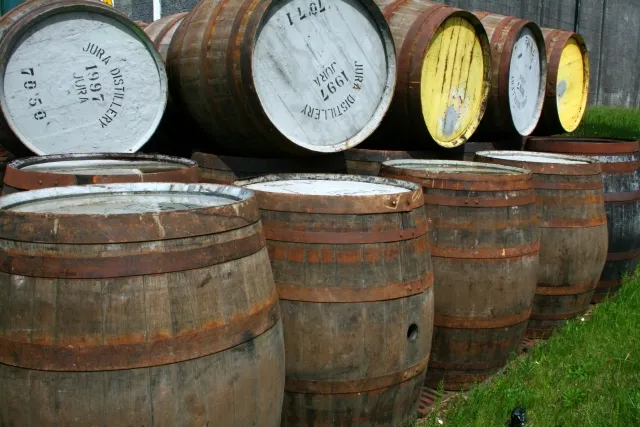
Trap 1: The barrel is too small
This is the one that emptied my first couple’s barrel. Barrel size dramatically changes both aging speed and how much survives.
| Barrel | Matures in | After a year |
|---|---|---|
| One litre | Two to three months | Nearly empty |
| Ten litres | Twelve months | A real glass |
A one-litre barrel ages fast, in roughly two to three months, while a ten-litre barrel reaches good maturity at around twelve months (source).
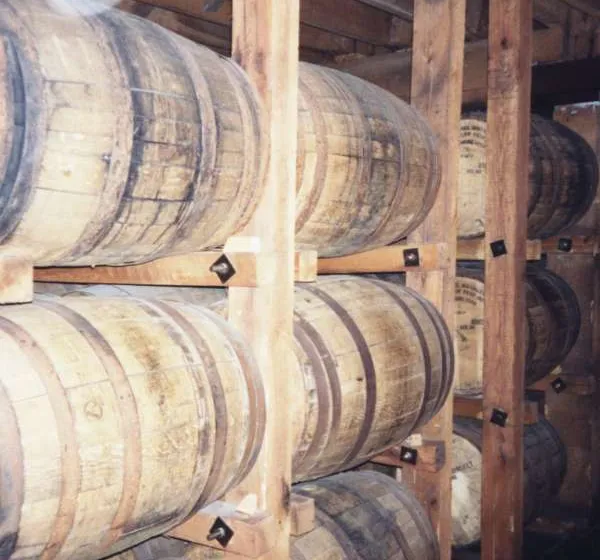
The catch is evaporation, the “angel’s share.” Small barrels have a huge surface-area-to-volume ratio, so a one-litre barrel can be nearly empty after a year. If you want a real glass to toast with on your anniversary, you want a barrel closer to ten litres, full stop.
Trap 2: The barrel leaks because it wasn’t prepped
A brand-new oak barrel is dry wood. Fill it with spirit on the wedding day and the staves swell, gaps open, and you’ll watch expensive whiskey weep out the seams during your own ceremony. The fix is a hot-water soak. Fill a new barrel with hot water about six days before the ceremony so the wood swells and seals; the staves take three to five days to fully close (source). And when you do fill it for real, never fill it completely, leave airspace so the barrel can breathe as temperature changes expand and contract the liquid (source). A totally full barrel can crack under pressure.
Trap 3: You used the wrong kind of whiskey
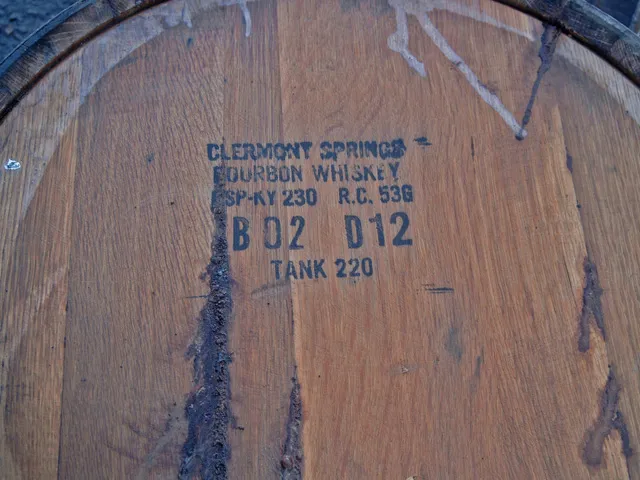
This one is counterintuitive, so most couples get it wrong. The instinct is to reach for the nicest aged bottle on the shelf. But bottled whiskey is already finished, it’s been aged and proofed down to drinking strength, so it won’t take on new oak character the way a barrel needs. For barrel aging you want unaged, higher-proof white rye spirit, which blends and matures far more effectively (source). Think of it as buying the raw material so the barrel can do the actual aging, instead of double-aging something that’s already done.
The exception: if you’re blending to drink that same day, with no aging at all, then two finished bottles you love are exactly right. Spirit type only matters when the barrel has to transform it over months.
The infinity bottle: the alternative almost nobody mentions
If the barrel logistics sound like a lot, there’s a quieter option I love and rarely see suggested. Instead of aging a sealed barrel, you blend two complementary whiskeys in an engraved decanter and keep adding to it throughout your marriage, building an ever-evolving blend (source).
It solves every problem above. No evaporation deadline. No barrel prep. No “wrong whiskey” trap, because you’re drinking from it, not aging it. And the symbolism is arguably richer than the barrel’s, since the blend literally grows and changes for as long as you keep pouring into it. A splash from your honeymoon trip. A pour from a tough year. The bottle becomes a liquid diary. For couples who’d rather have a ritual that keeps going than one that ends on a single anniversary, this is the one I push.
Wine, bourbon, and the no-alcohol versions
Whiskey isn’t the only way to do this, and you shouldn’t force it if it’s not yours.
Wine blending carries the same symbolism with softer logistics. Pour red and white into a carafe, or blend two complementary wines, and the meaning holds, years of work, careful blending, patience, all of it mirrors a relationship. If wine is more you, look at the wine box ceremony too, which seals letters and a bottle away instead of blending.
Burying the bourbon is a Southern tradition where you bury an unopened bottle upside-down at the ceremony site a month before the wedding, on the superstition that it keeps rain away, then dig it up for toasts on the day (source). I’ll be honest with couples: there’s no real evidence it controls the weather. I love it as a fun ritual and a great story, just don’t treat the rain part as a guarantee.
The no-alcohol version matters most to me, because no source seems to address it and plenty of couples need it. If one of you is sober, in recovery, or simply doesn’t drink, you keep the ritual and swap the symbol. Blend two non-alcoholic spirits, two single-origin teas, two coffees, anything with two distinct characters that combine into one. The whole meaning is two different things becoming a single richer thing. Alcohol was never the point.
A word on faith and venue rules
Before you commit, ask two questions. If you’re having a religious ceremony, check with your officiant or clergy, since some traditions have views on alcohol in the ceremony itself (source). And check your venue, some don’t permit open alcohol during the ceremony portion even if the bar opens later. Both are easy to solve when you ask early. Neither is fun to discover the morning of.
The whiskey unity ceremony script
Here’s a full script you can use as written. A reader or your officiant delivers the explanation while you two pour. I’ve built it on the classic three-pour structure, with the “water of life” history up front because it sets the whole tone.
Opening:
“[Partner A] and [Partner B] have chosen a whiskey unity ceremony to mark their joining today.
The word whiskey, in its original Gaelic form, means ‘water of life.’ For centuries, in Scotland and beyond, it has been a symbol of celebration and of two things becoming one.
Like a marriage, good whiskey is complex. It has depth, character, and edges. And when two distinct spirits are blended, they don’t cancel each other out. They make something richer than either was alone.”
The first pour:
“[Partner A], pour the first spirit.”
(Partner A pours into the barrel.)
“This first pour is everything [Partner A] brings on their own, their strengths, their character, the flavor that is theirs alone.”
The second pour:
“[Partner B], add yours now.”
(Partner B pours into the same barrel.)
“This second pour is the blending, two separate lives becoming one shared one. From this moment, these spirits can’t be unmixed, just as two lives joined today don’t come apart again.”
The third pour, or the sealing:
(If using a third pour, a parent or both partners add a final measure together. Otherwise, the couple seals the barrel.)
“This last pour is patience. Whiskey does its best work in the dark, slowly, over time. So will this marriage. [Partner A] and [Partner B] will seal this barrel today and open it on [milestone, e.g. their first anniversary], to taste what a year has made of it.”
Close:
“May your marriage be like this blend, two distinct lives, joined into one, growing smoother and richer with every year. Let’s raise a glass to [Partner A] and [Partner B].”
(Couple seals the barrel or takes a sip together. Toast.)
Where this fits in your ceremony
The whiskey blend lives in the unity ritual slot, after your vows and ring exchange, before the pronouncement. It runs about three to five minutes with the explanation, and it gives guests something physical to watch, two pours becoming one, which is exactly the kind of visible moment a ceremony needs after the more inward work of the vows.
If you want to compare it against every other option before you commit, the unity ceremony ideas guide ranks all of them by what they actually feel like in the room.
ALSO READ 23 Unity Ceremony Ideas, Ranked by an Officiant Who's Performed Them AllBuild the whole ceremony around it
The whiskey blend is one ritual. A ceremony is the architecture around it, the processional, the welcome, the vows, the unity moment, the pronouncement, all timed so the whiskey pour falls at the right beat instead of feeling bolted on.
That’s what the Couple’s Ceremony Kit is for. It’s the full word-for-word framework I use, with scripts for whiskey blending and every other unity ritual, written so you can drop your own words in and have a ceremony that sounds like you instead of a template. If you’re scripting this yourselves, it saves you the part that’s genuinely hard.
Still not sure whiskey is even your ritual? Take the free Unity Ceremony Quiz. Four questions, two minutes, and it’ll point you toward the ritual that actually fits your values, your heritage, and whether you drink, before you spend a dime on a barrel.
The Couple’s Ceremony Kit
Walk in with a ceremony that sounds like the two of you
This post covers one part of the ceremony, and the Couple’s Ceremony Kit covers the rest, with five full scripts to start from and the prompts I use to help couples write their vows.
- Five full ceremony scripts in five different styles
- The Story Mine, thirty prompts for writing your vows
- Sixteen unity rituals, with the words and what to gather
- Thirty readings, each with my notes on when it fits
CEREMONY
Caribbean Wedding Traditions Worth Keeping
A couple sat in my office in Crown Heights, both second-generation, one side Guyanese and one side Trinidadian, and the bride said, "We want it to feel Caribbean, but we don't.
READ →
CEREMONY
What Is a Unity Ceremony? The Complete Guide
What a unity ceremony is, where it fits in your wedding, and how to choose the right ritual, from an officiant who's performed them at 300+ weddings.
READ →
CEREMONY
African Wedding Traditions, Explained With Respect
African wedding traditions by people and region: the Akan knocking, the Yoruba engagement, the Igbo kola and wine-carrying, libation, aso ebi and the broom, with how to include one or two without flattening them.
READ →