CEREMONY
Handfasting Ceremony: History, Script, and How to Tie the Knot (Literally)
Handfasting explained: the real origin of 'tying the knot,' a word-for-word script, cord color meanings, and the binding technique that leaves a real knot.
Handfasting is having a real moment, and I get why. It’s old, it’s gorgeous on camera, and the couple walks away holding a literal knot they keep forever. It’s also the ritual I most often see go sideways, because the cords slip off and there’s no knot at the end. The fix is technique, and I’ll give you the whole thing.
What is a handfasting ceremony?
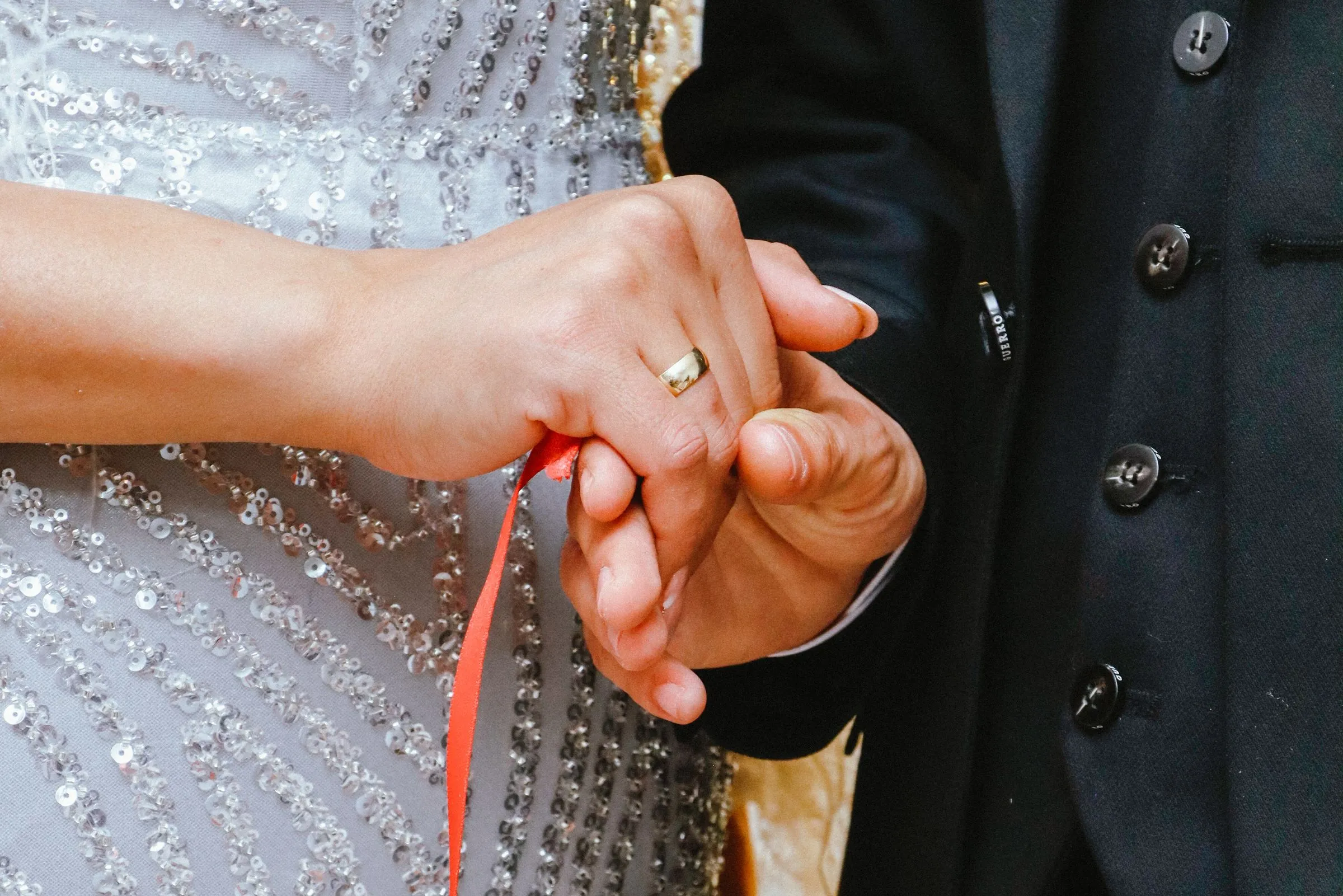
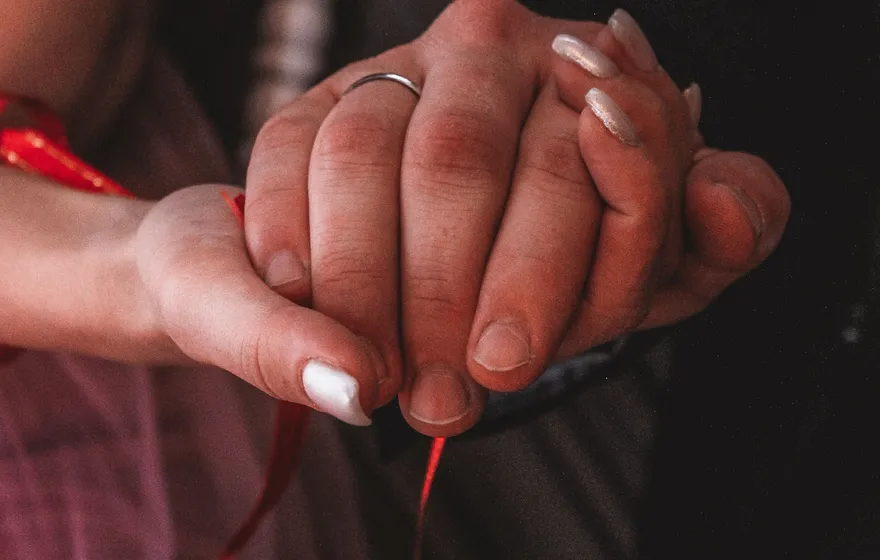
Handfasting is a ritual where the couple’s joined hands are bound together with cords or ribbons to symbolize their union. The officiant wraps the cords, often reading a blessing for each one, and the couple ends up holding a knot.
It’s genuinely ancient. The word comes from the Old Norse handfesta, “to strike a bargain by joining hands,” and from roughly the 12th to 17th centuries it referred to a betrothal later formalized as marriage (Wikipedia). The phrase “tying the knot” is commonly traced right back to this practice (Humanist Society Scotland). It works in Celtic, Pagan, Christian, and fully secular weddings, because the symbol needs no particular faith.
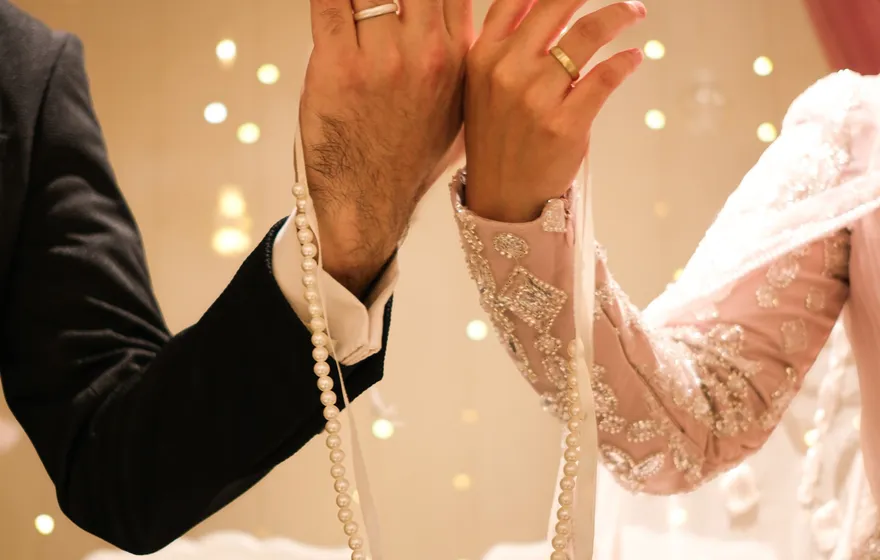
A quick note on what it isn’t: handfasting on its own doesn’t make you legally married. The license and the officiant do that. The cords are the symbolic heart, not the legal mechanism.
The handfasting script
OFFICIANT:
[Partner A] and [Partner B], please join hands.
[The couple joins hands, right to right and left to left, so the arms cross to form a figure eight.]
These cords represent the ties that bind you: not as chains, but as the threads of a shared life, woven from love, trust, and the people who brought you here.
[Drape the first cord over the joined hands.]
With this cord, I bind the promise of your love.
[Drape the second cord.]
With this cord, the strength to hold each other through every season.
[Loosely tie the cords beneath the hands.]
[Partner A] and [Partner B], your hands are bound, as your lives are now bound. Slip your hands free, and carry the knot with you.
[The couple gently withdraws their hands, leaving a knot.]
What is tied here today, you carry forward together.
The words are the easy part. The binding is where handfastings slip, and the next section walks through it.
How to actually tie the knot
This is the part nobody explains, and the reason handfastings fail. The goal is a knot that stays tied after the couple removes their hands.
Tying the infinity knot
-
Cross the hands
The couple joins both hands so their arms cross into a figure-eight (an infinity shape).
-
Drape the cords
Drape the loose middle of the cords across the crossed hands.
-
Tie it loose
Tie a loose knot underneath, around the join, without cinching it to their skin.
-
Slip free
The couple slips their hands out, and the loose loops settle into an infinity knot that holds (American Marriage Ministries).
Step three is the one that fails, and it fails the same way almost every time.
Rehearsal catches that mistake long before a guest could see it.
Cord colors and meanings
Most couples use one to three cords. Each color can carry meaning, and using several lets different family members each tie one with a blessing.
| Color | Meaning |
|---|---|
| Red | Passion, strength |
| Blue | Loyalty, patience |
| Green | Growth, fertility |
| Gold | Prosperity, wisdom |
| Silver | Protection, peace |
| White | Purity, devotion |
| Purple | Dignity, dreams |
My favorite version uses three cords, each tied by a different family member with a short blessing, leaving the couple’s hands bound through the pronouncement and the kiss. It always gets a reaction.
Get the full kit
The Couple’s Ceremony Kit includes the handfasting script above with a diagrammed binding sequence so your officiant nails the knot, plus 15 other ritual scripts. Its closest cousin is the lasso ceremony (el lazo), which binds the shoulders instead of the hands. Compare every option in the unity ceremony ideas guide, or take the free Unity Ceremony Quiz.
Frequently asked questions
Where does “tying the knot” come from?
From handfasting, the practice of binding a couple’s hands with cord.
How do you tie the cord?
Drape over crossed hands, tie loosely around the join, and let the couple slip out so an infinity knot remains.
Is it legally binding?
No. The license and officiant make it legal; the cords are symbolic.
How many cords?
One to three is typical, often one per family member.
The Couple’s Ceremony Kit
Walk in with a ceremony that sounds like the two of you
This post covers one part of the ceremony, and the Couple’s Ceremony Kit covers the rest, with five full scripts to start from and the prompts I use to help couples write their vows.
- Five full ceremony scripts in five different styles
- The Story Mine, thirty prompts for writing your vows
- Sixteen unity rituals, with the words and what to gather
- Thirty readings, each with my notes on when it fits
CEREMONY
Caribbean Wedding Traditions Worth Keeping
A couple sat in my office in Crown Heights, both second-generation, one side Guyanese and one side Trinidadian, and the bride said, "We want it to feel Caribbean, but we don't.
READ →
CEREMONY
What Is a Unity Ceremony? The Complete Guide
What a unity ceremony is, where it fits in your wedding, and how to choose the right ritual, from an officiant who's performed them at 300+ weddings.
READ →
CEREMONY
African Wedding Traditions, Explained With Respect
African wedding traditions by people and region: the Akan knocking, the Yoruba engagement, the Igbo kola and wine-carrying, libation, aso ebi and the broom, with how to include one or two without flattening them.
READ →