
OFFICIANT
What Does a Wedding Officiant Actually Do? (The Visible and Invisible Job)
The officiant's job is far more than the ten minutes you see. Here's the visible and invisible work, from someone who does it and teaches it.
Ask most people what a wedding officiant does and they’ll describe the ten minutes they’ve seen: someone stands at the front, says some words, and announces the couple as married. That’s the visible part, and it’s the smallest part.
The job is an iceberg. The ten minutes everyone watches sits on top of hours of work nobody sees, and that hidden work is what separates a ceremony that feels effortless from one that quietly falls apart. Understanding the whole thing matters whether you’re hiring a pro or about to become one yourself.
The visible job: leading the ceremony
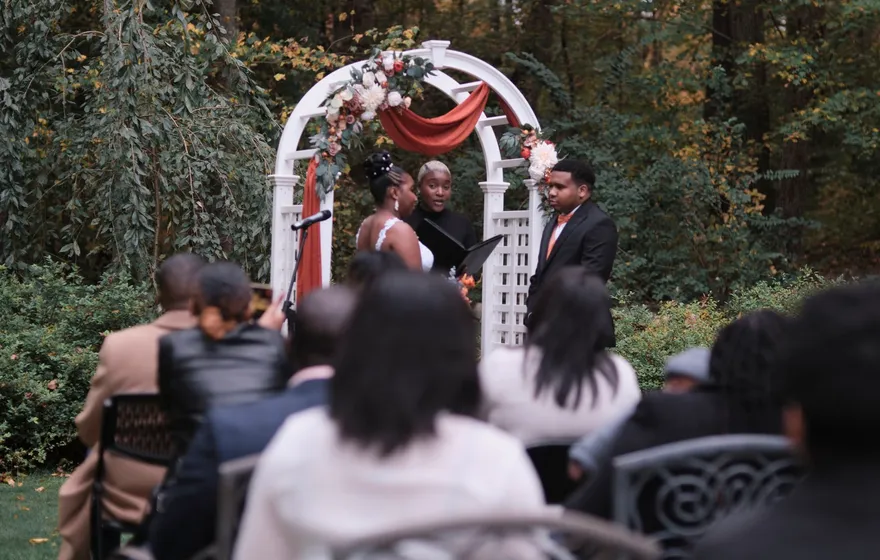
This is the part you picture. During the ceremony, the officiant:
- Welcomes the guests and sets the tone
- Tells the couple’s story
- Guides the readings, the vows, and the ring exchange
- Says the legal declaration and pronouncement
- Keeps the whole thing paced so it never drags or feels rushed
It looks simple from a chair, and that ease is something the officiant builds long before anyone sits down.
The invisible job: everything around it
Here’s what’s actually happening off-camera, the work that makes the visible part possible.
Before the day:
- Getting legally ordained or licensed, and confirming those credentials are valid in the right county
- Writing a custom ceremony and revising it with the couple
- Attending the rehearsal and mapping the positions and cues
- Building the run-of-show with the planner, DJ, and photographer
On the day, in real time:
- Managing their own nerves while steadying everyone else’s
- Adapting when a reader is missing, the mic dies, or the couple starts crying and can’t get through their vows
- Pacing the room, reading the energy, knowing when to slow down
After the kiss:
- Signing the marriage license and checking every field
- Filing it with the county clerk inside the deadline
- Confirming the marriage was legally recorded
That last list is the one people forget, and the license comes with a filing deadline.
The saves nobody notices
The real test of an officiant is what happens when something goes wrong, because something usually does. A reading gets skipped. A ring goes missing for a heart-stopping second. A page of the script gets flipped past. One officiant recently skipped the entire ring exchange because it sat alone on its own page of his notes (People / AOL).
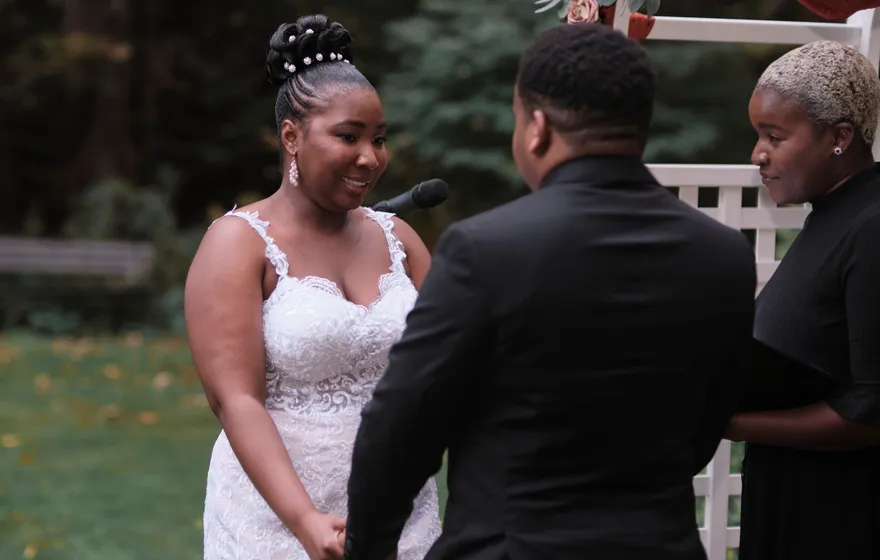
A prepared officiant absorbs these without the room ever knowing. That composure comes from three habits:
- formatting the script defensively, so no section sits alone on its own page
- rehearsing out loud
- having a plan for the moment things wobble
All three are homework, and a first-time officiant can do every one of them.
Friend or pro: who handles all this?
Both can. The difference is what each brings.
| Brings | Friend | Pro |
|---|---|---|
| Knows you | Yes | Less |
| Legal steps | New | Done often |
| Pacing, saves | First time | Many reps |
A friend brings something no professional can buy: they actually know you. The couple’s-story section writes itself. What they don’t have is reps with the invisible work, so they have to learn the legal steps and the pacing from scratch.
A professional brings the opposite: less personal history, but a hundred repetitions of the paperwork and the pacing and the saves. If you’re weighing the two, I laid out the honest trade-off in can a friend officiate your wedding and broke down the money in how much a wedding officiant costs.
Making sure nothing gets dropped
If a friend is taking this on, set them up so the invisible work is covered. My free guide, Ready to Officiate, is one evening of preparation, with the ceremony in order, the license steps, and a card for their pocket. The full Officiant Kit goes further, with eight ceremony scripts, a legal guide, and the day-of tools that turn a nervous first-timer into someone who looks like they’ve done this for years.
The bottom line
A wedding officiant does far more than say a few words. They make the marriage legal, they design and pace the ceremony, and they quietly catch the things that go wrong. The visible ten minutes are real, but the job that earns them happens where no one is looking. For the full how-to, see how to officiate a wedding.
The Officiant Kit
What to say when the ring goes missing, the mic dies or you blank on a name
This post gets you through one part of the ceremony, and the Officiant Kit covers what surrounds it, from the weeks before and the rehearsal to what you do when something goes wrong in front of everyone.
- Eight full ceremony scripts, with names you type once
- The Story Builder, seven steps to the couple’s story
- The Rehearsal Run Sheet, a cue sheet and four pocket cards
- A marriage license reference for all fifty states
OFFICIANT
How to Officiate a Wedding: A First-Timer's Step-by-Step Guide (2026)
How to officiate a wedding when you've never done it before, from someone who's coached a lot of nervous first-timers through their first ceremony.
READ →
OFFICIANT
The One-Day Officiant License in NYC: How It Actually Works (2026)
NYC has two ways to legally officiate a wedding, and most articles confuse them. Here's the one-day license, the full registration, and which is yours.
READ →
OFFICIANT
Can a Friend Officiate Your Wedding? The Honest Guide (2026)
How to have a friend legally officiate your wedding, write the ceremony, and avoid the one mistake that actually matters, from an NYC officiant who's seen it go both ways.
READ →