CEREMONY
Blended Family Unity Ceremony: Honest Scripts, the Consent Conversation, and What the Ritual Can't Do
How to plan a blended family unity ceremony that fits your actual family: five ritual formats with honest failure modes, a word-for-word script, step-parent vow lines, and the consent conversation almost nobody talks about.
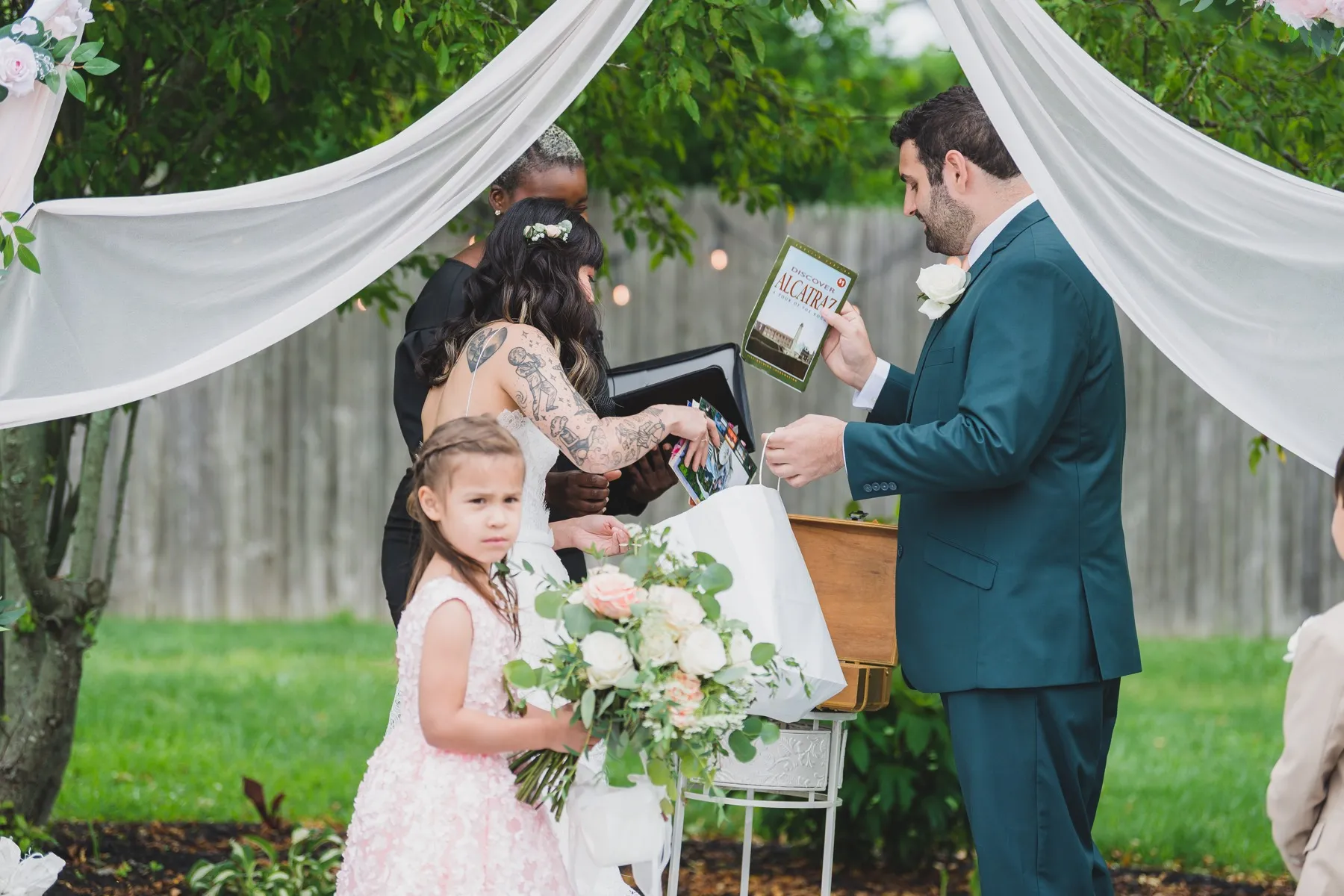
I once watched a nine-year-old flick a pinch of sand at the family vase. He didn’t pour it, he flicked it, two fingers and a little toss, the way you’d salt a plate of fries, and then he stepped back with his arms crossed while the photographer kept shooting and the guests kept smiling, none of them seeing what I saw from three feet away.
He wasn’t being difficult. He was telling the truth with his hands. Nobody had asked him whether he wanted to be in this part, and the only protest available to a kid in a clip-on tie at his mom’s wedding is a half-measure that looks like participation from the back row.
That moment changed how I plan every blended family ceremony I’ve done since. The ritual is not the hard part. The honest conversation that has to happen weeks before the ritual is the hard part, and most wedding advice skips it entirely.
I’ve officiated more than 300 ceremonies, and a good share have involved children joining two families. I’ve seen kids walk up to the vase grinning, and I’ve seen the flick. The difference is almost never the format you choose. It’s whether the kids felt asked.
What is a blended family unity ceremony?
It’s a wedding ritual that pulls the couple’s children into the moment the marriage is made, so the day reads as a family forming and not just two adults pairing off.
The mechanics vary: sand, a medallion, ribbons, a puzzle, a candle. The intent runs the same way through all of them, which is to say out loud that this child has a place in what’s being built, and to say it in front of everyone who matters to them.
Blended families are common enough now that most ceremony resources still get them wrong, treating the couple as the only two people at the altar. A wedding venue’s own family-blending guide (source) puts the share of remarriages and stepfamily weddings high, and whatever the exact number, anyone who officiates regularly will tell you these ceremonies are no longer the exception. That’s the gap this post is for.
Here’s the thing I wish more couples heard before they booked the sand kit.
The honest version of this, the one a family counseling resource put plainly (source), is that blending a family takes years of ordinary, patient, sometimes thankless love. Nobody becomes a family because the grains mixed in a vase. The ceremony is a promise to do the work, witnessed by people you love. Treat it that way and you’ll choose a ritual that fits, find words that ring true, and stop asking a four-minute moment to carry more than it can.
What can a blended family ceremony actually do?
Three things, when it’s done with care.
First, it makes the children visible. A wedding can quietly center two adults while kids sit in the second row feeling like guests at their own family’s beginning. A unity ritual reverses that and says, in front of the grandparents, that the kids are part of this.
Second, it gives the children a job, which is its own kind of gift. A role steadies a nervous kid. Holding the ribbon, pouring the color, receiving the medallion, any of it turns a swirl of big feelings into one clear thing to do with your hands.
Third, it lets the new step-parent make a promise directly to the child, not just to the spouse. This is the part most couples underuse, and it’s the part children remember.
What it can’t do is manufacture closeness on a deadline. A child carries competing loyalties into that moment (source): love for their other biological parent, feelings about the new marriage, and a slowly forming sense of this new household. A good ceremony holds all three at once. It says the marriage matters, the past matters, and the growing family matters too. A ceremony that only celebrates the new thing, while pretending the old family never existed, is the kind that produces a flick.
One note here, because it shapes every word you’ll choose: not every blended family forms after a divorce. A meaningful share form after a parent has died, and the dynamics are different. A child of divorce is often guarding loyalty to a living parent who’s somewhere else that day. A bereaved child is holding grief and the fear that a new parent figure means the lost one is being written over. Both need creation language rather than replacement language, but the bereaved child especially needs you to leave clear room for the parent who isn’t there, sometimes with an empty chair, a photo, or a single line that honors them by name.
The consent conversation: ask the kids before you plan anything
This is the most important section in this post.
Before you pick a ritual, before you order the sand or the medallion, you sit down with each child and you ask whether they want to be part of the ceremony. Asking is not the same as announcing, and children feel the difference the instant you open your mouth.
The research backs what I’ve watched play out on lawns for years. When children are consulted and given a genuine choice (source) about their role, they tend to experience the wedding as something important happening to their family. When they’re handed a script and a colored vase with no say, doubt tends to surface anyway, sometimes as the blunt question every blended-family parent dreads: “Are you going to get divorced too?”
The difference is almost never the format you choose. It’s whether the kids felt asked.
Asking the question is the parenting, not a failure of it. You’re showing this child that their feelings carry weight in the family you’re building, which is the exact message the ritual is meant to send.
Give them real options, including the option to do nothing. “Would you like to pour a color, or hand me the sand, or just sit in the special seat up front?” A child who chooses to witness from a seat of honor is participating, because they chose their level, and that choice is what you were asking for.
And settle a backup plan before the day. Decide in advance what happens if a kid who said yes freezes at the altar, because some will. Never force it in the moment (source). I’ll often tell a parent: if she shakes her head when I look at her, I’ll simply say “and we’re so glad you’re here with us” and move on, no pause, no spotlight. Nobody but us will know there was ever a plan B.
A harder version of consent involves the other household. Couples often worry that including the kids will provoke an ex, or that the ex somehow gets a vote in the ceremony. The boundary is clean: a co-parent’s custody and legal rights are real and worth respecting, but they do not extend to your wedding script. The other parent doesn’t get a say in your ritual. The children’s comfort does, and if a child is anxious about how a parent will feel, that’s a quiet conversation for you and the child, not a reason to hand the ex editorial control over the day.
Which blended family unity ceremony is right for my family?
There’s no single best ritual. There’s the one that fits your kids’ ages, your family’s history, and how much your children like being looked at. Here are the five I use most, each with the part the brochures leave out.
| Format | Best for |
|---|---|
| Sand | Young kids |
| Medallion | Kids who’ll keep it |
| Handfasting | Mixed ages |
| Puzzle | Younger kids |
| Candle | Indoor weddings |
The details behind each row are below, starting with the one most couples reach for first.
Sand ceremony
Everyone pours a different color into one vase, building layers that can’t be separated again. It’s cheap, forgiving, windproof, and it produces a keepsake. For young kids it’s close to ideal because the job is simple and the result is instant.
The failure mode is the one I opened with: resistance is invisible to guests. A child can pour with conflicted feelings, or pour a thin reluctant trickle while saving some of themselves (source) for the other parent’s house, and the photos will look fine. The sand ceremony tells you nothing about what the child actually feels. If you choose it, watch their hands during, and check in privately a few days after. For the full mechanics, color meanings, and pouring technique, see the unity sand ceremony guide.
The Family Medallion
This is the most formal and most established blended-family ritual, and the one most couples have never heard of. After the couple is pronounced married, each child receives a medallion of three interlocking circles (source), the third circle standing for the children’s place in the new family. The company behind it reports that more than 15,000 couples a year use it across the US, Canada, and Europe, and that figure comes from the vendor rather than an independent source, so read it as a sign the ritual is widely used rather than as a hard count.
I think of it as the structured option. The keepsake is wearable, so the child carries it home and into the rest of their life rather than leaving it on a shelf. The trade-off is logistics. You order the medallions ahead, you place the moment correctly in the script, and it works best when children are old enough to understand a token they’ll keep. For a toddler, the sand will mean more.
Handfasting
Each family member chooses a colored ribbon, then wraps it around the couple’s joined hands while speaking a wish out loud. Of every format here, this is the one I steer mixed-age families toward most.
Why: it’s the only ritual on this list that genuinely runs in two directions. Sand flows one way, into the vase. Handfasting asks each person to speak, so a thirteen-year-old who’d be mortified pouring colored sand will often light up given a sentence to say and a ribbon to tie. It produces a keepsake too, the bound cord, displayed at home. The failure mode is that it asks more of shy kids, so pair it with the consent conversation and let a quiet child tie without speaking. The full how-to lives in the handfasting ceremony guide.
Unity puzzle
Each person paints or holds a puzzle piece, and the pieces lock into one image during the ceremony. Kids love it because it’s tactile and a little playful, and the finished puzzle hangs in the new home.
It’s best for younger children and for families who want something lighter than the weighty permanence language some rituals carry. The failure mode is purely practical: pieces that don’t fit cleanly on the first try in front of 80 people. Test the actual puzzle beforehand, and assign each piece to a specific hand so there’s no scramble.
Unity candle
The couple and the children light a central candle from their own tapers. It’s traditional and quietly lovely indoors.
Outdoors it’s a gamble, because wind kills it, and I’ve watched a wedding party shield a flame with five bodies while a kid tried to relight a taper. For blended families specifically, it carries a subtler problem: a single flame can imply the old families dissolve into one, which is not the message a child of divorce or a grieving child needs. If you want it, frame it as new light added to existing light, not separate flames merging into one. More on doing it well in the unity candle ceremony guide.
What about kids of very different ages at the same altar?
Plenty of couples have, say, a four-year-old and a fourteen-year-old standing up together, and the worry is real: how do you give them roles that fit each child without the whole thing looking lopsided?
The move is to keep the ritual shared but split the jobs by age. In a sand ceremony, the little one pours a color with a parent’s hand resting over theirs, and the teen gets the dignified closing job, reading one line or being the one who caps and seals the vase. In handfasting, the four-year-old hands a ribbon up while a parent helps, and the teen ties their own and says a sentence. Same ritual, same vase or same cord, two roles pitched to two very different kids.
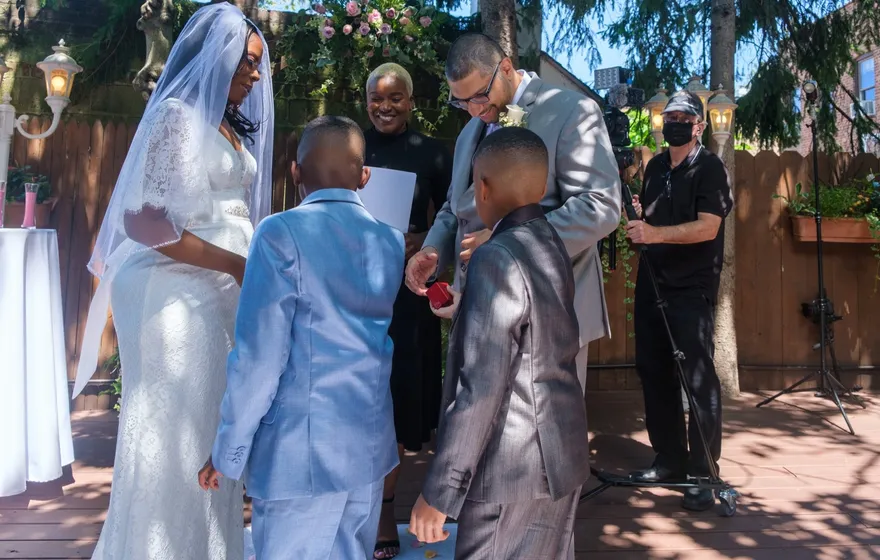
What keeps it from feeling unequal is that every child touches the one shared object. Avoid building a big production for the cute toddler and leaving the teen holding a prop. If anything, give the older kid the role with the most quiet authority, because a teen reads “you handed me the symbolic part” as respect, and respect is exactly what a teenager in a blended family is scanning for.
How do you word step-parent vows to a child?
This is where the ceremony does its quiet heavy lifting, and it’s the part couples most often leave thin.
Most blended family ceremonies pour their energy into the couple’s vows and give the children a generic line or nothing. Flip that. A child’s sense of safety in the new family comes less from watching the adults marry and more from hearing the step-parent make a promise to them, by name.
The vows that actually reach a child share four traits: use the child’s name, name the hard part honestly, promise not to replace the other parent, and stay specific instead of grand.
Here’s the shape I coach step-parents toward:
“Maya, I’m not here to replace your dad. You already have a dad, and I’d never try to take his place. What I’m promising you is this: I’ll be here. I’ll show up to your games, I’ll learn how you like your eggs, and on the hard days I’ll be in your corner. Being a step-parent will be new for both of us, and we’ll figure it out together. I’m lucky to get to.”
Notice what’s not in there. There’s no “I’ll love you exactly like my own,” because a step-parent saying that on day one is making a promise the child can hear isn’t true yet. The honesty is exactly why a child believes it, because kids have excellent instruments for detecting an adult overselling something. I’d take one true sentence over a paragraph of poetry every time.
A full blended family unity ceremony script
Here’s a complete script for a sand-based version that includes the consent moment, the family’s pour, and a direct word to the children. I’ve written it so you can lift it whole or swap the sand section for the medallion or ribbons. Read the note under it on the one phrase I cut.
Officiant, to the gathered family:
“A wedding joins two people. This one does more than that. Today we’re watching a family take shape, and that includes the people who matter most to David and Sarah: their children, Maya and Eli.”
(Invite the children forward by name. Wait. Let them come at their own pace. They’ll stand beside the couple, facing in, for this part only.)
Officiant:
“Each of you is holding a color. David and Sarah, your colors are the two you came in with. Maya, Eli, yours are the colors you chose, because you were here long before today and you belong in this just as much.”
(Couple pours first, slowly, into the shared vase.)
Officiant, as the couple pours:
“David and Sarah, as your colors settle together, you’re choosing each other, and you’re choosing this whole family that comes with the two of you.”
(Children pour next. If a child hesitates, the officiant simply continues without a pause.)
Officiant, as the children pour:
“Maya, Eli, your colors are part of this now, woven through the middle of it, where they’ve always belonged. This new family doesn’t erase anything that came before. It adds to it.”
Officiant, to the children directly:
“You didn’t have to choose a new family. You’re standing here helping build one anyway, and that’s a brave and generous thing. Whatever else changes, you have a home in this.”
(Step-parent may speak their vow to the children here, if planned. See the wording above. Then the children return to their seats with a quiet word from the officiant, and the ceremony continues toward the pronouncement.)
Officiant, to all:
“What you’ve made in this vase, you’ll make again tomorrow and the next day, in a thousand ordinary moments that no one will photograph. This is the start of it. Let’s build the rest together.”
A staging note, since it’s the question I get most after the script itself. The kids don’t stand at the altar for the whole ceremony. Bring them up by name for the unity moment, give them their job, then walk them back to a front-row seat of honor once they’ve poured, so they’re not stranded facing a crowd for twenty minutes. Decide ahead of time who cues them, usually me with a small nod, or a grandparent in the front row who walks the youngest up. And dress them for the photos but also for a real kid’s day: something they can sit in, move in, and not fuss with, because a child tugging at a stiff collar is a child who looks miserable in every frame.
The phrase I deliberately left out is the standard sand-ceremony line, “just as these grains can never be separated and poured again, so will your family be inseparable and whole.” (source) It’s a lovely sentence for a first marriage. For a child who has already watched one family come apart, the word inseparable can sting instead of soothe, and never be separated again is a promise nobody at the altar can actually guarantee. I trade permanence language for creation language. We’re making something, not locking it. That small shift protects the kid who knows, better than any adult in the room, that families sometimes do change.
How young is too young to take part?
Younger than you’d think can still take part, as long as the job matches the age.
A two-year-old can be carried up and held while a parent guides their hand on the sand. There’s no comprehension of symbolism there, and that’s fine; the photo and the inclusion are the point. By four or five, a child can pour their own color and feel proud of it, even if they dump the whole container in one go, which they will, and which is always a little wonderful.
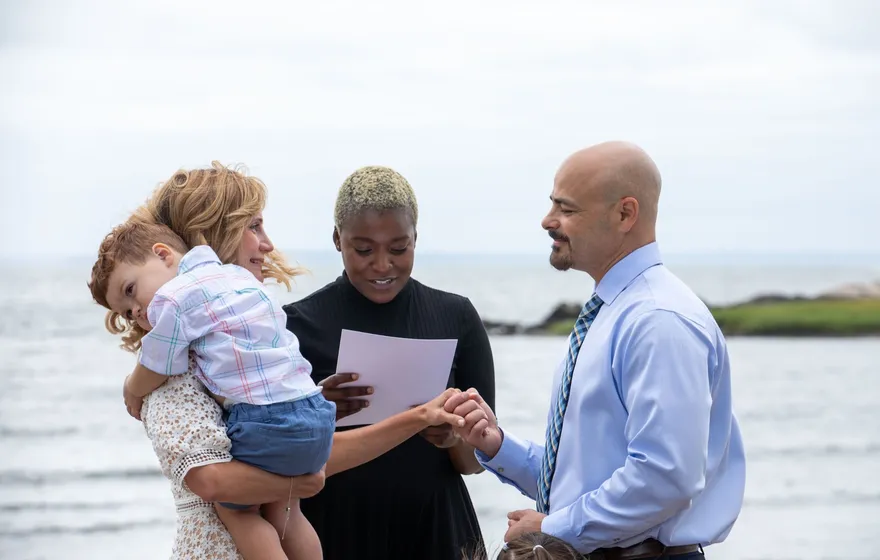
Real understanding of what the ritual means tends to arrive around seven or eight. That’s when a medallion or a spoken handfasting wish starts to carry weight for them. Teens understand it completely, which is exactly why they’re the hardest, and we’ll get to them.
| Age | What they can do |
|---|---|
| About 2 | Carried, hand guided |
| 4 to 5 | Pour their own color |
| 7 to 8 | Grasp a medallion |
| Teens | A role with dignity |
The honest answer to “too young” leans on the job more than the age. Match the role to what the child can actually do and enjoy, and almost any age works.
What if my teen or adult kid thinks the ceremony is awkward?
They might. Take it seriously rather than personally.
A teenager’s resistance is usually not rejection of you or the marriage. It’s a teenager’s standing horror of being looked at, multiplied by the complicated feelings of a parent remarrying. Asking a fifteen-year-old to pour colored sand in front of 80 adults is, to them, a small public nightmare.
So change the job, don’t drop the kid. Offer a teen a role with dignity and no spotlight:
- a reading
- escorting a grandparent
- standing up as a witness
- handing you the rings
Adult children especially respond to being treated as a peer in the day rather than a prop in a children’s ritual. Ask them what role, if any, feels right, and believe their answer.
And if the answer is “I’d rather just watch,” that’s a complete and acceptable answer. A grown or nearly-grown kid sitting in the front row, present and at ease, is worth more than a resentful one pressed into a ribbon ceremony for the photos.
Where the ceremony fits, and how long it takes
Place the unity ritual after the ring exchange and before the pronouncement. That’s the emotional high point of the ceremony, and the family moment belongs there, not tacked on at the start before anyone’s settled.
Budget three to six minutes for most blended-family rituals. Sand and candle run shorter; handfasting with multiple spoken wishes and a medallion presentation run longer. Add a cushion if young children are involved, because small hands and big nerves keep their own time, and you never want to be rushing a four-year-old at the altar.
One sequencing note specific to the medallion: it’s traditionally given after the couple is pronounced married (source), so the children are welcomed into a family that, in that instant, officially exists. If you’re using sand or ribbons, before the pronouncement works beautifully. If you’re using the medallion, just after it is the classic placement.
The real work starts after the last guest leaves
I’ll close where the family counselors do, because they’re right.
The vase on the mantel is a promise, not a finish line. The actual blending happens in the months after, in the daily, patient, unglamorous work (source) that no photographer is around for. Three things help:
- a weekly ritual the new family owns together
- one-on-one time between the step-parent and each child, with no agenda
- patience most of all, because a kid will test whether the new arrangement is safe, and the testing is normal
If you go in expecting the ceremony to do the bonding, you’ll be disappointed by week three. If you go in understanding the ceremony as the opening of a long, good project, you’ll have used it exactly right.
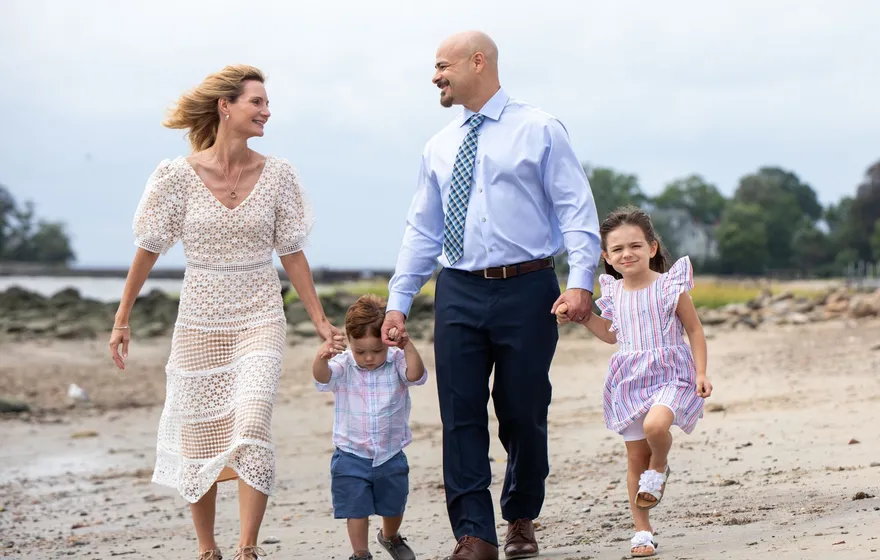
That’s how I’d hold it: a real beginning, followed by patient work. Plan the moment with that honesty and the ritual will fit the family you actually have.
Planning the version that fits your family
Most of what makes a blended family ceremony work happens before the day: the consent conversations, choosing the format for the kid you actually have, writing step-parent vows that don’t oversell. That’s the planning our Couple’s Ceremony Kit is built for. It walks you through the consent conversation script by script, gives you the format-by-format decision guide, and includes step-parent vow templates sorted by the child’s age, so you’re not staring at a blank page the week of the wedding. It’s $79, and it means you know why each piece of the moment is there before you walk up to it.
If you’re still weighing which ritual fits your family, the full unity ceremony ideas guide ranks every option, or the free Unity Ceremony Quiz matches you to one in two minutes.
ALSO READ Ways to Include Family in Your Wedding Ceremony (Matched to Comfort, Not Just Closeness)The Couple’s Ceremony Kit
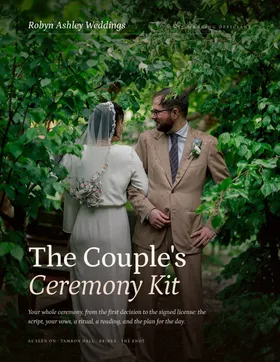
Walk in with a ceremony that sounds like the two of you
This post covers one part of the ceremony, and the Couple’s Ceremony Kit covers the rest, with five full scripts to start from and the prompts I use to help couples write their vows.
- Five full ceremony scripts in five different styles
- The Story Mine, thirty prompts for writing your vows
- Sixteen unity rituals, with the words and what to gather
- Thirty readings, each with my notes on when it fits
CEREMONY
Caribbean Wedding Traditions Worth Keeping
A couple sat in my office in Crown Heights, both second-generation, one side Guyanese and one side Trinidadian, and the bride said, "We want it to feel Caribbean, but we don't.
READ →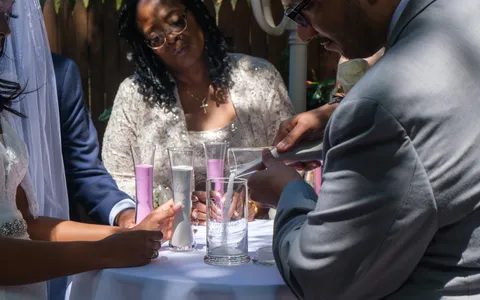
CEREMONY
What Is a Unity Ceremony? The Complete Guide
What a unity ceremony is, where it fits in your wedding, and how to choose the right ritual, from an officiant who's performed them at 300+ weddings.
READ →
CEREMONY
African Wedding Traditions, Explained With Respect
African wedding traditions by people and region: the Akan knocking, the Yoruba engagement, the Igbo kola and wine-carrying, libation, aso ebi and the broom, with how to include one or two without flattening them.
READ →