
OFFICIANT
Can a Friend Officiate Your Wedding? The Honest Guide (2026)
How to have a friend legally officiate your wedding, write the ceremony, and avoid the one mistake that actually matters, from an NYC officiant who's seen it go both ways.
Your best friend just asked you to officiate their wedding, and your stomach did a little flip. Or maybe you’re the couple, weighing whether to hand the most important ten minutes of your day to someone you love instead of a stranger with a clipboard.
Here’s the short version: yes, you can do this, it’s usually free or close to it to set up, and when it goes well it’s the most personal part of the day. When it goes badly, it almost always goes badly on paper, and that’s much harder to laugh off. I’ve watched both happen from a few feet away.
Let me walk you through the version that goes well.
Can a friend legally officiate a wedding?
Yes. In most of the United States, a friend can legally officiate your wedding once they get ordained online, which is free and takes about five minutes. After that, the couple confirms that the officiant’s credentials are accepted in the county where the marriage license is issued.
New York is the exception to know about. A New York appeals court held a marriage performed by a Universal Life Church minister void (Ranieri v. Ranieri, 1989), so in New York I tell every friend-officiant to skip the online route and get a One-Day Marriage Officiant license instead. It costs $25, it comes from the same clerk’s office that issued the couple’s license, and it covers exactly one wedding (N.Y. Domestic Relations Law 11-d).
That last part trips people up. Marriage law in this country is local. A rule that’s fine in one county can be a problem two counties over, and the state website rarely tells you the whole story.
There’s a reason this question is everywhere right now. Nearly 30% of U.S. adults identify as religiously unaffiliated, up from 16% in 2007 (Pew Research Center). Fewer couples have a clergy member on speed dial, so the job is going to the people who know them best.
Step 1: Get your friend ordained online
This is the easy part, and the part everyone worries about for no reason.
Two organizations handle the vast majority of friend-officiant weddings, both free and instant:
- American Marriage Ministries (AMM): free, fast, and genuinely useful state-by-state legal guides
- Universal Life Church (ULC): the original, also free, recognized for decades
Pick one, sign up, done. The whole thing takes less time than ordering lunch. If the wedding is in New York, do the One-Day license instead (more on that in my guide to the one-day officiant license in NYC).
Step 2: Check the local rules (the step everyone skips)
This is the one that actually bites people. Requirements swing wildly from place to place:
| Where | What they need |
|---|---|
| New York State | A One-Day license, $25 |
| NYC, as clergy | City Clerk registration, $15 |
| Virginia | A circuit court order |
| Most states | Ordination, clerk call |
In New York City, any officiant who isn’t on a One-Day license has to register with the City Clerk’s office before the ceremony. Elsewhere, some counties want ordination paperwork submitted in advance, and others just want the signed license back within a few days.
One phone call settles it. Have your friend call the county clerk where the wedding is happening and ask, plainly:
“I’m an online-ordained officiant. What do you need from me?”
Write down the answer. That two-minute call prevents the only mistake on this whole list that can’t be fixed after the fact.
What actually goes wrong (my own data on this)
Here’s something no survey will tell you, because it comes from my own ceremonies rather than a stat I found online.
Across 300+ weddings, I’ve watched plenty of friends step in as officiant. When one of those weddings hit a real problem, it almost never came from the vows or a case of nerves. It came from the paperwork. The most common reason a couple has called me in a quiet panic is a marriage license that got signed in the wrong place, filed past the deadline, or filed in the wrong county.
That flips the usual worry on its head. Couples agonize over whether their friend will freeze at the microphone. The microphone is the forgiving part. A shaky speech is a sweet memory by brunch the next morning. A botched license is a legal headache that can drag on for weeks.
Step 3: Write a ceremony that doesn’t drag
Now the fun part, and the one where first-timers either soar or spiral. The secret is that a wedding ceremony has a natural skeleton. Follow it and you genuinely cannot go too far wrong:
The skeleton of a ceremony
-
Welcome and opening
Greet everyone, set the tone in the first thirty seconds.
-
The couple's story
How they met, why they work, the detail only a real friend would know.
-
Readings
A poem, a passage, even a few lines from a song that means something.
-
The vows
The heart of the whole thing, and where the couple says “I do.” That declaration, made in front of you and whatever witnesses your state requires, is the part the law requires.
-
Ring exchange
With the wording written out, word for word.
-
The pronouncement
“By the power vested in me…” It’s the customary close rather than a legal requirement, but nobody skips it.
-
The kiss
And breathe, you did it.
The part a friend can do better than any professional is number two. You already have the stories. A hired officiant has to dig for what you’ve known for years, so lean into that and let a script carry the legal bits.
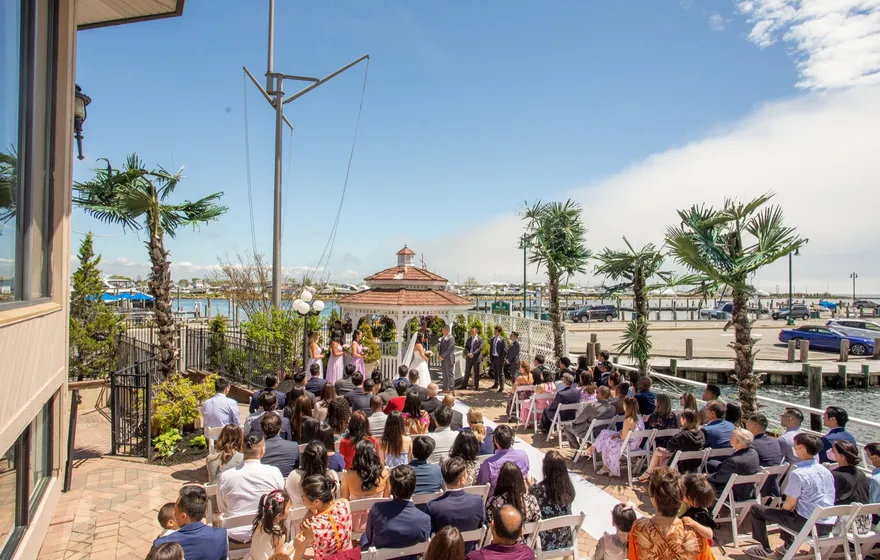
If you want the structure in more depth, I broke down the full flow in how to officiate a wedding and how to write a ceremony step by step.
Step 4: Handle the paperwork like it’s the only thing that matters
Because, per the data above, it nearly is. After the ceremony, the officiant has one job that can’t slip:
- Sign the license right after the ceremony. Not at the reception, not tomorrow. Then.
- Return it to the clerk inside the required window, usually a few days to two weeks, and five days in New York.
- Check every field before it goes in. Names spelled right, date correct, every signature where it belongs.
Get this right and the legal side disappears, exactly as it should.
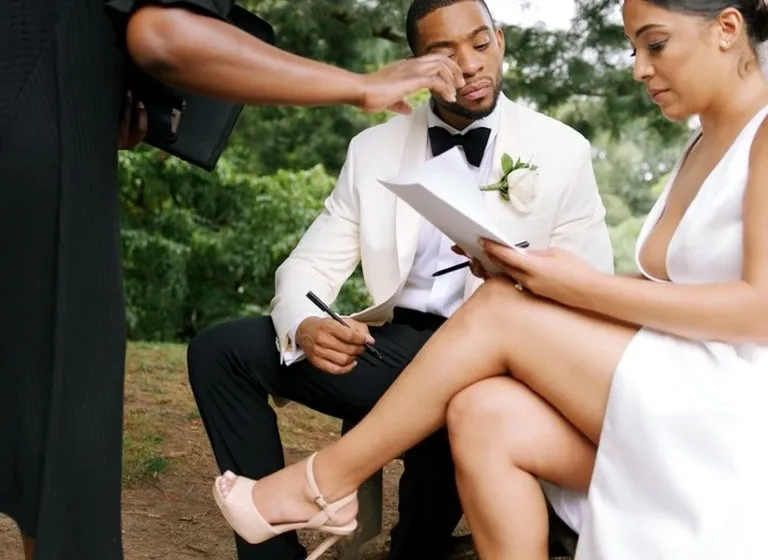
What if my friend hates public speaking?
Plenty of people just aren’t built for a microphone, and that’s okay. You still have good options:
- Rehearse out loud, more than feels necessary. Most nerves burn off by the third run-through.
- Co-officiate. Two friends split the ceremony and lean on each other.
- Read it straight from a card. There’s zero shame in this. Half the pros do it.
- Split the roles. Sign the legal paperwork quietly with a pro or at City Hall, then let your friend lead the ceremony that actually matters to you on the day.
Most of what helps here is preparation.
Common questions about a friend officiating
Can a friend legally officiate my wedding?
In most U.S. states, yes, once they’re ordained online through a group like AMM or ULC and have confirmed the rules with the county clerk where the wedding happens. In New York, use a One-Day Marriage Officiant license instead.
How does a friend get ordained?
They sign up free with American Marriage Ministries or the Universal Life Church. It’s instant. Print the certificate the same day.
Is online ordination legal everywhere?
No. A New York appeals court has held a Universal Life Church marriage void, and Virginia requires a court order, so always confirm locally instead of assuming.
What goes wrong most often?
The license, not the speech. Signed in the wrong spot, filed late, or filed in the wrong county.
How long should the ceremony be?
Fifteen to twenty minutes. First-timers always run long, so when in doubt, cut.
The bottom line
A friend officiating can be the most personal choice you make for the whole wedding. It’s more work than hiring a pro, and the payoff, a ceremony led by someone who actually knows you, is worth every minute.
The recipe is simple: get authorized the way your state wants it, confirm the county’s rules, write something true, and guard that marriage license with your life.
If you want to make it easy on the friend you’ve recruited, point them to the Officiant Kit. It has the scripts, the day-of checklists, and a legal guide for getting ordained and handling the license, so the paperwork part, the part that actually trips people, is handled.
If your friend wants a head start before the kit, send them Ready to Officiate, my free ten-page guide they can fill in over one evening, with the license steps and a card for their pocket. And if you’re still deciding between a friend and a pro, our guide to wedding officiant cost lays out the trade-off.
The Officiant Kit
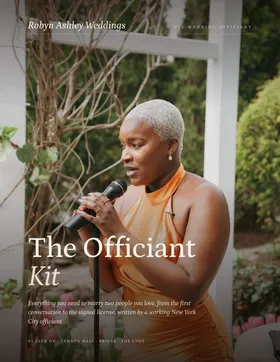
What to say when the ring goes missing, the mic dies or you blank on a name
This post gets you through one part of the ceremony, and the Officiant Kit covers what surrounds it, from the weeks before and the rehearsal to what you do when something goes wrong in front of everyone.
- Eight full ceremony scripts, with names you type once
- The Story Builder, seven steps to the couple’s story
- The Rehearsal Run Sheet, a cue sheet and four pocket cards
- A marriage license reference for all fifty states
OFFICIANT
How to Officiate a Wedding: A First-Timer's Step-by-Step Guide (2026)
How to officiate a wedding when you've never done it before, from someone who's coached a lot of nervous first-timers through their first ceremony.
READ →
OFFICIANT
The One-Day Officiant License in NYC: How It Actually Works (2026)
NYC has two ways to legally officiate a wedding, and most articles confuse them. Here's the one-day license, the full registration, and which is yours.
READ →
OFFICIANT
How to Get Ordained Online to Officiate a Wedding (2026)
How to get ordained online for free with AMM or the ULC, why the county clerk decides whether it counts, which states require registration, and how to sign and return the license correctly.
READ →