
OFFICIANT
The Wedding Officiant Checklist a Pro Actually Uses (2026)
A working officiant's checklist for before, during, and after the ceremony, including the items first-timers forget most often.
The reason experienced officiants look so calm is almost embarrassing once you know it. Nothing lives in their head. It’s all on a checklist.
That’s the whole secret. The smoothness you see at a well-run ceremony isn’t nerves of steel or natural charm. It’s a person who wrote everything down so they never have to remember it under pressure. Borrow that, and you borrow the calm.
Here’s the exact list, split into the three phases that matter: before, day-of, and after.
Work through it top to bottom and nothing has to live in your head.
Before the wedding
This is where a great ceremony is actually made. Get this stretch right and the day itself runs itself.

Here’s the order I’d work in.
-
Get legally ordained
It’s free and instant through AMM or the ULC. Save the certificate the same day.
-
Confirm the local rules
Call the county clerk where the wedding happens and ask what they need from the officiant. See the NYC marriage license guide if you’re in the five boroughs.
-
Confirm the couple has their marriage license
And know the filing deadline for that county.
-
Write the ceremony script
Include the legal declaration and pronouncement word for word. Start from how to write a ceremony if you’re staring at a blank page.
-
Rehearse out loud with a timer
Aim for fifteen to twenty minutes total.
-
Attend the rehearsal
Walk the processional, the positions, and the cues.
-
Confirm the microphone setup
Check it with the venue or DJ.
On the wedding day
Print this section. Genuinely. This is the part where small forgotten things become big visible things. Start with what goes in your bag:
| Bring | Why |
|---|---|
| Printed script | In a binder, not a phone |
| A reliable pen | Plus a backup pen |
| Marriage license | If you’re holding it |
| Water | Nerves dry your throat |
Then the moves that keep the start smooth:
- Arrive at least thirty minutes early.
- Test the mic before guests arrive, checking your volume while looking down at the script, not just speaking out into the room.
- Know the processional order and your cue to begin.
- Tell the guests to sit after the processional. If you don’t say it, some will stand the entire time.
The script itself deserves one more pass before you print it.
After the ceremony
The party starts, but you have one job left, and it’s the most important one on the whole list.
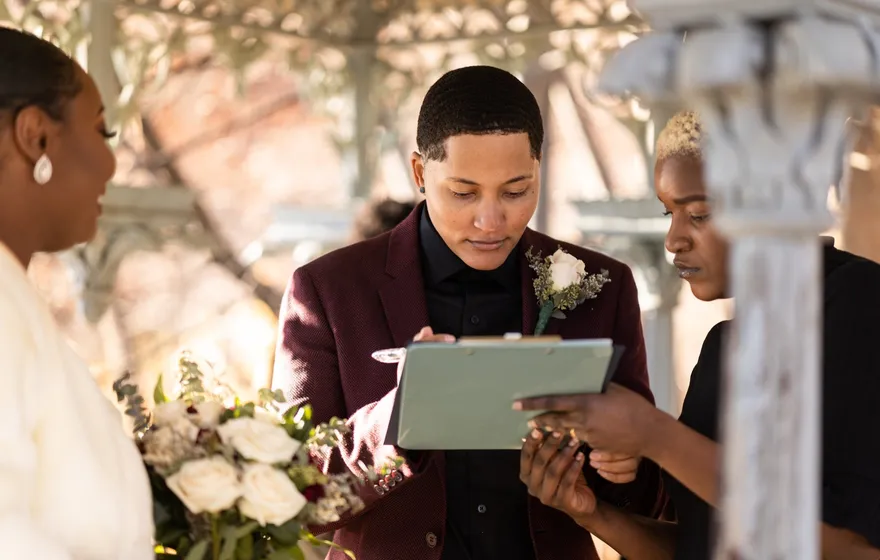
Work through these in order before you join the party:
-
Sign the license immediately
With the couple and any required witnesses.
-
Check every field
Before it leaves your hands: names spelled correctly, date right, signatures in the correct boxes.
-
File it with the county clerk inside the deadline
In New York, within five days.
-
Confirm it was recorded
A quick call to the clerk’s office closes the loop.
Of the four, filing is the one with a legal deadline attached, so treat it as part of the ceremony rather than an errand for next week.
Want this as a sheet you can fill in and print?
This checklist is what I built into my free guide, Ready to Officiate. It’s ten pages you fill in and print: a one-evening plan, the ceremony in order with your cue lines, the license steps, and a pocket card you cut out so you’re never scrolling a phone mid-ceremony.
If you want the full version, the Officiant Kit turns every line above into done-for-you tools: the script templates, the legal guide, the day-of timeline, and the vow prompts. It’s the difference between a ceremony that feels thrown together and one that feels handled.
The bottom line
A checklist is how a nervous first-timer ends up looking like a seasoned pro. Work the three phases, guard the license, and let the list carry what your memory shouldn’t have to. For the wider picture of the role, read what a wedding officiant actually does and the full how to officiate a wedding walkthrough.
The Officiant Kit
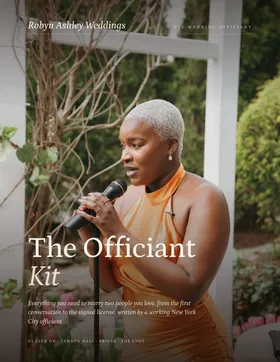
What to say when the ring goes missing, the mic dies or you blank on a name
This post gets you through one part of the ceremony, and the Officiant Kit covers what surrounds it, from the weeks before and the rehearsal to what you do when something goes wrong in front of everyone.
- Eight full ceremony scripts, with names you type once
- The Story Builder, seven steps to the couple’s story
- The Rehearsal Run Sheet, a cue sheet and four pocket cards
- A marriage license reference for all fifty states
OFFICIANT
How to Officiate a Wedding: A First-Timer's Step-by-Step Guide (2026)
How to officiate a wedding when you've never done it before, from someone who's coached a lot of nervous first-timers through their first ceremony.
READ →
OFFICIANT
The One-Day Officiant License in NYC: How It Actually Works (2026)
NYC has two ways to legally officiate a wedding, and most articles confuse them. Here's the one-day license, the full registration, and which is yours.
READ →
OFFICIANT
Can a Friend Officiate Your Wedding? The Honest Guide (2026)
How to have a friend legally officiate your wedding, write the ceremony, and avoid the one mistake that actually matters, from an NYC officiant who's seen it go both ways.
READ →