OFFICIANT
How to Get Ordained Online to Officiate a Wedding (2026)
How to get ordained online for free with AMM or the ULC, why the county clerk decides whether it counts, which states require registration, and how to sign and return the license correctly.
A groom’s older brother texted me three days before the wedding, fully panicking. He’d gotten ordained online months earlier, felt great about it, and had just found out the county clerk wouldn’t accept his ordination without a piece of paper he didn’t have. The ceremony was Saturday. He thought the whole wedding might not count.
It worked out, and we sorted it in time. But that exact panic is so common, and the reason is always the same. Everyone obsesses over getting ordained, and almost nobody thinks about the part that actually decides whether two people walk away married.
I officiate weddings in New York, and I’ve coached a lot of first-time officiants through this, usually a brother or a best friend who got handed the job. Here’s the thing they all get wrong at the start.
Getting ordained online is the easy part. It’s free, and it takes under a minute. The real work is making sure the marriage is legally valid where the wedding actually happens.
So treat this as a two-decision job. First you pick a church and get ordained. Then you verify the rules of the specific county where the couple is getting married. Most of this post lives in that second decision, because that’s where people get burned.
How do I actually get ordained online?
You go to one of two organizations, fill out a short form with your name and email, and click submit. That’s the whole thing. You’re ordained.
The two that matter are American Marriage Ministries (AMM) and the Universal Life Church (ULC). Both ordain you online for free, instantly, with no test, no class, and no waiting.
A little background, since people always ask. The Universal Life Church was founded in 1962 by Kirby Hensley in Modesto, California, and says it has ordained over 20 million people (Wikipedia). American Marriage Ministries is younger, founded in 2009 by Glen Yoshioka in Seattle, and has no affiliation with the ULC (Wikipedia).
| Detail | AMM | ULC |
|---|---|---|
| Founded | 2009, Seattle | 1962, Modesto |
| Cost | Free | Free |
| Speed | Instant | Instant |
On the ordination itself, there’s nothing to choose between them. The only money decision is whether you want printed credentials.
That one’s worth slowing down on, because the upsell trips people up. AMM offers paid packages (around $49 standard, $99 signature), but those bundle the documents, not the ordination itself. If your county wants to see a paper certificate, the package saves you a trip to a print shop. If your county doesn’t, you never needed it.
For the full walkthrough of standing up there and running the ceremony, I wrote a separate piece on how to officiate a wedding from start to finish. This post is specifically about the ordination and the legality around it.
AMM or ULC, which one should I pick?
Both are free, both ordain instantly, and both get accepted across most of the country. So my honest answer is that the better question isn’t which church. It’s which paperwork your county wants.
Here’s the move I give my couples. Before you ordain through either one, call the county clerk where the wedding is happening and ask two things: do you accept online ordination, and if so, do you need any specific documents from the officiant? Then you ordain through whichever church produces what that clerk asked for.
One bit of non-obvious context. These two are genuinely separate organizations, and they’ve actually sued each other. AMM opposed a ULC-affiliated trademark on the phrase “GET ORDAINED,” and the Federal Circuit issued a decision on that dispute in November 2023 (Federal Circuit). I bring it up only so you understand they aren’t two doors into the same building. They’re rivals.
Is online ordination actually legal?
In most of the U.S., yes. In a few places, no, or it’s complicated. And the answer can shift depending on which county you’re standing in, even inside the same state.
This is the part that can void a marriage, so I want to be precise here.
New York, where I work, is the cautionary tale. Under cases like Ranieri v. Ranieri (1989) and earlier Rubino v. City of New York (1984), some downstate counties have refused to recognize online-ordained ministers who don’t have a real congregation or a physical meeting place (Wikipedia). The counties people flag most often are Nassau, Westchester, Putnam, and Dutchess. I’ve watched this variation play out firsthand. Two neighboring counties can give you two different answers.
Other states have history too. North Carolina overturned a marriage’s validity in State v. Lynch (1980), and Virginia’s Supreme Court in Cramer v. Commonwealth (1974) memorably called ULC credentials “casually and cavalierly acquired” (Wikipedia). Virginia was still fighting this as recently as 2025.
| State | The history |
|---|---|
| New York | Ranieri, 1989 |
| North Carolina | State v. Lynch, 1980 |
| Virginia | Cramer, 1974 |
| Tennessee | Ban settled in 2023 |
Every one of those was decided state by state, and sometimes county by county.
Now the flip side, because old lists scare people for no reason. Tennessee passed a 2019 law banning internet-ordained ministers from solemnizing marriages. The ULC sued and won, and the case ended in August 2023 with consent orders where Tennessee officials pledged never to prosecute a ULC minister (The Epoch Times). So the state that was the scariest a few years ago is now workable. Which is exactly why you check current local rules instead of trusting a list from 2018.
Do I need to register before the ceremony?
In about a third of states, yes. Roughly that many require the officiant to register with a county clerk, court, or state office before the wedding, not just show up holding an ordination (Universal Life Church).
The ones I hear about most are Nevada, New York City (the rest of New York State has no registration), West Virginia, Virginia, Hawaii (through its Department of Health), and Washington D.C. Some of these take real time. A few states with one-day or designated-officiant processes can take weeks to clear.
That’s why “I’ll just get ordained the week of the wedding” can quietly be too late, even though the ordination itself is instant. The ordination is fast. The registration that some places ask for is not.
If the wedding is in New York City specifically and you’d rather skip online ordination entirely, there’s a one-day path through the City Clerk that I broke down in the one-day officiant license route. And if you’re more broadly trying to become an officiant in the city, I covered how it works locally in how to become a wedding officiant in NYC.
What do I do after I’m ordained?
This is where well-meaning friends nail the ceremony and then nearly undo it on the paperwork. I’ve watched it happen more than once. So here’s the order of operations that keeps a marriage legal.
After you're ordained
-
Call the issuing county clerk
Confirm they accept online ordination and ask what credentials or registration they want. The county, not the state. I keep repeating that because the state-level answer can be useless to you.
-
Handle any registration early
Weeks ahead
If your jurisdiction requires it, do this weeks ahead, not days.
-
Run the ceremony around the legal moment
In most states the law cares about one spoken moment: the Declaration of Intent (“Do you take…”), said in front of you and the witnesses. The Pronouncement is the customary close, and every officiant I know says it. Everything else is yours to design. If you want help building the rest, here’s how to write a ceremony that actually sounds like the couple.
-
Sign and return the license correctly and on time
Here’s the one that trips people. The officiant, not the couple, is legally responsible for completing and returning the marriage license. In New York State, the officiant has to get the original back to the clerk within five days of the ceremony (New York State Department of Health).
Let me stay on number four, because this is the single most common way a first-timer almost invalidates a wedding.
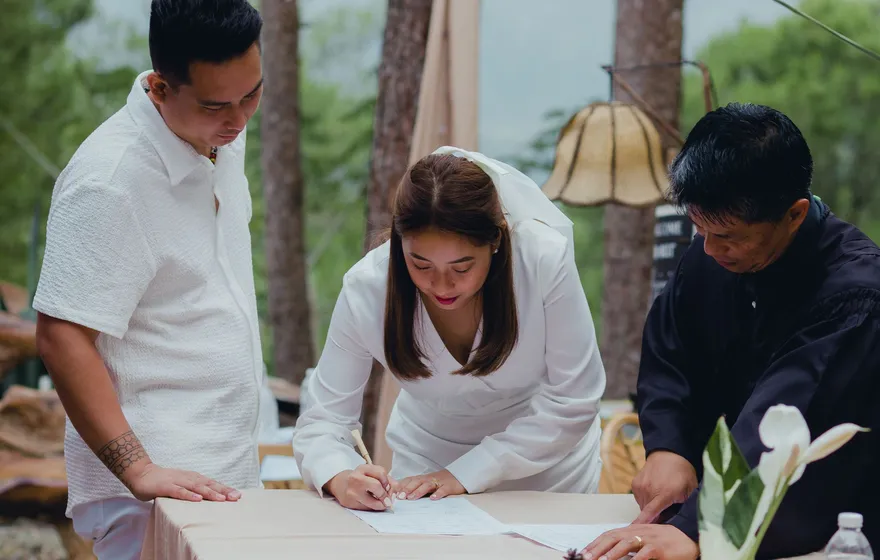
The license is a legal document, not a souvenir
The mistakes that get a license rejected are boring and avoidable, and they’re almost never about the ceremony (Get Ordained). Here’s what I drill into every first-time officiant:
- Use the right title. Write “Minister” or “Ordained Minister,” not “Friend” or “Celebrant.” A clerk can reject the form over the wrong word.
- Sign the correct county’s section. Licenses have specific fields. Putting your signature in the wrong place is a real problem.
- No white-out, no cross-outs. Treat it like a contract. If you make a mistake, ask the clerk how to handle it. Don’t improvise with correction fluid.
- Print legibly. A clerk who can’t read your handwriting can send the whole thing back.
- Return it before the deadline. Marriage licenses are usually valid for only 30 to 90 days, and the signed copy often has to come back within roughly 3 to 10 days of the ceremony. Miss that window and you’ve created a genuine mess.
Get those five right and a clerk has nothing to send back.
And because litigation in contested states has actually voided real marriages, this reaches well past the ceremony day. In a handful of jurisdictions a marriage performed by an online-ordained minister can get challenged years later, during a divorce or an inheritance fight. Verifying the rules in advance and filing the license cleanly is what makes that risk disappear.
A few things first-timers always forget on the day
These aren’t legal, they’re the human details that separate a smooth ceremony from an awkward one. I learned most of them by watching nervous brothers and best friends stumble through the same moments.
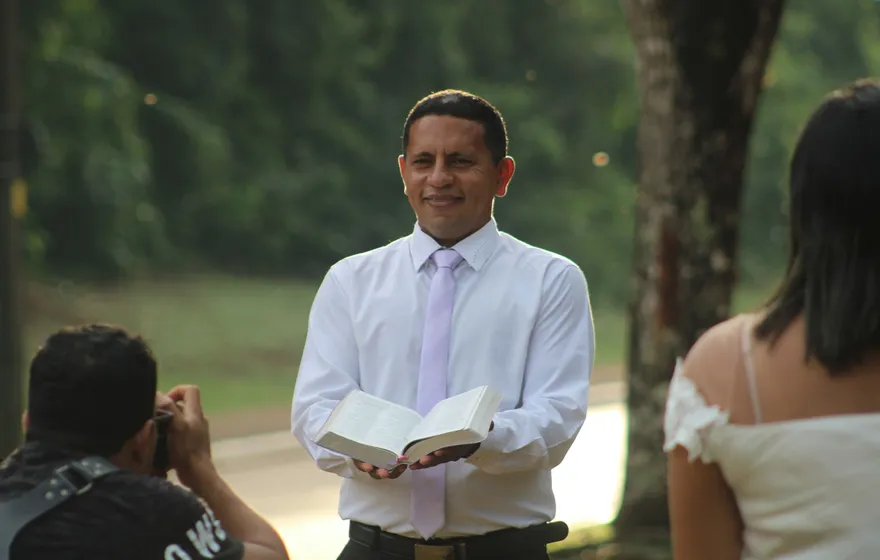
After the processional, tell the guests “please, be seated.” People stand for the entrance and then hover, unsure, until someone gives them permission. That someone is you.
The rest comes down to where you stand and what you can be heard over:
- Stand in front of the arbor, not under it, so you don’t block the couple’s faces in every photo.
- Step well aside before the first kiss, so the photographer gets the shot you came to make possible.
- If there are more than about twenty guests, or any wind or traffic, sort out a microphone in advance.
I’d rather set up a mic we don’t end up needing than have the back row miss the vows.
If you want the whole thing handled for you
By now you’ve probably caught the pattern. Ordination is trivial. Everything around it, the county verification, the registration timing, the license execution, the actual words you’ll say, is where the work lives.
That’s the exact gap I built the Officiant Kit to close. It’s the ceremony scripts, the license checklist, the state-by-state legal prompts, and the moment-by-moment runsheet I use myself, packaged so a first-time officiant can walk in calm and walk out having married their people correctly. If you’d rather not piece it together from a dozen browser tabs, the Officiant Kit is here for $150.
If you want a taste first, grab my free guide, Ready to Officiate. It walks you through the license and legality checks above in one evening, the stuff I wish that panicking brother had read three months before the wedding instead of three days.
And if you’re the couple reading this while you decide whether to ask a friend at all, I wrote honestly about what it really means to have a friend officiate, and about what a wedding officiant actually does beyond standing up front, so you both know what you’re signing up for.
A ready-to-use ceremony close
Since the Declaration of Intent is the part the law requires in most states and the Pronouncement is the customary close, here’s a clean, copy-ready version of that closing stretch. Drop your couple’s names in and it’s done.
Declaration of Intent:
(Turn to the first partner. Slow down. This is a legal question, so let it carry weight.)
“[Name], do you take [Name] to be your partner in marriage, to love and to hold, from this day forward, for as long as you both shall live?”
(Wait for the “I do.” Then turn to the second partner and repeat.)
“[Name], do you take [Name] to be your partner in marriage, to love and to hold, from this day forward, for as long as you both shall live?”
Ring Exchange:
(Optional, but most couples want it. Hand the first ring over.)
“As you place this ring, repeat after me: I give you this ring as a sign of my love, and a promise I intend to keep.”
(Repeat for the second partner.)
The Pronouncement:
(Step aside now, out of the photographers’ line. This is the legal seal of the marriage, so say it like you mean it.)
“By the power vested in me, and with the joy of everyone gathered here, it is my honor to pronounce you married. You may share your first kiss.”
If you want a fuller ring-exchange section, I have a whole post of ring exchange wording you can borrow.
Frequently asked questions
Is it free to get ordained online?
Yes. Both American Marriage Ministries and the Universal Life Church ordain you online for free in under a minute, and the free ordination carries the same legal standing as a paid one. You only pay (roughly $49 to $99 at AMM) if you want the physical Certificate of Ordination and Letter of Good Standing that some states require you to present.
Is online ordination legal?
In most of the U.S., yes, but it varies by state and even by county. A handful of jurisdictions have refused or challenged online ordination, including some downstate New York counties and, historically, Virginia, North Carolina, and Tennessee. Because the call is often made at the local clerk’s office, the only reliable answer comes from contacting the specific county clerk that issues the couple’s marriage license.
American Marriage Ministries or Universal Life Church, which should I use?
Both are free, both ordain instantly, and both are widely accepted. Ask the county clerk where the wedding happens whether they have a preference or a specific paperwork requirement, then ordain through whichever church produces the credentials that clerk wants to see. They are entirely separate organizations and have even litigated against each other.
Do I have to register with the county before I can officiate?
Sometimes. About a third of states require officiants to register with a county clerk, court, or state office before the ceremony, including places like Nevada, New York, West Virginia, Virginia, Hawaii, and Washington D.C. Some registrations take weeks to process, so confirm the requirement well before the wedding, not the week of.
Can an online-ordained minister’s marriage be challenged later?
In contested jurisdictions, yes. Courts in a few states have set aside or questioned marriages performed by online-ordained ministers, sometimes years later during a divorce or inheritance dispute. That risk effectively disappears when you verify the local rules with the issuing county clerk in advance and complete the license correctly.
The Officiant Kit
What to say when the ring goes missing, the mic dies or you blank on a name
This post gets you through one part of the ceremony, and the Officiant Kit covers what surrounds it, from the weeks before and the rehearsal to what you do when something goes wrong in front of everyone.
- Eight full ceremony scripts, with names you type once
- The Story Builder, seven steps to the couple’s story
- The Rehearsal Run Sheet, a cue sheet and four pocket cards
- A marriage license reference for all fifty states
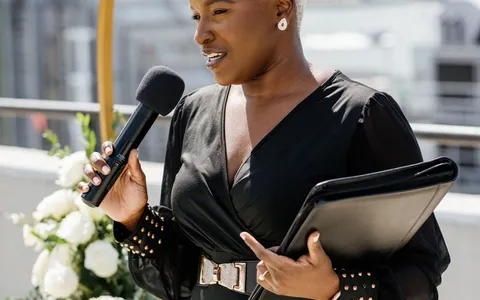
OFFICIANT
How to Officiate a Wedding: A First-Timer's Step-by-Step Guide (2026)
How to officiate a wedding when you've never done it before, from someone who's coached a lot of nervous first-timers through their first ceremony.
READ →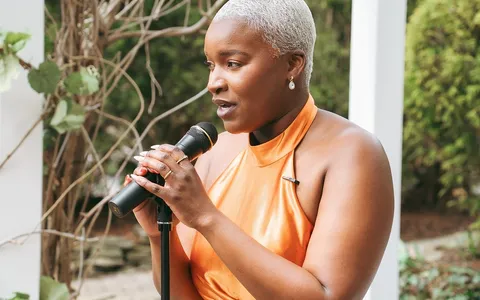
OFFICIANT
The One-Day Officiant License in NYC: How It Actually Works (2026)
NYC has two ways to legally officiate a wedding, and most articles confuse them. Here's the one-day license, the full registration, and which is yours.
READ →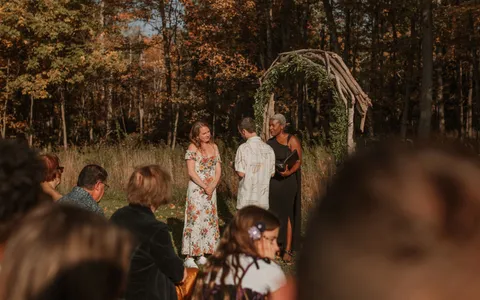
OFFICIANT
Can a Friend Officiate Your Wedding? The Honest Guide (2026)
How to have a friend legally officiate your wedding, write the ceremony, and avoid the one mistake that actually matters, from an NYC officiant who's seen it go both ways.
READ →