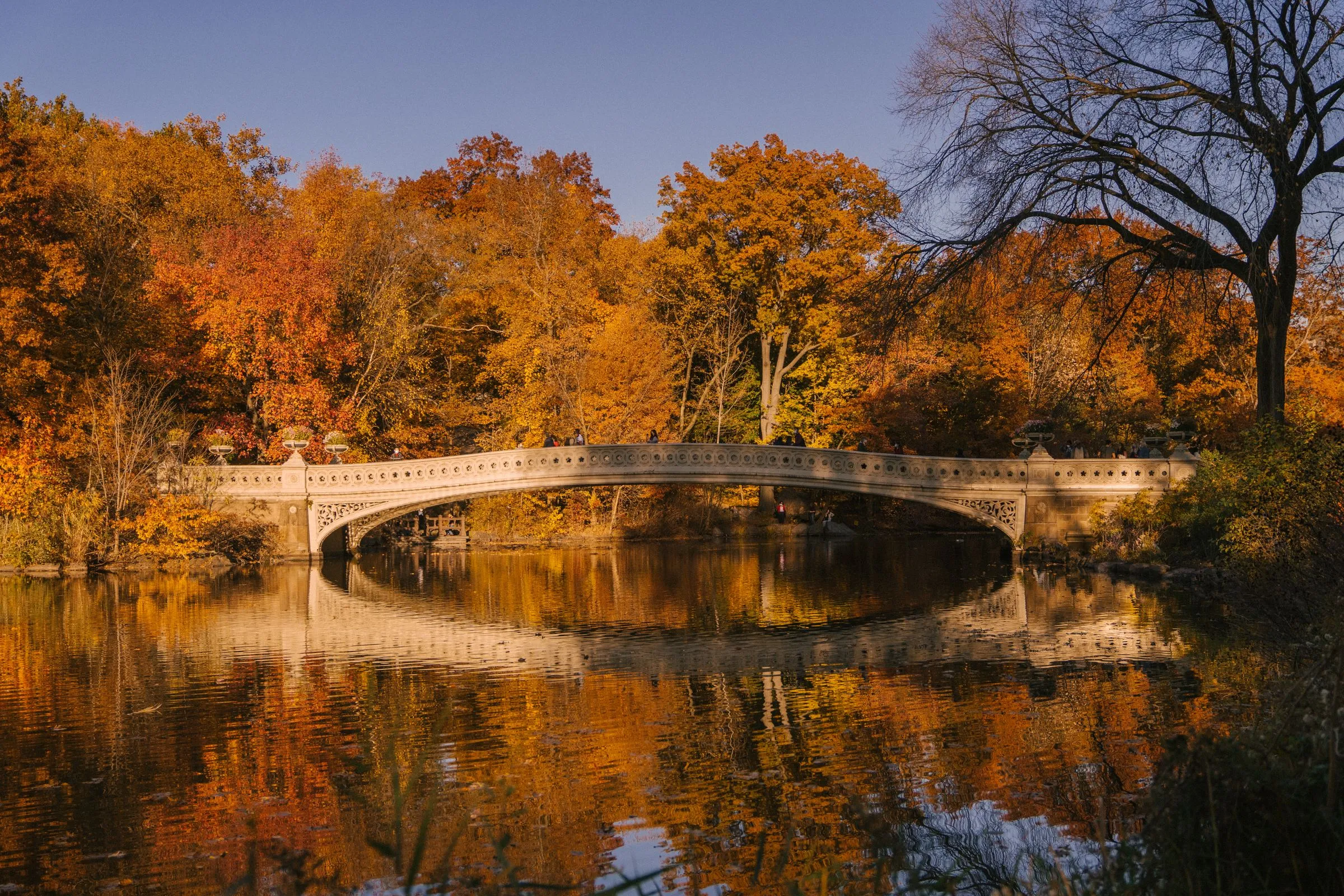
LOCATIONS
The Real Guide to Getting Married on Bow Bridge
Planning a Bow Bridge wedding in Central Park? Permits, the 25-guest cap, crowds, best light, and how to run a tight ceremony on a public bridge.
A couple asked me three days out whether I could “get the bridge cleared” for ten minutes so their vows would be private. I told them the truth I tell everyone, which is that there is no clearing Bow Bridge. It is a public crossing, and on a June morning a hundred strangers will walk over it whether you are mid-vow or not. We married them at 6:40 a.m. anyway, finished in eleven minutes, and the only person who walked through was a man with a coffee who stopped, smiled, and said congratulations.
That is the whole game here. Bow Bridge is the most romantic 87 feet of cast iron in New York, and the only way to marry on it well is to plan around the crowd instead of fighting it.
You can absolutely get married on Bow Bridge. You just cannot own it for a single second. I have run ceremonies across Central Park’s public spots for years, and the bridge is the one where the officiant’s real job is crowd choreography as much as the vows. Here is how it actually works.
Can you close Bow Bridge or block it off for your ceremony?
No, and this is the one thing to understand before you fall in love with the idea.
Bow Bridge is a working public right-of-way. An NYC Parks event permit gives you the right to hold a ceremony there. It does not give you the right to stop a single human being from crossing while you do it. Central Park wedding specialists say this plainly: even with a permit, the public may still pass through your ceremony.
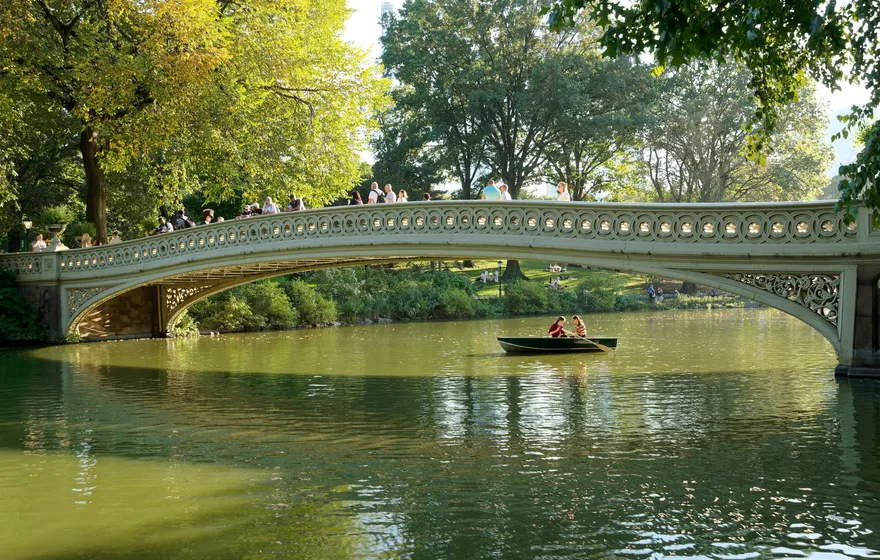
So picture it honestly. You are standing at the top of the arch, your partner across from you, and a tour group rounds the corner from the Ramble side. They are not going to wait. They are going to walk through, some of them filming, most of them delighted, all of them in your photos.
Do you need a permit, and how small does the party have to be?
If you are bringing 20 or more guests, you need an NYC Parks Special Events Permit. The fee is $25, it is non-refundable, it cannot be waived, and you should apply at least 30 days out because that is the minimum processing time (NYC Parks).
The hard cap for a wedding permit here is 25 guests. But every seasoned Central Park planner I know will tell you to aim for ten or fewer, and the reason is mechanical, not aesthetic: a big group physically blocks the public’s right of way across a narrow bridge. You cannot stand 25 people in a horseshoe and expect joggers to thread it politely.
A small group does something better than stay legal. It becomes a soft human barrier. Eight people loosely ringing the couple gives passersby an obvious lane to walk around, and gives you a pocket of attention that feels almost private even though it is wide open.
There is a real reason this spot belongs to small ceremonies and elopements. It rewards two people who only have eyes for each other. The classic NYC elopement formula of “two people, a witness, and a sunrise” by this elopement playbook is exactly what the bridge was built for, even if Calvert Vaux and Jacob Wrey Mould did not know it when they finished it in cast iron in 1862 (Wikipedia).
What can you actually bring or set up on the bridge?
Less than you think, and the limits are the point.
- No amplified sound
- No decorating the bridge or attaching anything to its structure
- No alcohol, no smoking, no vehicles
- Nothing that blocks the walkway
In practice that means an acoustic, unplugged, decor-free, standing ceremony. No chairs, no aisle runner, no archway you brought, no clipped-on florals.
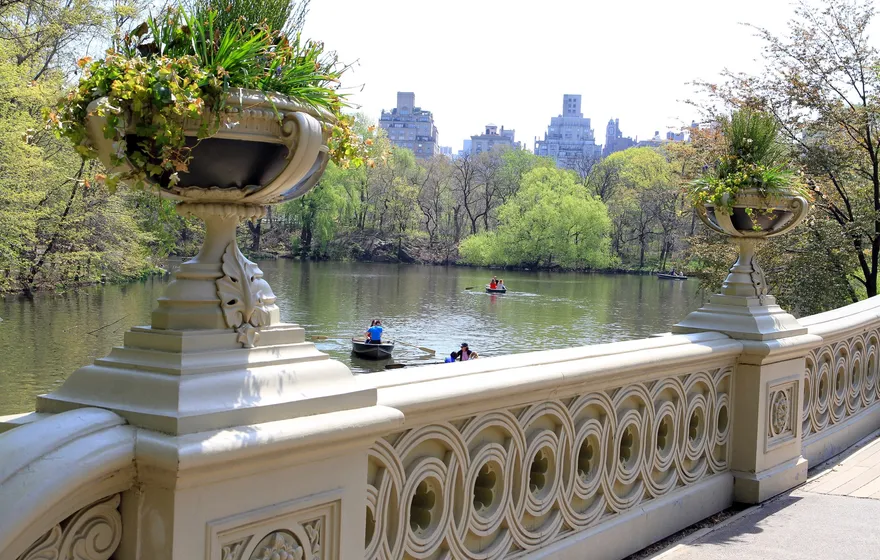
It also means your officiant has no microphone. The voice has to carry over ambient park noise, rowboats on the Lake below, kids, and the general Saturday hum of the most photographed spot in the park (Central Park Conservancy). I plant my feet, drop my volume slightly, and make the couple lean in toward me instead of projecting at the crowd. It sounds backward, but it pulls their focus inward and lets the strangers fall out of the frame.
If you want a spot with stone, grandeur, and a built-in stage, the arcade and fountain at Bethesda Terrace is a five-minute walk away and forgives a slightly larger guest count. And if you want the same Lake-and-bridge backdrop with actual elbow room to stand, the lawn at Cherry Hill sits right beside Bow Bridge. That is where I send couples who want the view without standing in the foot traffic.
When should you schedule it to dodge the crowds?
Sunrise. I am not being romantic, I am being practical.
Photographers and planners agree: book sunrise or very early morning, or failing that, late-afternoon golden hour. During peak season, roughly May through October, the middle of the day is genuinely wall-to-wall, and there is no script tight enough to save you from a 1 p.m. Saturday in July.
Sunrise is the one window where you can have the bridge close to empty, with soft light coming low across the Lake. You will be tired. You will also be one of maybe three couples in the entire park, and your photos will show an empty bridge instead of a tour group.
| Time | What you’ll find |
|---|---|
| Sunrise | Close to empty |
| Golden hour | Crowds thinning |
| Midday, May to October | Wall-to-wall |
The other thing to plan for is weather.
How do you keep it intimate with people walking through?
This is the part couples lose sleep over, and the part I most want to reassure you about.
The dread of the crowd is almost always worse than the reality. Planners tell nervous couples the same thing I do: once the ceremony is actually underway, you stop noticing the people walking past. Your nervous system narrows to the one face in front of you, and the strangers fade into the background.
My job is to make that happen on purpose:
How I keep it close on a public bridge
-
A loose ring, not a wall
I position the small party as a loose ring, so passersby have an obvious lane around you.
-
Hold the eyeline
I hold the couple’s eyeline so their focus never drifts to the joggers.
-
Time the gaps
Every minute or two
I read the rhythm of foot traffic, because there is one. Gaps open every minute or two, and I time the vows and the ring exchange into those gaps so they happen while the bridge is briefly empty, and the couple hears each other over nothing but the rowboats.
None of it needs a microphone or a closed bridge, only a small group and someone watching the foot traffic.
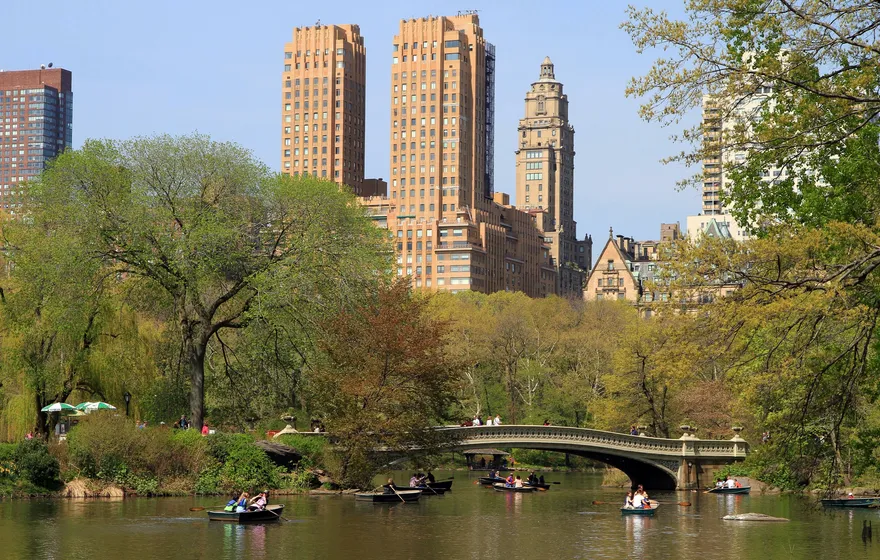
If you genuinely cannot stand being watched, you do have an out. The boat landing on the Ramble side of the Lake is more private and still keeps Bow Bridge in the background of every photo. I have done the legal vow exchange there when the bridge itself was mobbed, then walked the couple up for portraits. Best of both.
For the full rundown on every ceremony spot in the park and how they compare, start with my guide to Central Park wedding locations.
A short, copy-ready Bow Bridge ceremony
Because the bridge demands speed, here is the actual shape I use. It runs about eight to ten minutes and is built to be said without a microphone, with the spoken parts compressed to what matters. Take it, change the names, make it yours.
Welcome: (officiant stands at the apex, couple facing each other, small party loosely ringed behind)
“We are standing on a bridge that thousands of people cross every day, and this morning, for a few minutes, it belongs to a love story. Anna and Sam, look at each other. Everything else here is just the city going by.”
The intent: (spoken to the couple, low and direct, not projected at the crowd)
“You are not here to perform a wedding. You are here to promise one. So we will keep this simple and true.”
Vows: (officiant nods to the first partner; this is timed into a gap in foot traffic)
“Anna, say what you came here to say.”
(each partner speaks their vows; if they have not written any, they repeat after the officiant in short lines)
“I take you, exactly as you are, on a bridge full of strangers, as if we were the only two people in New York.”
Ring exchange:
“Place the ring and say: with this ring, I marry you.”
(repeat for the second partner)
Pronouncement: (officiant raises the volume now, the one moment the crowd is welcome to hear)
“By the power vested in me by the State of New York, and witnessed by everyone lucky enough to be walking past, I pronounce you married. Kiss in the middle of the most romantic bridge in the city.”
(couple kisses; the small party closes in; officiant signals the photographer that the gap is now, move fast)
If you want more options to swap into that frame, vow prompts, ring wording, a non-religious blessing, grab my free sample ceremony script and lift whatever fits.
Is Bow Bridge worth it, or should you marry somewhere else?
Honest answer: it depends entirely on your tolerance for being seen.
If a stranger’s grin during your vows would delight you, Bow Bridge is one of the great wedding settings in America. It has been the backdrop in films from Enchanted to Spider-Man 3, it is the oldest cast-iron bridge in the park, and it has been photographed more than almost any spot in Central Park since the 19th century (Central Park Conservancy). You are marrying inside a piece of the city’s memory.
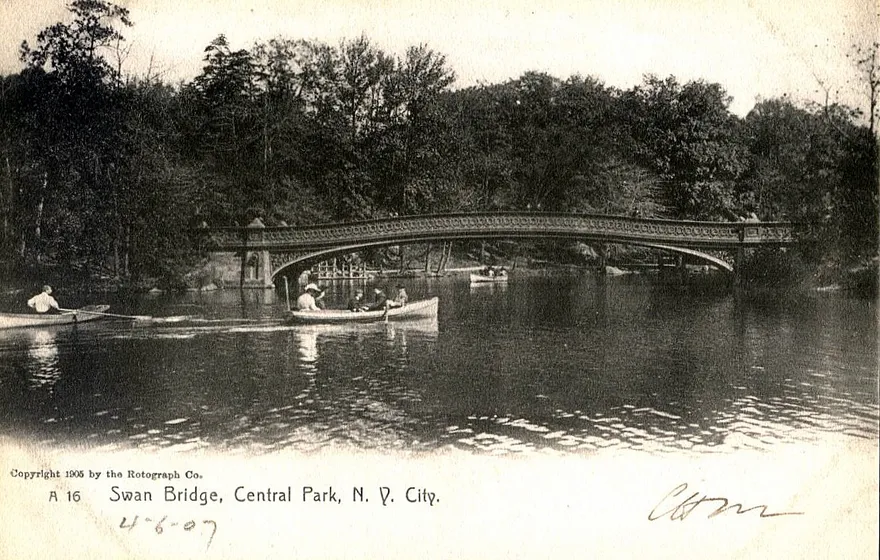
If the thought of an audience tightens your chest, do not force it. Use Cherry Hill, use the boat landing, use a quieter cove, and keep the bridge as your view rather than your altar.
The couples who love their Bow Bridge wedding are the ones who decided, in advance, that the crowd was part of the gift and not a flaw to manage. That decision gets made at the planning table, not on the bridge.
Want someone who has actually worked the bridge
I run Central Park ceremonies for couples who want the morning to start on time, stay tight, and finish before a tour group reaches the apex. That timing comes from planning, and it is the part I am paid for.
If you are weighing Bow Bridge against the rest of the park, or you want a guide who knows when to start your vows so you say them into a clear stretch of bridge instead of over a passing tour group, that is what I do across Central Park ceremonies. The short version: small party, early light, no chairs, and an officiant who treats the foot traffic as choreography.
If that sounds like your morning, tell me your date and let’s talk it through. I will give you a straight read on whether the bridge fits you, or point you to the spot that does.
Frequently asked questions
Can you close Bow Bridge for a wedding?
No. Bow Bridge is a public thoroughfare in Central Park, and an NYC Parks permit does not let you stop anyone from crossing it. Even with a permit in hand, joggers, tourists, and photographers can and will walk through your ceremony. The bridge stays open the whole time, which is why the ceremony has to be small and fast rather than staged like a private venue.
Do you need a permit to get married on Bow Bridge?
You need an NYC Parks Special Events Permit once you have 20 or more guests. The application fee is $25, it is non-refundable, and you should apply at least 30 days ahead. Under 20 guests, many couples pull the permit anyway for peace of mind, though no permit grants exclusive use of the bridge.
How many guests can you have for a Bow Bridge wedding?
The permitted maximum is 25, but experienced Central Park planners recommend keeping it to around ten or fewer. A larger group blocks the public’s right of way across the bridge. A small party also works in your favor: it forms a soft buffer between you and the foot traffic without becoming a roadblock.
What is the best time of day to get married on Bow Bridge?
Sunrise or very early morning is the only realistic window to have the bridge nearly to yourself, with soft light coming over the Lake. Late-afternoon golden hour is the next best option as crowds thin slightly. During peak season, May through October, the middle of the day is wall-to-wall tourists, so schedule at the edges of the day.
Can you have chairs, an aisle, or music on Bow Bridge?
Effectively no. Amplified sound is prohibited, you cannot decorate or attach anything to the bridge, and you cannot set up anything that blocks the walkway. That means an acoustic, decor-free, standing ceremony. Any music has to be unamplified, and your officiant has to project over ambient park noise without a microphone.
BOOK YOUR CEREMONY
Need help with your ceremony?
Tell me about your day. I will write back the same week.
AVAILABLE 2026 + 2027
LOCATIONS
Governors Island Wedding | NYC Ceremony Guide
The first Governors Island wedding I officiated, I spent the ten minutes before the processional doing math on a ferry app instead of reading my notes. Half the guest list was.
READ →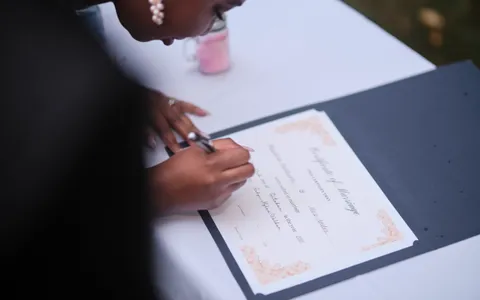
LOCATIONS
NYC City Hall Wedding: Everything You Need to Know (2026)
What a City Hall wedding in NYC is really like: booking both appointments on Project Cupid, the $60 in fees, the 24-hour wait, witnesses, photos, and how to add your own vows.
READ →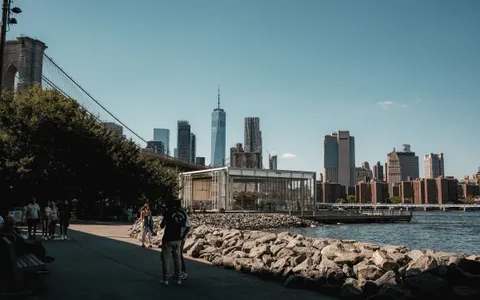
LOCATIONS
Brooklyn Bridge Park Wedding Ceremony | Full Guide
The first time I officiated on Pier 1, a tourist holding a hot dog stopped dead in the middle of the promenade, figured out what he was watching, and started clapping before I'd.
READ →